Next-Generation Ceramics: Unlocking Superior Properties for Industry

What is Aluminum Oxide Ceramic?
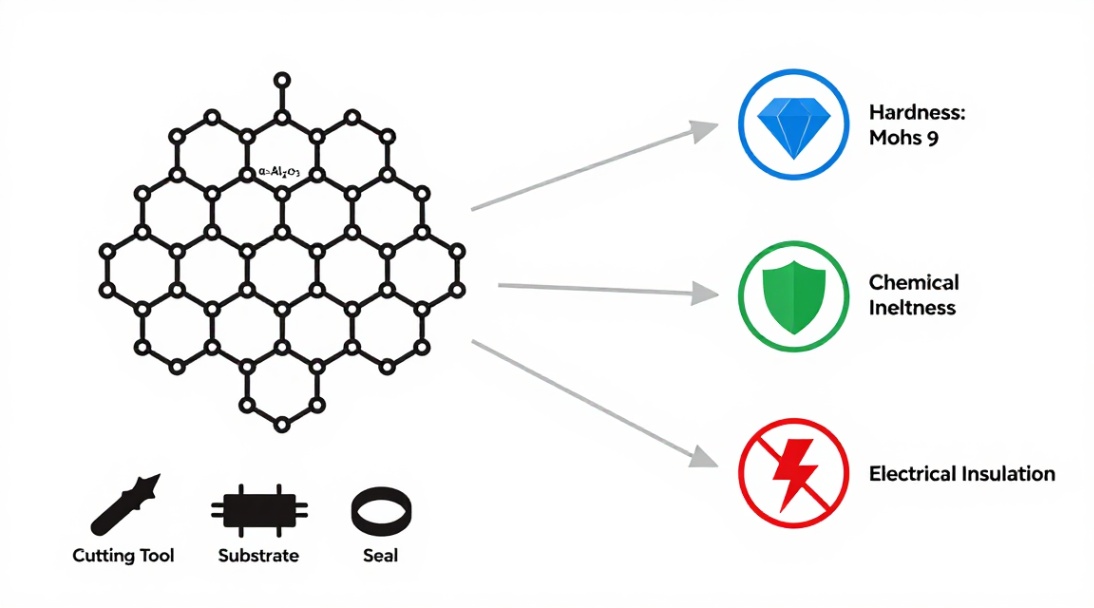
Aluminum oxide ceramic, commonly called alumina, is a high-performance technical ceramic primarily composed of alpha-aluminium oxide (α-Al2O3). Its defining characteristic is a rare combination of exceptional hardness, excellent electrical insulation, and superior chemical inertness. Engineers select it for applications where metals fail due to wear, corrosion, or electrical breakdown.
Core Properties and Material Advantages
The value of aluminum oxide ceramic stems from its intrinsic material properties. Its crystalline structure provides a robust lattice that translates directly to performance in the field.
Mechanical and Physical Properties
Alumina ranks among the hardest materials available. This gives it outstanding abrasion resistance. It maintains high compressive strength and stiffness at elevated temperatures, often outperforming metals. Its density is lower than many steels, offering weight-saving advantages.
| Property | Typical Value/Characteristic | Engineering Implication |
|---|---|---|
| Hardness (Vickers) | 1500-2000 HV | Resists cutting, grinding, and particle erosion. |
| Compressive Strength | 2000-4000 MPa | Withstands extreme bearing loads without deformation. |
| Young’s Modulus | 300-400 GPa | Provides high rigidity and dimensional stability. |
| Fracture Toughness (KIC) | 3-5 MPa·m1/2 | Indicates brittleness; a key limitation addressed via composite strategies. |
Thermal, Electrical, and Chemical Properties
Alumina serves as a superior electrical insulator, even at high temperatures. It offers good thermal conductivity for a ceramic, facilitating heat dissipation. Its chemical stability is nearly universal, resisting attack from strong acids, alkalis, and molten metals.
| Property | Typical Value/Characteristic | Engineering Implication |
|---|---|---|
| Max. Use Temperature | 1600-1750 °C | Suitable for high-temperature furnace components and sensors. |
| Thermal Conductivity | 20-35 W/m·K | Exceeds many ceramics, useful for substrates and heatsinks. |
| Volume Resistivity | >1014 Ω·cm | An ideal insulator for high-voltage and electronic applications. |
| Chemical Resistance | Inert to most chemicals | Perfect for seals, pump components, and labware in corrosive environments. |
Manufacturing and Material Grades
Manufacturers tailor alumina’s properties through precise control of purity, grain size, and density. Common forming methods include dry pressing for simple shapes, isostatic pressing for uniform density, and extrusion for long, complex profiles. Sintering at high temperatures achieves final densification. Advanced techniques, like slurry infiltration for composites, can enhance fracture toughness significantly, moving from monolithic 3-5 MPa·m¹/² to 10-20 MPa·m¹/² ranges.
Selecting the Right Grade
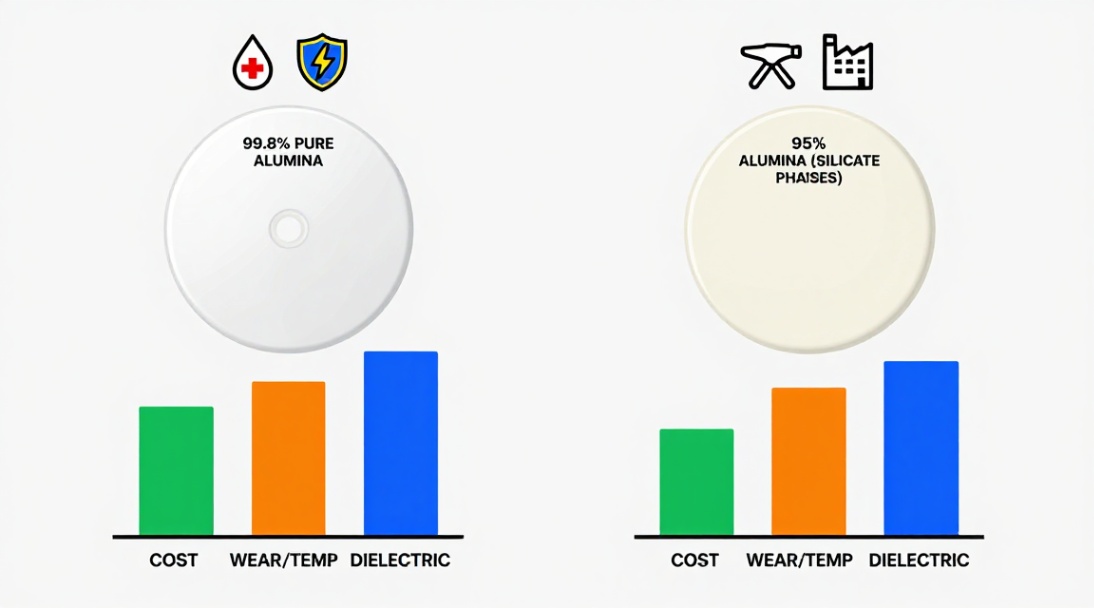
Grade selection is critical. A 99.8% pure alumina offers maximum corrosion resistance and electrical properties. A 94-96% alumina grade often includes silicate glass phases that improve mechanical strength and ease of manufacturing. Engineers must balance cost against performance requirements like wear, temperature, and dielectric strength.
Key Applications Across Industries
Alumina’s properties solve specific, demanding engineering challenges. It is not a general-purpose material but a targeted solution for extreme conditions.
- Industrial Wear Parts: Pump seals, valve components, and abrasive blast nozzles leverage its wear resistance. It outlasts steel in slurry and pneumatic conveying systems.
- Electronics & Electrical: Substrates for thick and thin film circuits, insulating housings for spark plugs, and high-voltage insulators rely on its dielectric strength and thermal conductivity.
- Medical: Its biocompatibility and inertness make it a premier material for orthopedic implants, dental components, and surgical tools.
- Semiconductor Manufacturing: Wafer processing fixtures, plasma etch components, and diffusion furnace tubes use high-purity alumina for its cleanliness and stability.
Alumina vs. Other Advanced Ceramics
Choosing alumina over materials like silicon nitride ceramic or zirconia requires a clear understanding of trade-offs. The table below provides a direct comparison for common selection criteria.
| Material | Key Advantage vs. Alumina | Typical Use Case Where it Prevails |
|---|---|---|
| Aluminum Oxide (Alumina) | Best overall cost/performance, excellent hardness & insulation. | General wear parts, electrical insulators, cost-sensitive components. |
| Zirconia (ZrO2) | Higher fracture toughness and flexural strength. | Precision bearings, cutting blades, biomedical implants requiring higher toughness. |
| Silicon Nitride (Si3N4) | Superior thermal shock resistance and fracture toughness. | High-temperature engine components, bearing balls for extreme environments. |
| Silicon Carbide (SiC) | Higher thermal conductivity, extreme hardness and wear resistance. | Armor plates, high-performance seals, kiln furniture, abrasives. |
Machining and Finishing Considerations
Alumina in its sintered state can only be machined using diamond grinding tools. Designers must factor in its brittleness; avoid sharp internal corners and specify generous tolerances for ground dimensions. Post-sintering machining is costly, so net-shape or near-net-shape forming is always preferred to control costs.
Conclusion: Is Aluminum Oxide Ceramic Right For Your Application?
Alumina excels where requirements include extreme wear, electrical insulation, high temperature, or chemical corrosion. It fails where impact loading or severe thermal shock are primary concerns. For components like critical seals, insulating substrates, or wear plates in aggressive environments, it offers an unbeatable balance of performance and reliability.
Do not compromise your design with an inferior material specification. Consult with a specialist ceramic component manufacturer early in your design phase. They can advise on the optimal grade, manufacturing process, and design for manufacturability to ensure your aluminum oxide ceramic part performs as required. Request a formal engineering consultation and material selection review today to de-risk your project.
Suppiler
Synthetic-chemical focus on the research and development, production and sales of ceramic products, serving the electronics, ceramics, chemical and other industries. Since its establishment in 2015, the company has been committed to providing customers with the best products and services, and has become a leader in the industry through continuous technological innovation and strict quality management.
Our products includes but not limited to Aluminum Nitride, Aluminum Oxide, Boron Carbide, Boron Nitride, Ceramic Crucible, ect. If you are interested in any type of these, please feel free to contact us.