Next-Generation Ceramics: Unlocking Superior Properties for Industry

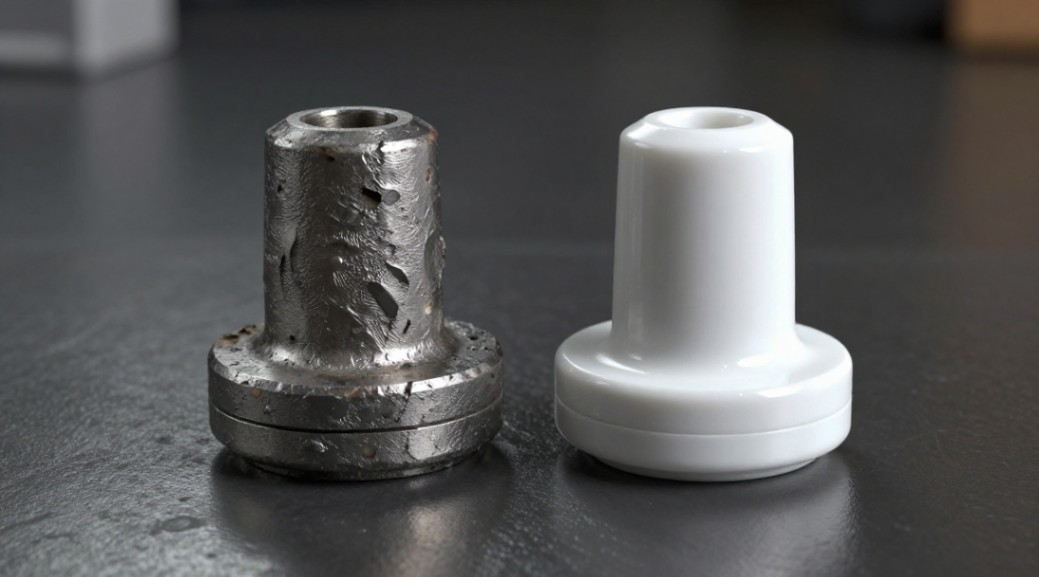
Let me tell you about the first time I realized how much we take this material for granted. A client sent us a valve component that had been obliterated after just a few weeks of processing a highly abrasive slurry. We were losing money and time. My team suggested a super-hard alloy. I went with the simple solution, the one I knew from years of grinding electrodes and assembling industrial furnaces: high-purity aluminum oxide ceramic. The replacement part ran for over three years. That’s the story of alumina. It’s not the flashiest, but it’s the reliable, cost-effective workhorse that solves problems where others fail.
So, What Exactly is Aluminum Oxide Ceramic?
Aluminum oxide ceramic (also called alumina) is an advanced ceramic material made primarily from Al2O3. We produce it by sintering fine, highly purified aluminium oxide powders at temperatures often exceeding 1600°C. The result is a dense, polycrystalline structure that gives us a material far removed from its powdery origins. Its color shifts from stark white for high purity grades to beige or pink when doped with other elements like chromium or manganese.
The Core Properties That Make It a Go-To Material
Think of alumina as the ultimate multi-tool for harsh environments. Here’s why we use it so much:
Exceptional Hardness & Wear Resistance. It’s right up there with sapphire (which is single-crystal alumina). We specify it for pump seals, grinding media, and liners where abrasion would shred metals in days.
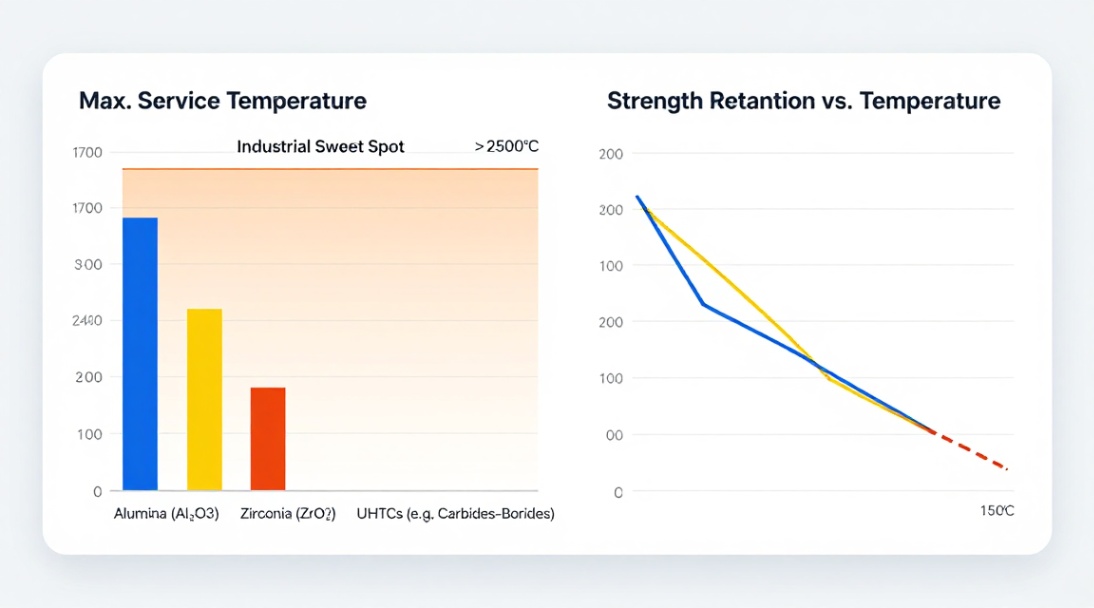
High-Temperature Stability. It maintains its strength and shape up to about 1700°C. This makes it perfect for furnace components, thermocouple tubes, and insulators.
Electrical Insulation. Alumina has excellent dielectric properties. It’s the standard for substrates and insulators in electronics, from microchips to power transmission.
Superb Chemical Inertness. It shrugs off attack from most acids and alkalis. We use it for laboratory crucibles and wear parts in chemical pumps where corrosion is a constant battle.
Aluminum Oxide Ceramic vs. Other Advanced Ceramics: A Quick Guide
Choosing the right ceramic is about trade-offs. I often see engineers defaulting to alumina, but sometimes another ceramic is better. Let’s clear it up with a direct comparison.
| Ceramic Material | Key Advantages | Typical Drawbacks vs. Alumina | Where It Trumps Alumina |
|---|---|---|---|
| Aluminium Oxide Ceramic (Alumina) | Excellent wear & corrosion resistance, great electrical insulation, cost-effective, very hard. | Lower fracture toughness, higher thermal expansion. | General-purpose wear parts, electrical substrates, high-temperature furnaceware. |
| Zirconia (ZrO2) | Highest fracture toughness, better wear resistance in some cases, high strength. | More expensive, lower maximum use temperature, can suffer from aging. | Medical implants, ball valves requiring high impact resistance, cutting tools. |
| Silicon Carbide Ceramic (SiC) | Superior thermal conductivity, extreme hardness, excellent thermal shock resistance. | Higher cost, more difficult to machine, poorer electrical insulator. | High-temperature heat exchangers, armor plates, wear parts in extreme heat. |
| Aluminum Nitride Ceramic (AlN) | Exceptional thermal conductivity (like a ceramic heatsink), good electrical insulator. | Very high cost, sensitive to moisture during processing. | High-power LED substrates, RF microwave packages, semiconductor processing. |
| Silicon Nitride Ceramic (Si3N4) | Excellent thermal shock resistance, high strength and toughness, good wear resistance. | Complex manufacturing leads to higher cost. | Automotive turbocharger rotors, ball bearings for high-speed applications, cutting tools. |
Not All Alumina is Equal: The Purity Grade Breakdown
When you order alumina, the single most important spec is the purity. I’ve seen projects fail because someone bought a 90% grade thinking it was “good enough.” Here’s what the grades mean for us on the factory floor.
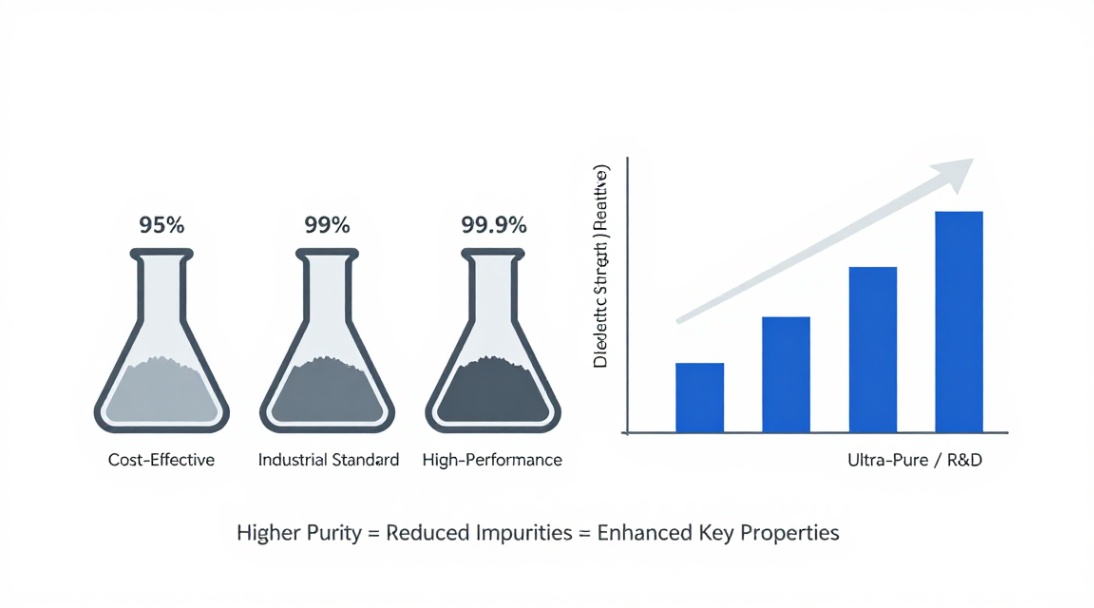
- High Purity (99.5% – 99.99%): This is our high-performance material. It offers the best mechanical strength, highest thermal conductivity, and superior corrosion resistance. We use it for semiconductor processing parts, transparent tubes, and critical wear components.
- Standard Industrial (96% – 99%): The workhorse grade. It offers an excellent balance of properties and cost. Most wear plates, pump seals, and insulators you’ll encounter are made from 96% or 99% alumina. It’s tough, reliable, and affordable.
- Lower Purity (85% – 94%): This alumina contains silicate glass phases that lower its sintering temperature. It’s less hard, less strong, and more porous. We use it for lower-stress applications like some electrical insulators or tiles where cost is the primary driver.
How We Make It and Shape It
Starting with fine, pure powder, we form it into shapes. Isostatic pressing gives us dense, uniform blocks. Tape casting creates the thin, flat sheets used for electronic substrates. For complex shapes, we use injection molding or slip casting.
The real magic happens in the sintering furnace. The loose, green ceramic part is heated to over 1600°C. The particles fuse together into a dense, monolithic body. Shrinkage is significant and predictable-we factor it into every mold we design.
Finally, we finish it. Aluminium oxide ceramic can be ground with diamond tools to achieve incredibly tight tolerances and mirror-like surface finishes. We can even laser-drill or metalize it to create brazed assemblies.
Where You’ll Find It in Action (The Applications)
Walk through any heavy industry or high-tech lab, and you’ll spot alumina. Its forms are everywhere:
- Wear Parts: Liners, nozzles, seal rings, ball mill media. It outlasts steel in abrasive service by an order of magnitude.
- Electronics: Substrates for circuits, insulators, spark plug bodies. It’s the reliable backbone that keeps electricity where it should be.
- Thermal & Process: Thermocouple protection tubes, furnace tubes, crucibles for melting metal or glass. It handles the heat without complaining.
- Medical: Dental implants, bone screws, prosthetic joints. Its biocompatibility is proven.
- Armor: Personal and vehicle armor inserts. Hardness is key here.
Its Limits and What We Need to Design Around
Alumina isn’t perfect. It’s brittle. Its fracture toughness is low. That means we must avoid sharp corners, sudden changes in cross-section, and tensile stress concentrations. We design it to be in compression. We make it thick enough to handle impact loads. We never assume it will bend. Knowing these limitations is what separates a successful application from a pile of broken ceramic parts on Monday morning.
As for research, the frontier is pushing beyond its thermal limits. New ultra-high-temperature ceramics (UHTCs), like advanced carbides and borides, are targeting service above 2000°C, a realm where alumina would soften. For most of us, though, alumina’s sweet spot of 1500°C-1700°C covers the vast majority of industrial needs.
Your Next Step as an Engineer
If you’re facing a wear, temperature, or corrosion problem, ask yourself if alumina could be the solution. Start with a standard 96% or 99% grade for prototyping. Talk to an experienced manufacturer early. They can help you design for the material’s quirks-things like proper clearances for its thermal expansion and avoiding stress risers. The goal is to leverage its incredible strengths while respecting its inherent brittleness. Master that balance, and this unsung ceramic workhorse will save you countless headaches and repair bills.
Suppiler
Synthetic-chemical focus on the research and development, production and sales of ceramic products, serving the electronics, ceramics, chemical and other industries. Since its establishment in 2015, the company has been committed to providing customers with the best products and services, and has become a leader in the industry through continuous technological innovation and strict quality management.
Our products includes but not limited to Aluminum Nitride, Aluminum Oxide, Boron Carbide, Boron Nitride, Ceramic Crucible, ect. If you are interested in any type of these, please feel free to contact us.