Next-Generation Ceramics: Unlocking Superior Properties for Industry

You’ve Been Specifying Alumina Wrong (And It’s Costing You)
Have you ever had an aluminum oxide ceramic component, seemingly perfect on paper, fail unexpectedly during thermal cycling? Watched a high-wear part degrade faster than a cheaper steel alternative? The problem isn’t the material. It’s the application. Treating alumina as a monolithic, one-size-fits-all solution is the single biggest error in the ceramics industry. I’ve seen too many engineers default to it without asking the hard questions first. Stop the guesswork. Let’s fix that.
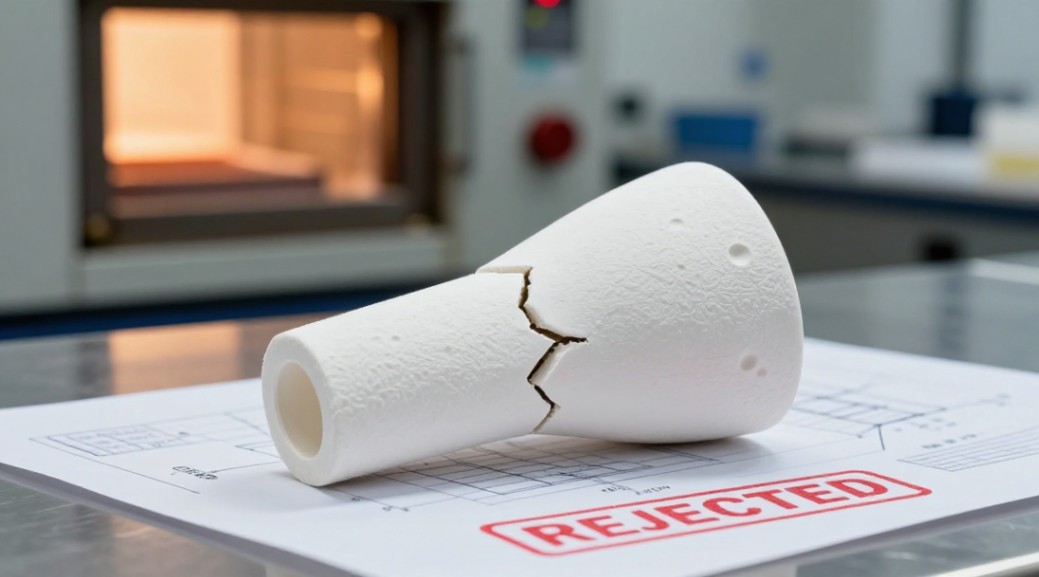
1. The Myth of “Pure” Superiority: Grades Are Everything
The industry casually throws around “alumina” as a generic term. This is misleading and dangerous. 99.6% alumina and 85% alumina are fundamentally different materials. The aluminum oxide ceramic you need depends entirely on your failure mode.
High Purity (99.5%+) vs. Low Purity (85-95%)
High-purity grades offer superior electrical insulation and chemical inertness. They excel in semiconductor wafer processing and high-frequency insulators. However, their fracture toughness is poor. The glassy phase in lower-purity grades (e.g., 85-95% Al2O3) acts as a sintering aid and can slightly improve damage tolerance, but at the cost of reduced high-temperature capability and chemical resistance. Never assume higher purity is always better. For a sealing surface in a corrosive pump, 99.8% is mandatory. For a wear pad in a non-corrosive environment, a 92% grade might be tougher and cheaper.
2. Ignoring the Elephant in the Room: Brittleness
Aluminum oxide ceramic is brittle. This isn’t a minor footnote; it’s the core design constraint. You cannot design with it like metal. Sharp corners, point loads, and improper mounting are execution orders. The key isn’t to wish for more toughness, but to engineer around its inherent flaw. This means generous radii, uniform support, and using alumina in compression whenever possible. If your application involves high tensile stress or impact, you’re likely looking at the wrong material from the start. Consider silicon nitride ceramic or specialized composites instead.
3. The Thermal Shock Trap: Not All Heat is Equal
Alumina has good high-temperature stability. That’s true. But its thermal shock resistance is mediocre. A 1500°C furnace liner? Excellent. A component repeatedly quenched from 800°C to room temperature? A recipe for catastrophic failure. The thermal conductivity, while decent, isn’t high enough to rapidly equalize severe temperature gradients. For brutal thermal cycling, materials like silicon carbide ceramic or aluminum nitride ceramic (for its high conductivity) are objectively superior choices. Selecting alumina for rapid thermal cycling because it’s “a high-temperature ceramic” is a classic, expensive mistake.
4. Blindly Choosing Alumina Over Advanced Alternatives
Alumina is the workhorse. It’s familiar and relatively inexpensive. This familiarity breeds complacency. We must compare directly.
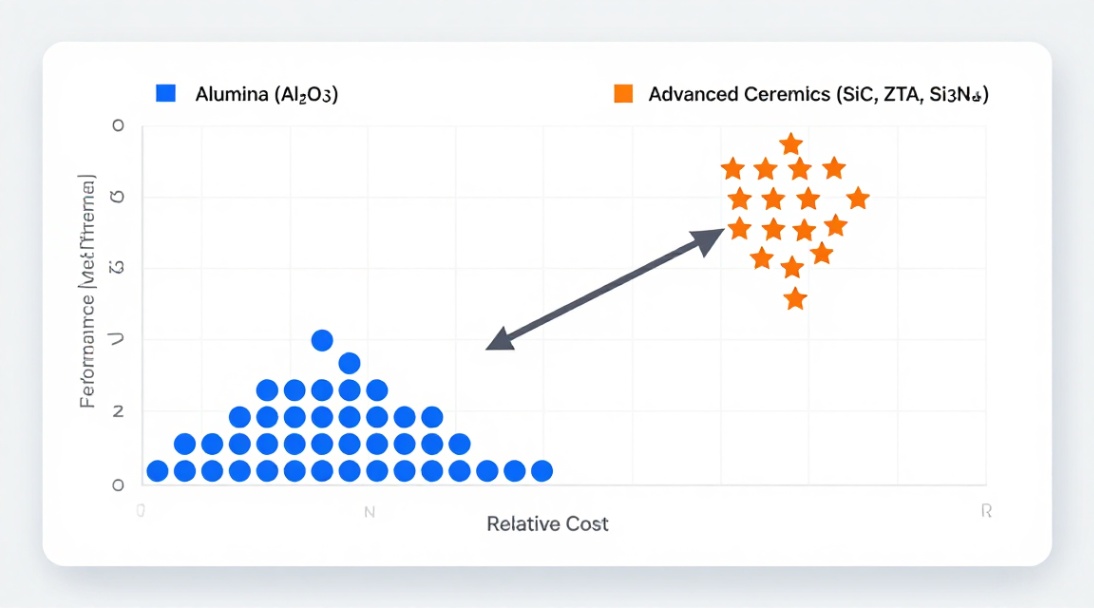
- Vs. Zirconia (ZrO2): Zirconia has roughly double the fracture toughness and flexural strength. If you need a thinner, stronger, more impact-resistant component, zirconia wins. But its long-term stability above 800°C is questionable, and it’s more expensive.
- Vs. Silicon Nitride (Si3N4): Silicon nitride offers vastly superior thermal shock resistance, higher strength at temperature, and excellent wear resistance. For high-stress dynamic applications like bearings or turbine components, it’s the professional’s choice.
- Vs. Boron Carbide (B4C): For extreme, lightweight armor, boron carbide ceramic is the undisputed king of hardness and ballistic efficiency. Alumina armor is heavier and less effective.
An old mentor of mine put it bluntly: “Using alumina where you need silicon nitride is like using a hammer to perform surgery. It might work, but it’s going to be ugly.”
5. Forgetting the Finish: Surface Integrity is Non-Negotiable
An as-sintered alumina surface is a liability. Micro-cracks, porosity, and surface defects act as stress concentrators, dramatically lowering the actual strength versus the theoretical value. Precision finishing-diamond grinding, lapping, polishing-isn’t a cosmetic luxury; it’s a mechanical necessity for load-bearing surfaces. The cost of finishing can exceed the cost of the blank part. Factor this in from day one. A poorly specified surface finish will guarantee premature failure.
6. Overlooking the Joining and Assembly Nightmare
You can’t weld it. You can’t thread it like metal. Mechanical fastening requires specialized design to avoid point loads. Adhesive bonding requires rigorous surface preparation and has temperature limits. Shrink-fitting with metals is a delicate dance due to differing thermal expansion coefficients. Many brilliant alumina component designs fail in the final assembly stage because the integration method was an afterthought. Design the interface and assembly process concurrently with the part itself.
7. The Future is Composite, Not Monolithic
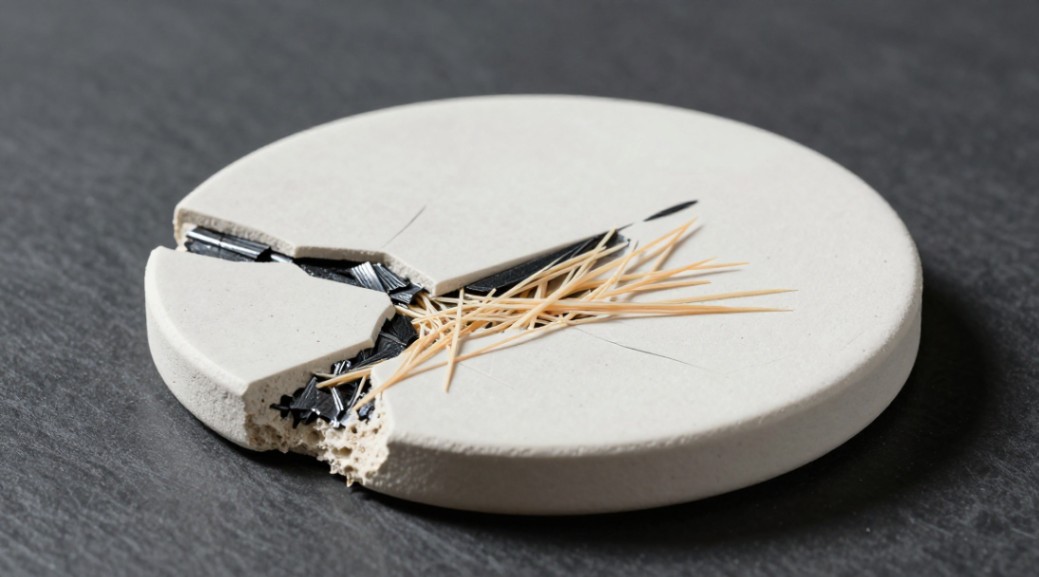
The industry’s obsession with pure, monolithic aluminum oxide ceramic is reaching its limits. The real innovation lies in composites. Research into silicon carbide-bonded silicon nitride ceramics and fiber-reinforced UHTCs points the way. Imagine alumina toughened with graphene platelets or reinforced with a network of mullite fibers. These advanced composite formulations aim to crack the brittleness code, pushing toughness from the typical 3-5 MPa·m¹/² toward 10-20 MPa·m¹/². The future belongs to engineered microstructures, not purer powders.
Your Next Move: Question Everything
Stop defaulting to alumina. Start with a brutally honest assessment of the application’s primary stresses: thermal, mechanical, chemical, electrical. Map those against a properties matrix. If wear is the only major factor and cost is king, alumina may be correct. If any combination of impact, severe thermal shock, or high tensile stress appears, immediately evaluate zirconia, silicon nitride, or silicon carbide. Consult with a materials engineer who isn’t selling you a specific product. Your goal isn’t to pick a ceramic. Your goal is to eliminate failure. That requires choosing the right tool for the job, not the most familiar one.
Suppiler
Synthetic-chemical focus on the research and development, production and sales of ceramic products, serving the electronics, ceramics, chemical and other industries. Since its establishment in 2015, the company has been committed to providing customers with the best products and services, and has become a leader in the industry through continuous technological innovation and strict quality management.
Our products includes but not limited to Aluminum Nitride, Aluminum Oxide, Boron Carbide, Boron Nitride, Ceramic Crucible, ect. If you are interested in any type of these, please feel free to contact us.