Next-Generation Ceramics: Unlocking Superior Properties for Industry

Let’s Start With a Surprising Stat
Here’s something we’ve witnessed first-hand in labs and factories for decades: of all the advanced ceramics in use today-silicon carbide, silicon nitride, boron nitride, you name it-aluminum oxide ceramic (or alumina) accounts for over 70% of the volume. Why? It’s rarely the absolute best performer in any single category. Silicon carbide is harder. Aluminium nitride manages heat better. Yet, alumina dominates. The logic points to a material that hits the critical balance between performance, reliability, and cost better than any other. That’s the story we’re unpacking today.
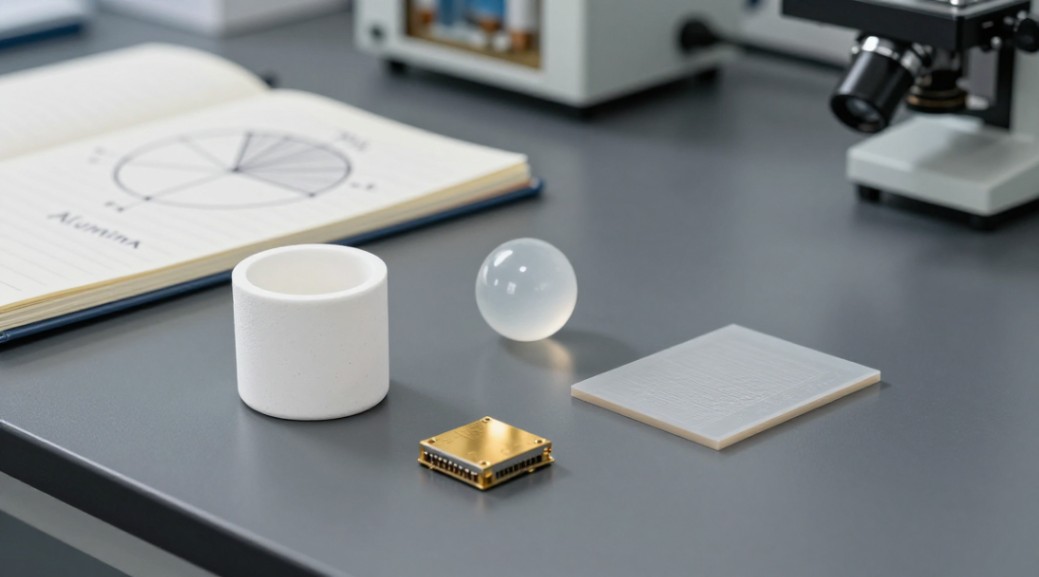
1. The Core Argument: Why Alumina is the Go-To Workhorse
Fundamentally, alumina is aluminum and oxygen (Al2O3). That simple composition delivers a powerhouse trio of properties.
- Hardness & Wear Resistance: It scores a 9 on the Mohs scale. Only diamond and a few exotic ceramics like boron carbide top it. For parts that face constant abrasion, this is non-negotiable.
- Thermal & Chemical Stability: It shrugs off temperatures to 1700°C in many cases and laughs at most chemicals. This stability is why it forms the basis for ultra-high-temperature ceramics (UHTC) research, where a dense, protective oxide layer is the goal.
- Electrical Insulation: It’s an exceptional insulator, even at high temperatures. This single property made the modern electronics industry possible.
2. The Purity Paradox: 96% vs 99.5% vs 99.9%
This is where most designs succeed or fail. Purity dictates everything.
Standard Grade (96% Al2O3)
This is your industrial workhorse. The 4% of sintering aids and silicate glass phase gives it slightly lower properties but makes it far more cost-effective to manufacture via dry pressing or isostatic pressing. Use it for wear plates, seals, and insulators where ultimate performance isn’t critical.
High-Purity Grades (99.5% & Above)
Here, the game changes. With less glassy phase, these grades offer superior hardness, thermal conductivity, and corrosion resistance. They’re mandatory for:
- Semiconductor Processing: Wafer boats and chambers demand 99.6%+ purity to prevent contamination.
- Medical Implants: Biocompatibility requires the cleanest, most inert structure.
- Advanced Armor: The microstructure must be flawless to dissipate impact energy.
3. The Manufacturing Reality: How Process Defines Possibility
You can’t separate the material from how it’s made. Each process imposes its own design rules.
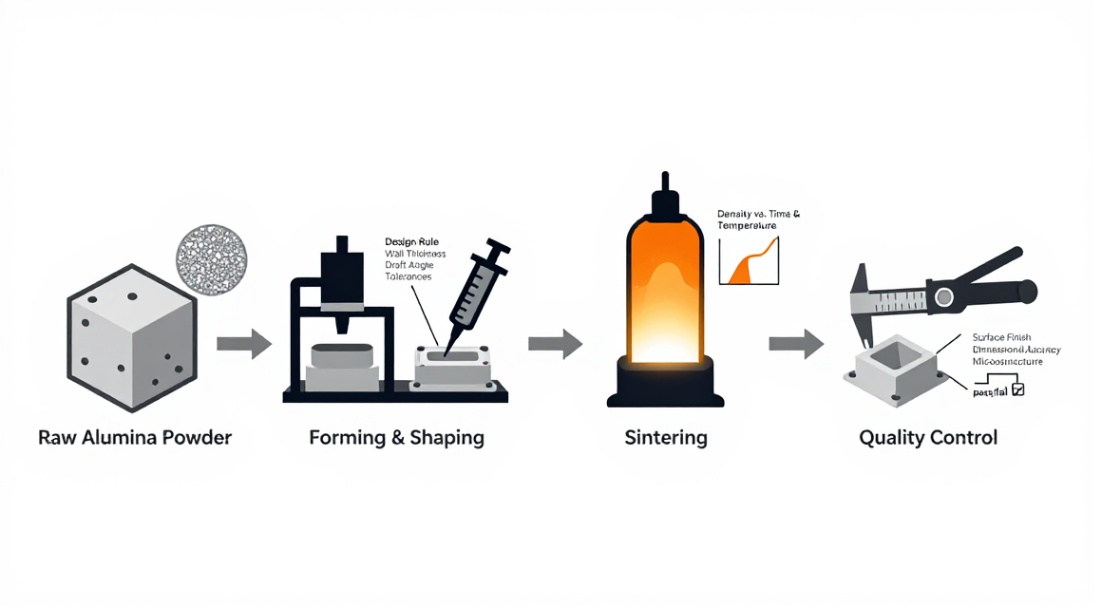
- Dry Pressing: Fast, cheap. Limited to simple, relatively flat shapes. Think tiles, substrates.
- Isostatic Pressing: Applies pressure uniformly. Gives more complex, homogeneous parts with better properties. Used for tubes, crucibles.
- Injection Molding: The key to complex, high-volume geometries. Ideal for intricate wear parts or medical components. Tooling cost is high, but per-part cost plummets at scale.
4. The Honest Comparison: Where Alumina Wins (And Loses)
Let’s apply pure logic. Don’t choose alumina because it’s a ceramic. Choose it because it solves your specific problem better than the alternatives.
Versus Metals:
Choose alumina when you need to eliminate galling, withstand higher temperatures without creep, or stop electrical currents dead. Forget it if you need high tensile strength or impact toughness.
Versus Plastics:
This is an easy win. When your plastic part is wearing out, deforming from heat, or breaking down chemically, alumina is the answer. The trade-off is always cost and machinability.
Versus Other Advanced Ceramics:
- vs. Silicon Carbide / Silicon Nitride: These win on thermal shock and extreme high-temperature strength. But they are often more expensive and harder to machine to tight tolerances. Alumina is the sensible, high-performance default.
- vs. Aluminum Nitride: AlN is a specialist for thermal management. If your primary need is moving heat, use AlN. If you need a balance of insulation, wear, and cost, use alumina.
- vs. Boron Nitride: BN is soft and machinable, often used as a release agent or in special coatings for crucibles. They’re solving completely different problems.
5. The Designer’s Checklist: How to Specify Alumina Correctly
Based on decades of fixing failed applications, here is your logical selection flow. Get these specifications right from the start.
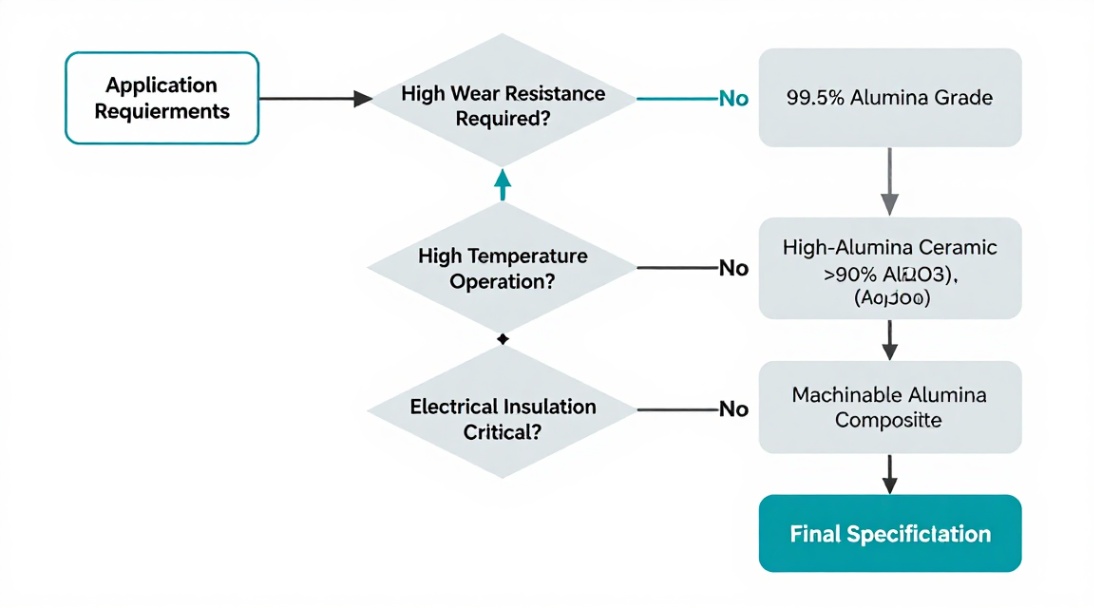
- Define the Primary Failure Mode: Is it wear? Heat? Corrosion? Electrical breakdown? This points you to the necessary property.
- Select Purity Based on Environment: Aggressive chemical or ultra-clean? Go high purity. General industrial use? 96% is likely perfect.
- Choose the Process Based on Geometry & Volume: Complex shape, high volume? Consider injection molding. Simple shape, lower volume? Dry or isostatic pressing.
- Plan for Post-Processing: Alumina is hard. Diamond grinding is the only option for precision tolerances. Factor this cost and time in early. Surface finish matters for wear and sealing.
- Reference the Right Standard: Don’t just say “alumina.” Specify to ASTM or ISO standards for density, strength, and composition. This is the language between you and your supplier.
The Logical Next Step
Alumina isn’t magic. It’s a tool. Its dominance is a testament to engineered compromise. The next time you face a material failure-be it a worn seal, a failed insulator, or a component that can’t take the heat-run through the logic above. Compare it to silicon carbide ceramic for pure abrasion or mullite ceramic for better thermal shock. But in the vast middle ground of high-performance engineering, aluminum oxide ceramic will likely be your most rational, reliable choice. That’s why it’s everywhere.
Suppiler
Synthetic-chemical focus on the research and development, production and sales of ceramic products, serving the electronics, ceramics, chemical and other industries. Since its establishment in 2015, the company has been committed to providing customers with the best products and services, and has become a leader in the industry through continuous technological innovation and strict quality management.
Our products includes but not limited to Aluminum Nitride, Aluminum Oxide, Boron Carbide, Boron Nitride, Ceramic Crucible, ect. If you are interested in any type of these, please feel free to contact us.