Next-Generation Ceramics: Unlocking Superior Properties for Industry

Introduction: Have You Hit the Performance Wall?
Ever designed a component that failed under heat? Or watched a seal wear out in weeks, not years? You needed a material that refuses to compromise. Aluminium oxide ceramic is that material. It is the workhorse of the technical ceramics family. This article answers the core question: what is it, and can it solve your problem?
1. What Exactly Is Aluminum Oxide Ceramic?
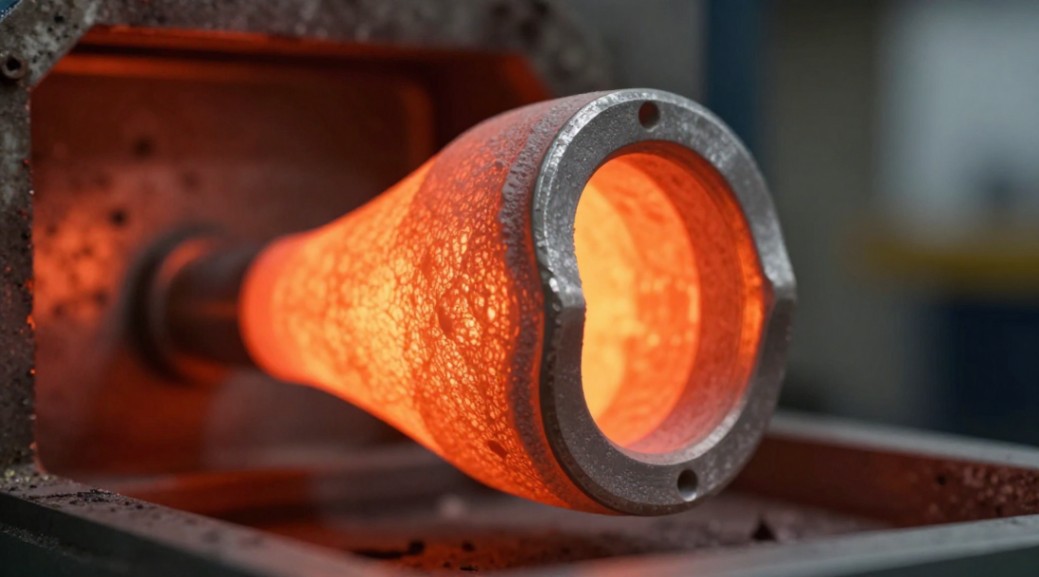
Aluminum oxide ceramic is a dense, polycrystalline material primarily composed of alpha-alumina (Al2O3). It is produced by sintering high-purity alumina powder at extreme temperatures. The result is a hard, chemically inert solid. Engineers choose it when they need a material that combines high strength with electrical insulation.
1.1. How Is It Different From Other Oxide Ceramics?
Many users on Reddit ask: “Is aluminum oxide the same as zirconia?” No. Zirconia ceramic offers higher fracture toughness but at a higher cost and lower hardness. Aluminum oxide ceramic provides superior hardness and wear resistance at a fraction of the cost. For applications needing extreme toughness, zirconia wins. For pure abrasion resistance and thermal stability, aluminum oxide is the standard.
2. What Are the Key Properties That Matter?
The properties of aluminium oxide ceramic are well-characterized and reliable. Here are the data-backed facts:
- High Hardness: 9 on the Mohs scale. Second only to diamond and cubic boron nitride. This makes it ideal for industrial abrasives and cutting tools.
- Excellent Electrical Insulation: Volume resistivity exceeds 1014 ohm-cm at room temperature. It is the default choice for electronic substrates and spark plugs.
- High Melting Point and Thermal Stability: Melts at 2072°C. It retains mechanical integrity in refractory applications like furnace tubes and high-temperature kiln furniture.
- Biocompatibility: It is chemically inert in physiological environments. This is why it is used in medical implants like hip replacements and dental prosthetics.
- Chemical Inertness: Resists most acids and alkalis. Ideal for corrosion-resistant components in chemical processing.
3. How Is Aluminum Oxide Ceramic Manufactured?
You cannot machine this material like metal. It must be shaped before sintering. The common methods are straightforward:
3.1. Uniaxial Pressing and Isostatic Pressing
Most components start as powder. Uniaxial pressing works for simple shapes like tiles or plungers. Isostatic pressing applies uniform pressure from all sides. This gives a more uniform density and fewer defects. The pressed part, called a green body, is then fired.
3.2. Sintering and the Role of Aids
Sintering temperature and time dictate the final grain size and density. Sintering aids like magnesia (MgO) are often added. They control grain growth and promote densification. Purity levels matter: 99.8% alumina gives better performance than 96% alumina, which contains glassy phases. The trade-off is cost.
4. Where Does This Ceramic Outperform Other Types?
Context matters. You have other options: silicon carbide ceramic, silicon nitride ceramic, boron carbide ceramic, and boron nitride ceramic. Here is a direct comparison:
- Aluminum oxide vs. Silicon carbide ceramic: Silicon carbide offers higher thermal conductivity and extreme hardness. But it is more expensive and difficult to bond. Aluminum oxide is the cost-effective alternative for general wear resistance.
- Aluminium oxide vs. Silicon nitride ceramic: Silicon nitride has better toughness and thermal shock resistance. For high-speed bearings, silicon nitride is superior. For static wear plates, aluminum oxide wins on cost.
- Aluminum oxide vs. Boron carbide ceramic: Boron carbide is lighter and harder, used for personal body armor. But it is expensive. Aluminum oxide ceramic is widely used in vehicle and fixed ballistic armor due to its high compressive strength and lower cost.
- Aluminium oxide vs. Mullite ceramic: Mullite offers excellent thermal shock resistance but lower hardness. For kiln furniture, mullite is better. For cutting tools, use aluminum oxide.
- Aluminum oxide vs. Quartz ceramic: Quartz ceramic has very low thermal expansion. Aluminum oxide has better mechanical strength.
5. What Are the Top Applications in Industry?
You find aluminum oxide ceramic in places where failure is not an option.
5.1. Mechanical Seals and Valve Components
Pump reliability depends on seal faces. Aluminum oxide provides the hard, flat, wear-resistant surface needed. It handles abrasive slurries and corrosive fluids. It increases mean time between failures significantly.
5.2. Cutting Tools and Grinding Media
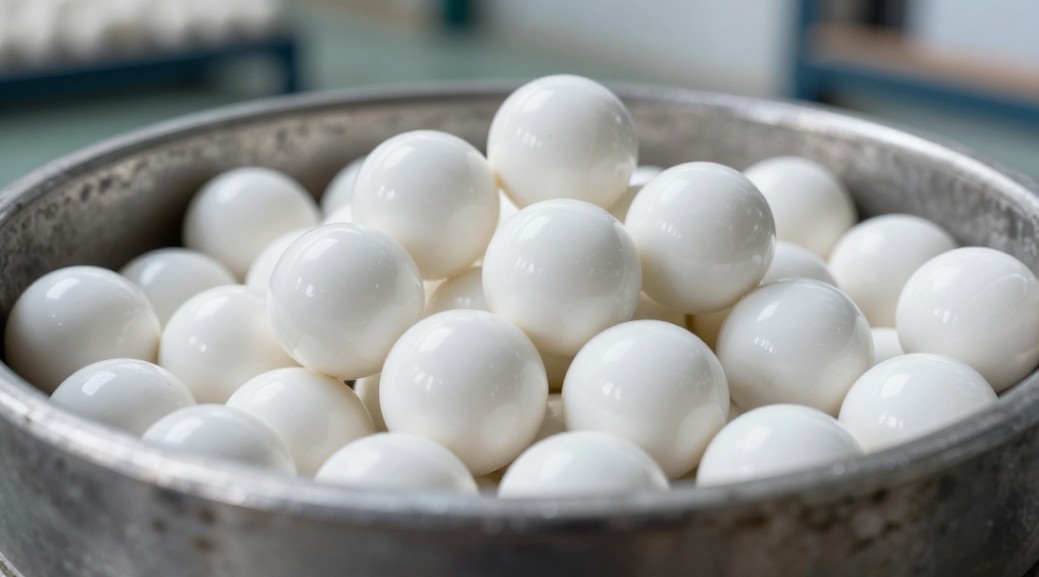
The high hardness makes it the first choice for grinding balls and liners. It outlasts steel by orders of magnitude. No contamination of the milled product occurs.
5.3. Electronic Substrates and Spark Plugs
Its insulation property prevents current leakage. It also withstands the thermal shock of combustion in spark plugs.
5.4. Medical Implants
Dental implants and hip replacement heads use high-purity alumina. It is biocompatible and wear-resistant. It does not corrode in the body.
6. What Are the Limitations? The Critical Downside
No material is perfect. Aluminum oxide ceramic has a clear weakness: brittleness. It has low fracture toughness. It will fail catastrophically under tensile stress or impact if not designed correctly. Second, it is difficult to machine. You cannot drill or tap it with conventional tools. All final machining requires diamond grinding. This adds cost.
Surface finish and grain size also influence optical translucency in specialized grades. For applications needing transparency, like sodium vapor lamp tubes, you must control grain size precisely.
7. Practical Insights From the Field
Experienced engineers know this: for a component that must resist erosion and corrosion at high temperatures, aluminum oxide is the safe bet. But avoid using it where cyclic tensile loads are high. Users on Reddit often complain about chipping on edge. The fix is simple: design a chamfer or use a metal housing to support the ceramic.
Another common mistake: assuming all alumina grades are the same. They are not. A 94% alumina part has different properties than a 99.8% part. Always specify the purity level based on the operating environment.
8. A Note on Specialized Variants
You might encounter specialized types in complex systems. Examples include silicon carbide-bonded silicon nitride ceramics and reaction-sintered silicon carbide ceramics. These are not pure aluminum oxide. They are composites designed for niche thermal or mechanical needs. Similarly, pressureless sintered silicon carbide ceramics and recrystallized silicon carbide ceramics serve high-temperature structural applications. For most corrosion and wear applications, start with standard aluminum oxide.
If you are working with boron nitride crucibles, note that special coating for boron nitride ceramic crucibles often uses a thin layer of aluminum nitride or alumina to prevent reactions with molten metals.
9. Next Steps: What Should You Do?
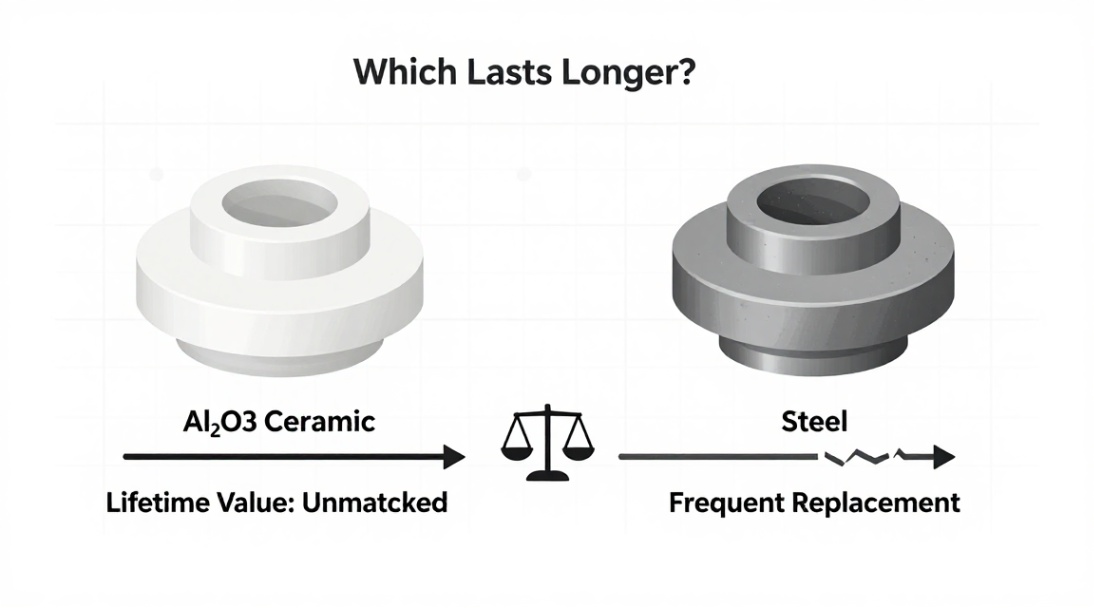
First, analyze your failure mode. Is it wear? Heat? Corrosion? If yes, specify a high-purity aluminum oxide ceramic component. Contact a qualified ceramic manufacturer. Provide them with your operating conditions. They will recommend the correct grade and sintering aid package. Ask for a sample part. Test it under real conditions. The upfront cost is higher than steel, but the lifetime value is unmatched.
Do not wait for another catastrophic failure. Switch to aluminum oxide ceramic and solve your material problem permanently.
Suppiler
Synthetic-chemical focus on the research and development, production and sales of ceramic products, serving the electronics, ceramics, chemical and other industries. Since its establishment in 2015, the company has been committed to providing customers with the best products and services, and has become a leader in the industry through continuous technological innovation and strict quality management.
Our products includes but not limited to Aluminum Nitride, Aluminum Oxide, Boron Carbide, Boron Nitride, Ceramic Crucible, ect. If you are interested in any type of these, please feel free to contact us.