Next-Generation Ceramics: Unlocking Superior Properties for Industry

My First Encounter with a Costly Mistake
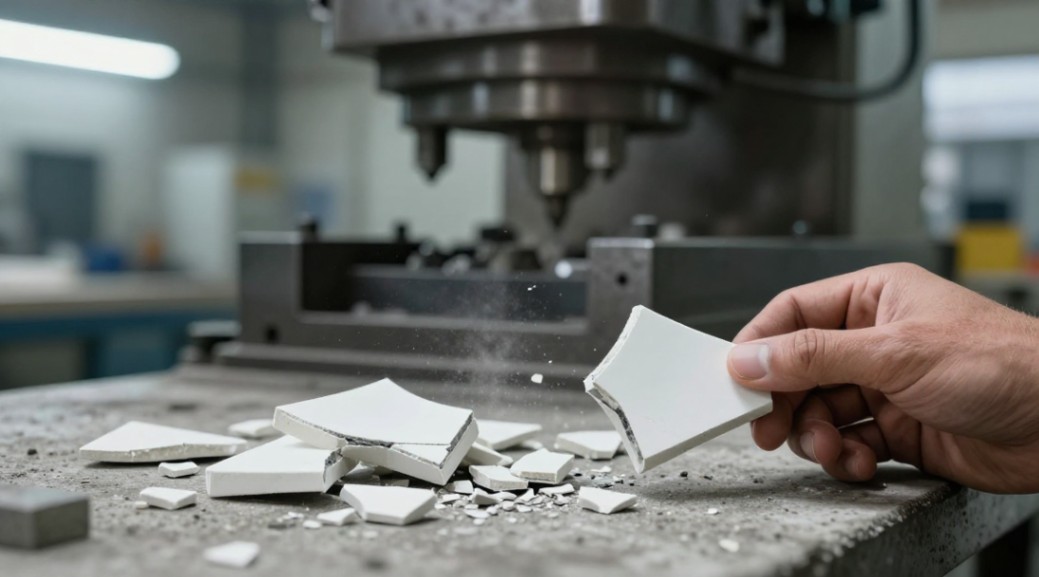
Twenty years ago, I walked into a client’s plant. They had just lost a $50,000 mold because their chosen ceramic insert shattered on day three. The engineer was frustrated. He had picked a material based on a datasheet number—hardness—without understanding the full picture. That failed insert was aluminum oxide ceramic. Beautifully hard, but brutally brittle under thermal shock. That day taught me a lesson I want to share with you: choosing a ceramic is about balancing trade-offs, not chasing one property.
Let’s walk through the real questions I hear from engineers every week. No marketing spin. Just what works and what doesn’t.
What Exactly Is Aluminum Oxide Ceramic?
Simply put, aluminum oxide ceramic (also called alumina ceramic or Al2O3) is a dense, crystalline material made mostly from alpha-alumina. It is one of the most popular technical ceramics on the planet. You can find it inside pump seals, spark plugs, hip implants, and sandpaper.
Its backbone is extreme hardness: a 9 on the Mohs scale. Only diamond is harder. It also resists heat very well and acts as an electrical insulator. But here is the catch: hardness does not equal toughness. It breaks before it bends.
How Does Aluminum Oxide Compare to Silicon Carbide Ceramic?
This is the most common comparison I get. Silicon carbide ceramic is stiffer and conducts heat much better than alumina. If your application runs hot and needs fast heat dissipation, silicon carbide wins. Think burner nozzles or high-temperature heat exchangers.
But alumina often beats silicon carbide on price and electrical insulation. For a mechanical seal in a water pump running at 80°C, alumina will work fine and cost half as much. For a seal in a 400°C molten salt pump, you need silicon carbide ceramic or reaction-sintered silicon carbide ceramics.
Quick logic rule: High speed + high temperature + thermal shock = choose silicon carbide. Moderate temperature + low cost + electrical insulation = choose alumina.
Aluminum Oxide vs. Zirconia: Which Is Tougher?
Zirconia (zirconium dioxide) is actually tougher than aluminum oxide ceramic. It can absorb more impact without cracking. That is why zirconia is popular in dental crowns and knife blades.
But alumina is harder. On a scratch test, alumina wins. On a drop test, zirconia wins. Here is my practical advice: if your part sees sudden mechanical loads or impacts, use zirconia. If your part sees steady abrasive wear, use alumina. Do not swap them without understanding your failure mode.
What About Aluminum Nitride and Boron Nitride Ceramics?
These materials serve different masters. Aluminum nitride ceramic is a thermal management superstar. It conducts heat almost as well as some metals, but stays electrically insulating. That makes it the top choice for LED substrates and power electronics.
Boron nitride ceramic is soft and machinable. It resists thermal shock incredibly well. If you need a crucible for melting molten metals, especially with a special coating for boron nitride ceramic crucibles, this is your material. But it is expensive and not very hard.
Do not confuse these with alumina. Each solves a specific problem. Alumina is the workhorse. Boron nitride is the specialist for non-wetting and easy release.
Is Aluminum Oxide Better Than Mullite or Quartz Ceramic?
Mullite ceramic has lower thermal expansion than alumina. That makes it more resistant to thermal shock. It is often used in kiln furniture. If your part goes from room temperature to 1000°C repeatedly, mullite may outlast alumina.
Quartz ceramic (fused silica) has almost zero thermal expansion. It can survive extreme thermal shock. But it is softer and weaker than alumina. Use quartz for radar domes or crucibles where thermal cycling is extreme and mechanical load is low.
Alumina sits in the middle: decent thermal shock resistance, high strength, high hardness. It is the safe choice for most industrial applications, but not the best for extreme cycling.
How Do Silicon Nitride and Boron Carbide Compare?
Silicon nitride ceramic is one of the toughest advanced ceramics. It resists cracking and handles thermal shock far better than alumina. It is expensive. Use it for high-stress bearings or engine parts where failure is catastrophic.
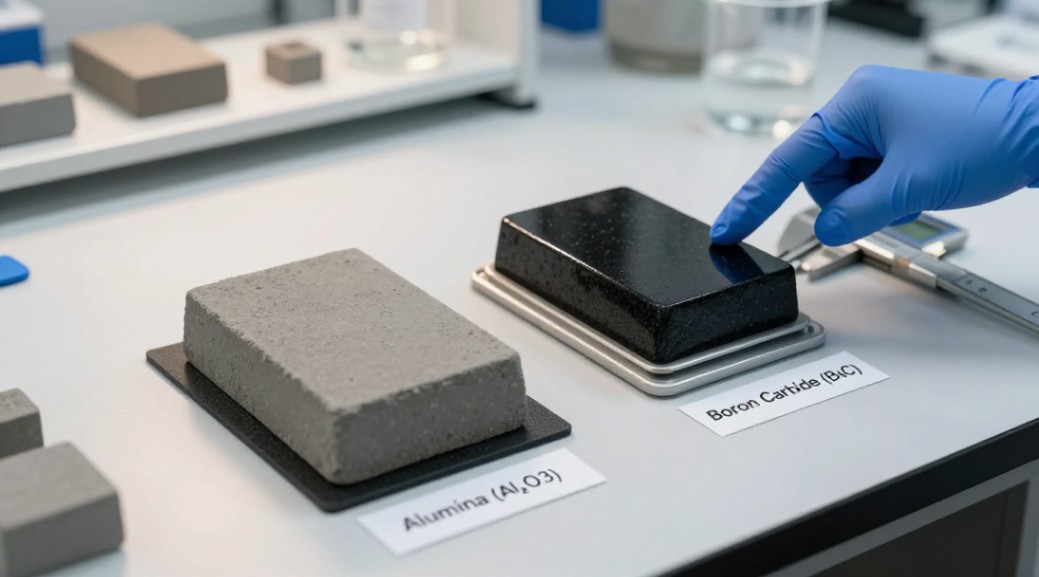
Boron carbide ceramic is extremely hard and light. It is used for armor plating and abrasive nozzles. It costs a lot. Alumina is a cheaper alternative for abrasion resistance, though heavier and slightly less hard.
Silicon carbide-bonded silicon nitride ceramics combine properties of both. They offer good oxidation resistance and mechanical strength at high temperatures. These are niche materials. Unless you work in advanced furnace components, you likely will not need them.
What Do the Different Purity Grades (85%, 96%, 99.5%, 99.9%) Mean for Me?
Purity dictates performance and price. Here is the logic:
- 85% alumina: Contains glassy phases. Lower cost, lower strength, lower corrosion resistance. Good for electrical insulators where mechanical load is low.
- 96% alumina: The standard workhorse. Good balance of strength, wear resistance, and cost. You see this in mechanical seals and valve seats.
- 99.5% alumina: High density, low porosity. Better for corrosive environments and high-temperature furnaces. Often used in semiconductor processing.
- 99.9% alumina: Very dense and pure. Best chemical resistance and highest mechanical strength. Use this for biomedical implants or ultra-pure applications. It costs much more.
Do not over-specify. If 96% works for your pump seal, buying 99.9% wastes money. Test the environment first.
Can Aluminum Oxide Be Machined or Formed Into Complex Shapes?
Yes, but with a cost. Aluminum oxide ceramic is very hard. You cannot cut it with standard steel tools. You need diamond grinding or laser machining.
Green machining (before firing) is possible. You can press or cast the powder into complex shapes, then sinter it. Common manufacturing methods include dry pressing for simple shapes, isostatic pressing for more uniform density, and slip casting for thin-walled parts.
After sintering, machining becomes slow and expensive. Plan your geometry to minimize post-sintering work. Add generous radii. Avoid sharp internal corners. The ceramic wants to crack at sharp edges.
When Does Aluminum Oxide Ceramic Fail?
It fails under three main conditions:
- Point loading: A small contact area with high force causes local fracture.
- Thermal shock: Rapid temperature changes create internal stress. Alumina does not like going from 500°C to 20°C in seconds.
- Sustained tensile stress: Ceramics are strong in compression, weak in tension. If your design pulls the material apart, it will crack.
If your application involves any of these, consider a tougher ceramic or a design change. Add a cushioning layer. Reduce the heating rate. Use a metal housing to preload the ceramic in compression.
Which Manufacturing Method Should I Choose for My Part?
Match the method to your volume and geometry:
- Dry pressing: Fast and cheap for simple shapes like discs or tubes. Good for high-volume production.
- Isostatic pressing: Uniform density, better for complex 3D shapes. More expensive than dry pressing.
- Slip casting: Ideal for thin-walled parts like crucibles or tubes. Slow, but can make shapes no other method can.
- Sintering: Always required after shaping. Controls final density and grain size.
Do not forget that pressureless sintered silicon carbide ceramics and recrystallized silicon carbide ceramics have their own sintering quirks, but for alumina, standard sintering in air works well.
What Are the Best Applications for Aluminum Oxide Ceramic?
Here is where I tell you to look at your own process. I have seen alumina succeed in:
- Cutting tools: For machining cast iron and hardened steels.
- Abrasives: Grinding wheels and sandpaper.
- Biomedical implants: Hip joints and dental brackets (high-purity grades).
- Electronic substrates: Where electrical insulation and heat spreading are needed.
- Mechanical seals and valve components: High wear resistance in pumps.
- High-temperature furnaces: Tubes and liners for up to 1750°C.
- Corrosive environments: Resists most acids and alkalis except hot concentrated alkalis.
If your part operates in one of these zones, alumina is a strong contender. If not, re-evaluate.
Your Next Step: Test, Don’t Guess
I cannot tell you exactly which ceramic to buy. But I can tell you this: get a small sample part made from aluminum oxide ceramic and test it in your real conditions. Monitor for cracks, wear, and chemical attack. Compare it with a sample from silicon carbide ceramic or zirconia.
Data sheets tell you half the story. Your operating environment tells you the rest. Start with 96% alumina for a low-cost trial. Move up or sideways based on what breaks first.
That engineer from twenty years ago? He now tests three ceramics in parallel before committing to production. He saves money and avoids downtime. You can do the same.
Take this information, talk to your materials supplier, and run a quick test. That is the only way to be sure. I am confident you will make the right choice.
Suppiler
Synthetic-chemical focus on the research and development, production and sales of ceramic products, serving the electronics, ceramics, chemical and other industries. Since its establishment in 2015, the company has been committed to providing customers with the best products and services, and has become a leader in the industry through continuous technological innovation and strict quality management.
Our products includes but not limited to Aluminum Nitride, Aluminum Oxide, Boron Carbide, Boron Nitride, Ceramic Crucible, ect. If you are interested in any type of these, please feel free to contact us.