Next-Generation Ceramics: Unlocking Superior Properties for Industry

How a Broken Hip Led Me to a Lifetime Study of White Ceramics
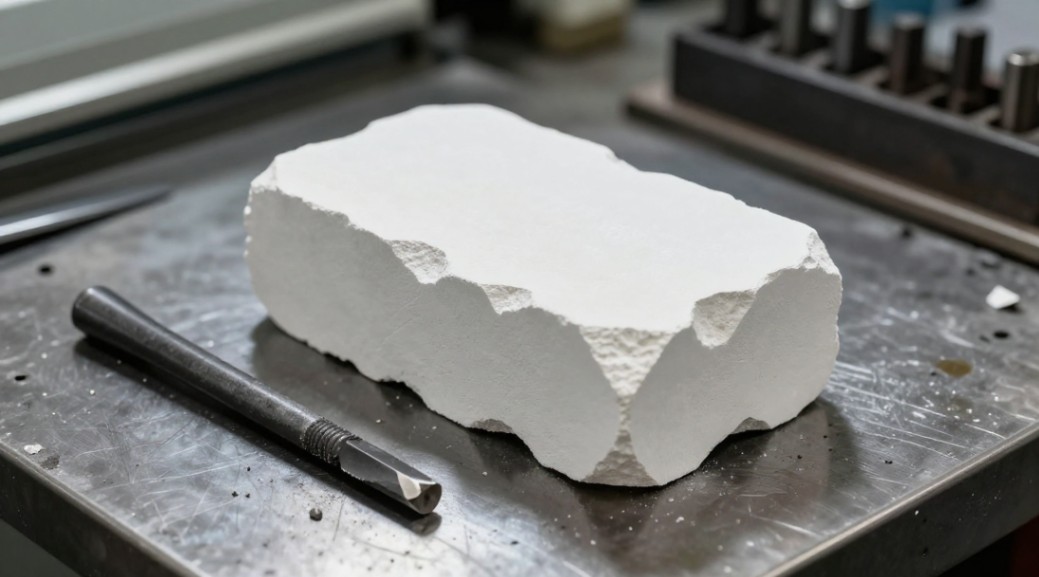
Twenty years ago, I watched a machining line lose three carbide tools in under an hour. The foreman threw a chunk of white material on my desk. “Try this,” he said. That chunk was aluminum oxide ceramic. It cut through the hardened steel like butter for the next eight hours. I never looked back. That experience taught me the raw, practical power of Al2O3. We will cover exactly what this material is, its strengths, its weaknesses, and where you should use it today.
1. What Is Aluminum Oxide Ceramic? The Basic Definition
Aluminum oxide ceramic is a technical ceramic made primarily from alpha-alumina (Al2O3). It is a polycrystalline material with a hexagonal crystal structure. Engineers call it a technical ceramic because it is engineered for specific properties, not just for decoration or simple structural use.
1.1. What is the chemical composition of Al2O3?
The material consists of aluminum cations and oxygen anions arranged in a strong ionic lattice. High-purity grades exceed 99.9% Al2O3. Standard grades range from 92% to 96% purity, containing minor additives like magnesia to control grain growth during sintering.
1.2. What is the crystalline structure?
The stable phase is alpha-alumina (corundum). It is the same crystal structure as natural sapphire and ruby. This structure gives the ceramic its extreme hardness and chemical stability. Other phases like gamma or theta exist but are metastable. They transform to alpha during high-temperature processing.
2. What Are the Critical Properties of Aluminum Oxide Ceramic?
These properties define where and how you use Al2O3. Let me be direct. It is not a universal solution. Know its limits.
2.1. Exceptional Hardness and Wear Resistance
Aluminum oxide ceramic ranks 9 on the Mohs scale. Diamond is a 10. This makes Al2O3 ideal for cutting tools, grinding media, and abrasives. It resists abrasive wear better than most metals and many other ceramics.
2.2. High Melting Point and Thermal Stability
The melting point is 2072°C. It retains strength at high temperatures where many ceramics degrade. However, it suffers from thermal shock. Rapid temperature changes can cause cracking. Silicon carbide ceramic and silicon nitride ceramic handle thermal shock better. Choose accordingly.
2.3. Electrical Insulation and Dielectric Strength
Al2O3 is an excellent electrical insulator. High-purity grades have volume resistivity above 1014 Ω·cm at room temperature. This is why it is the standard substrate material for thick-film and thin-film circuits. It also has high dielectric strength, making it suitable for high-voltage applications.
2.4. Chemical Inertness and Corrosion Resistance
Al2O3 resists most acids, alkalis, and solvents at room temperature. It does not oxidize further. It is chemically stable in aggressive environments. However, avoid strong hot caustic solutions. They will attack the grain boundaries.
3. How Is Aluminum Oxide Ceramic Manufactured?
You cannot just melt and cast Al2O3. The high melting point makes that impractical. Instead, we use powder processing and sintering.
3.1. Pressing and Dry Pressing
Alumina powder is mixed with binders, then pressed into a shape in a steel die. This is the cheapest method for simple geometries like rectangles, discs, and rods. Green parts are fragile. Handle with care before firing.
3.2. Sintering
The pressed part is heated to 1500-1700°C in a kiln. The powder particles fuse together. The part shrinks by 15-20%. This creates a dense, hard ceramic. Standard sintering yields some residual porosity (1-3%).
3.3. Hot Isostatic Pressing (HIP)
For maximum density and strength, use HIP. The green part or pre-sintered part is subjected to high pressure gas (argon) at elevated temperatures. This removes virtually all porosity. The result is near-theoretical density. HIPed alumina is stronger and more reliable for demanding applications like biomedical implants.
3.4. Post-Sintering Machining
Here is the hard truth. After sintering, Al2O3 is very hard. Conventional machining is nearly impossible. You must use diamond-grinding tools, ultrasonic machining, or laser cutting. This is expensive. Plan your shape before sintering as much as possible.
4. What Are the Key Applications of Aluminum Oxide Ceramic?
Aluminum oxide ceramic is everywhere. Let me list the most important sectors.
4.1. Industrial Wear Parts and Cutting Tools
Use Al2O3 for nozzles, valve seats, slurry pumps, and guide pins. It outlasts steel in abrasive environments by a factor of 10 or more. For cutting tools, Al2O3 inserts are excellent for high-speed finishing of hardened steels and cast irons. They tolerate high heat without softening.
4.2. Biomedical Implants (Hip Prostheses)
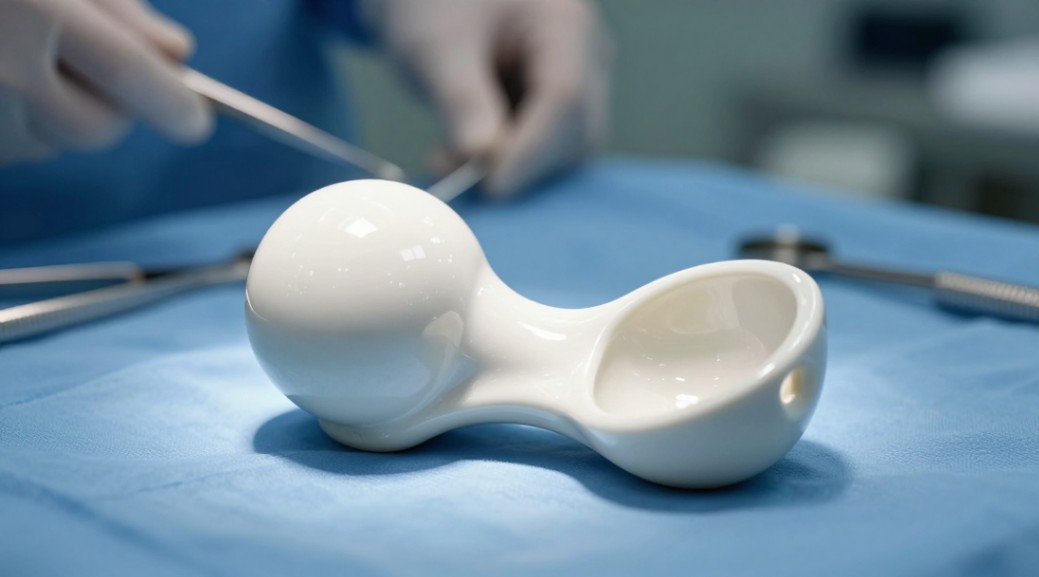
High-purity, dense alumina is biocompatible. It is used in hip replacement ball heads and acetabular cups. The wear rate is extremely low. This reduces the risk of osteolysis. Many patients retain these implants for over 20 years. Ceramic-on-ceramic bearings use aluminum oxide ceramic paired with itself.
4.3. Electronics: Substrates and Insulators
Thin-film and thick-film circuit boards use 96% or 99.5% alumina substrates. They provide excellent heat dissipation, electrical isolation, and a stable surface for printing conductive traces. Power modules use Al2O3 insulators.
4.4. Other Variants
Translucent alumina is a specialized grade. It is used for sodium-vapor lamp tubes. The material transmits light while containing the corrosive sodium vapor. Rare. But a perfect example of material engineering.
5. How Does Aluminum Oxide Ceramic Compare to Other Technical Ceramics?
You need to know what else is out there. Do not default to Al2O3 without considering alternatives.
5.1. Alumina vs. Zirconia
Aluminum nitride ceramic is different. Let us compare Al2O3 to zirconia (ZrO2). Zirconia is tougher. It has higher fracture toughness. Alumina is harder. Zirconia is better for impact resistance. Alumina is better for abrasion resistance. In biomedical implants, alumina wear debris is less reactive than zirconia debris. Many surgeons prefer alumina.
5.2. Alumina vs. Silicon Carbide
Silicon carbide ceramic (SiC) is harder and has higher thermal conductivity. It also resists thermal shock better. But SiC is more expensive to sinter. Reaction-sintered silicon carbide ceramics offer a cost-effective route for large parts. Use SiC for extreme wear and high temperatures. Use Al2O3 for cost-sensitive applications.
5.3. Alumina vs. Silicon Nitride and Boron Nitride
Silicon nitride ceramic has excellent fracture toughness and thermal shock resistance. It is the best choice for engine bearings and cutting tools for Nickel superalloys. Boron nitride ceramic is soft and machinable. It is used as a refractory and crucible material. A special coating for boron nitride ceramic crucibles often uses alumina to prevent oxidation. Boron carbide ceramic is extremely hard, used for armor. It is much more expensive than Al2O3.
5.4. Alumina vs. Mullite and Quartz
Mullite ceramic and quartz ceramic have lower melting points and lower strength than Al2O3. They are cheaper. Use them for high-temperature insulation where load-bearing is not critical.
6. What Are the Limitations of Aluminum Oxide Ceramic?
I must be honest about the weaknesses. Too many vendors ignore this.
6.1. Brittleness and Low Tensile Strength
Al2O3 is a brittle material. It has low tensile strength. It fails suddenly without plastic deformation. You must design parts to be in compression, not tension. Avoid sharp corners. They concentrate stress.
6.2. Difficulty in Machining Post-Sintering
As mentioned, diamond grinding is the only reliable method. This adds cost. For complex shapes, consider near-net-shape forming methods like injection molding or gelcasting.
6.3. Thermal Shock Sensitivity
Do not quench hot Al2O3 in water. It will crack. The thermal expansion coefficient is about 8 x 10⁻⁶ /K. Combined with high elastic modulus, this creates high stress during temperature changes. Use aluminum oxide ceramic only for controlled thermal environments, or combine it with a tougher secondary phase.
7. Real-World User Feedback on Alumina Ceramic
I monitor engineering forums closely. Many users on Reddit in r/Ceramics and r/Machinists share honest feedback. One user reported: “We switched from tungsten carbide to alumina for a slurry nozzle. We get 6x longer life. But we had to redesign the holder because the first one shattered during installation.” Another user in silicon carbide-bonded silicon nitride ceramics discussion noted: “For our kiln furniture, alumina is too sensitive to thermal cycling. We moved to SiSiC. It was worth the extra cost.” These stories confirm the trade-offs.
8. Final Recommendations: When to Choose Aluminum Oxide Ceramic
Here is my direct advice. Choose aluminum oxide ceramic when:
- You need high hardness and wear resistance.
- You operate in chemically corrosive environments.
- You need electrical insulation.
- Cost is a primary constraint over silicon carbide or zirconia.
Do NOT choose Al2O3 when:
- Your part experiences impact loading.
- Thermal shock is unavoidable.
- You need a complex shape that cannot be pressed or green-machined.
Test a small batch first. Verify the thermal and mechanical conditions in your specific process. The literature is strong, but your setup is unique. Start with a standard 96% grade. Move to high-purity 99.5% or HIPed material only if needed. That is the path I have seen work for two decades. It will work for you too.
Suppiler
Synthetic-chemical focus on the research and development, production and sales of ceramic products, serving the electronics, ceramics, chemical and other industries. Since its establishment in 2015, the company has been committed to providing customers with the best products and services, and has become a leader in the industry through continuous technological innovation and strict quality management.
Our products includes but not limited to Aluminum Nitride, Aluminum Oxide, Boron Carbide, Boron Nitride, Ceramic Crucible, ect. If you are interested in any type of these, please feel free to contact us.