Next-Generation Ceramics: Unlocking Superior Properties for Industry

Shocking Statistic: Over 40% of Aluminum Oxide Ceramic Failures Trace Back to These 3 Simple Errors
It’s a figure that keeps project managers awake. Not catastrophic material flaws, but preventable misapplications. Choosing aluminum oxide ceramic (Al2O3) is often the correct first step. Using it incorrectly is where the real danger lies. I’ve spent two decades in the trenches, and I’m here to steer you clear of the most expensive and frustrating traps.
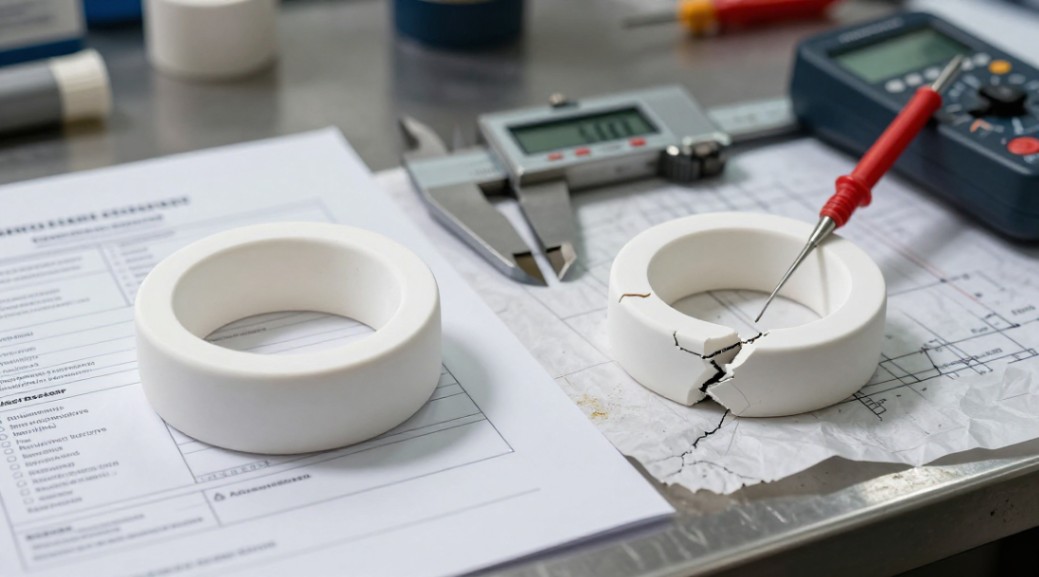
Your Top Alumina Ceramic Questions, Answered (And What You Should Never Do)
“Isn’t all Aluminum Oxide Ceramic basically the same?”
Never assume purity is just a number. Treating 96% and 99.9% alumina as interchangeable is the single biggest mistake. The 3-4% difference in purity isn’t just filler. It’s the primary controller of cost, thermal conductivity, and dielectric strength. For a high-voltage insulator, you need 99.5%+ purity. For a simple wear plate, 96% alumina ceramic does the job at half the price. Misunderstanding this wastes budget immediately.
“Can’t I just machine it like metal?”
Absolutely not. This mindset destroys tools and components. Aluminum oxide ceramic is harder than most steels. You must use diamond-grit tools. You must manage heat and stress with coolant. You must avoid sharp internal corners. Attempting to drill or mill it with standard carbide tools will result in catastrophic chipping, not a clean hole. The cost of a ruined ceramic blank far exceeds the cost of proper tooling.
“It’s so hard and brittle. How do I even join it?”
Forget welding or standard adhesives. You cannot fuse alumina ceramic like metal. Mechanical clamping with compliant interfaces is your first, best option. For permanent bonds, you need specialized glass frits or active metal brazing alloys designed specifically for ceramic-to-metal joining. Using a generic epoxy guarantees joint failure under thermal cycling or load.
“When should I NOT use Aluminum Oxide Ceramic?”
This is crucial. Avoid it for:
- Severe thermal shock. While good, materials like silicon nitride ceramic or Mullite ceramic handle rapid temperature swings better.
- Extreme wear with impact. For a hammer mill liner, silicon carbide ceramic or boron carbide ceramic offer superior fracture toughness.
- Very high thermal conductivity needs. Here, aluminum nitride ceramic is the specialist.
Choosing alumina for these roles invites premature failure. It’s a champion of wear, corrosion, and electrical insulation, not a universal solution.
The Logical Framework for Flawless Alumina Selection
Let’s build your selection process from the ground up, using pure logic. Forget confusing datasheets for a moment.
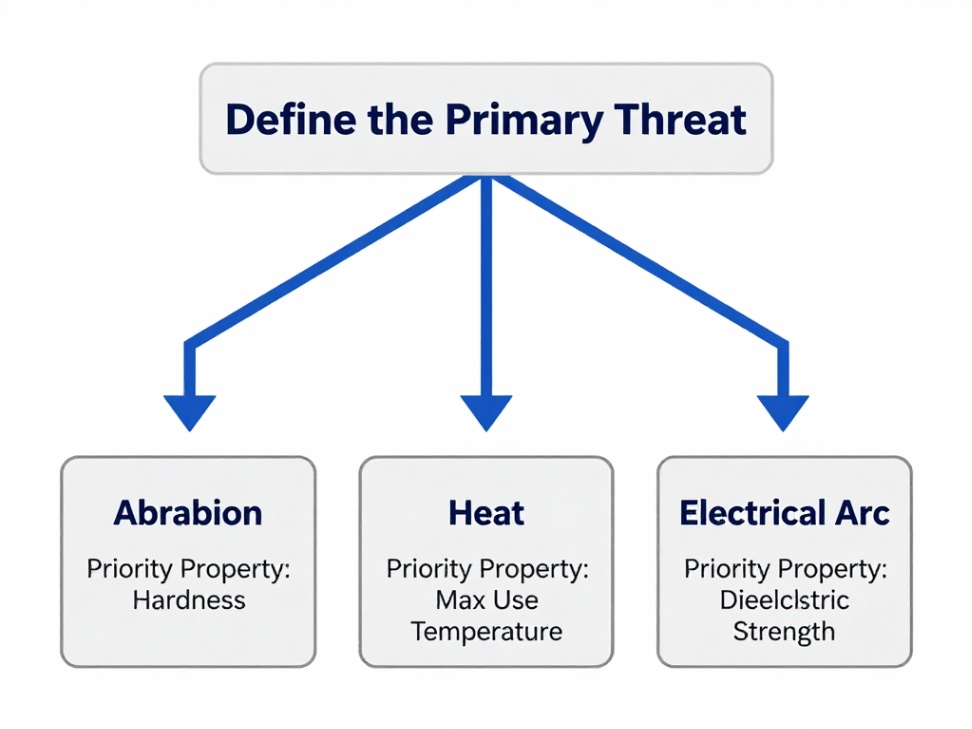
First, define the primary threat. Is it abrasion? Heat? Electrical arc? This determines your priority property: hardness, maximum use temperature, or dielectric strength.
Second, consider the environment. Is it wet, acidic, or caustic? Alumina’s chemical inertness is a major asset over metals. But if hydrofluoric acid or strong hot alkalis are present, you must reconsider.
Third, think about geometry and tolerances. A simple plate formed by dry pressing is cheap. A complex manifold requires injection molding or precise isostatic pressing, which increases cost. Tighter tolerances mean more expensive diamond grinding later.
Finally, source intelligently. A reputable supplier won’t just sell you a tube or substrate. They will ask about your application, pressure test limits, and surface finish needs. They might suggest a special coating for boron nitride ceramic crucibles if your process involves molten metal, knowing alumina might react. This consultative approach is your green flag.
Your Next Step: From Knowledge to Confident Specification
You now know the traps. You have a logical framework. The final step is translating this into a component that performs. This is where partnering with true expertise pays dividends.
A knowledgeable manufacturer will guide you through the maze of reaction-sintered silicon carbide ceramics versus pressureless sintered silicon carbide ceramics if wear is your main concern. They’ll explain why a silicon carbide-bonded silicon nitride ceramic might be the perfect compromise for your severe service application.
My advice? Before you finalize any drawing, have a design-for-manufacturability conversation with your ceramic fabricator. Discuss the forms—substrates, tubes, rods, plates—and the best process to get there. This one conversation can prevent months of delay and thousands in rework.
Start your next project with clarity. Use this guide as your checklist. Ask the hard questions. And when you’re ready to specify, choose a partner who speaks the language of properties, not just pieces.
Suppiler
Synthetic-chemical focus on the research and development, production and sales of ceramic products, serving the electronics, ceramics, chemical and other industries. Since its establishment in 2015, the company has been committed to providing customers with the best products and services, and has become a leader in the industry through continuous technological innovation and strict quality management.
Our products includes but not limited to Aluminum Nitride, Aluminum Oxide, Boron Carbide, Boron Nitride, Ceramic Crucible, ect. If you are interested in any type of these, please feel free to contact us.