Next-Generation Ceramics: Unlocking Superior Properties for Industry

From Hospital to Hard Drive: The Material You Never Notice
Years ago, a project engineer showed me a failed pump seal. The metal components were scarred and worn. The culprit? Abrasive slurry. We switched the seal face to an alumina ceramic disc. The next failure inspection was two years later. The ceramic surface looked nearly new. That was my first hands-on lesson in aluminum oxide ceramic’s silent, relentless durability. This material doesn’t make headlines; it just makes other components last.
Aluminum Oxide Ceramic: Your Questions, Answered Objectively
What exactly is aluminum oxide ceramic?
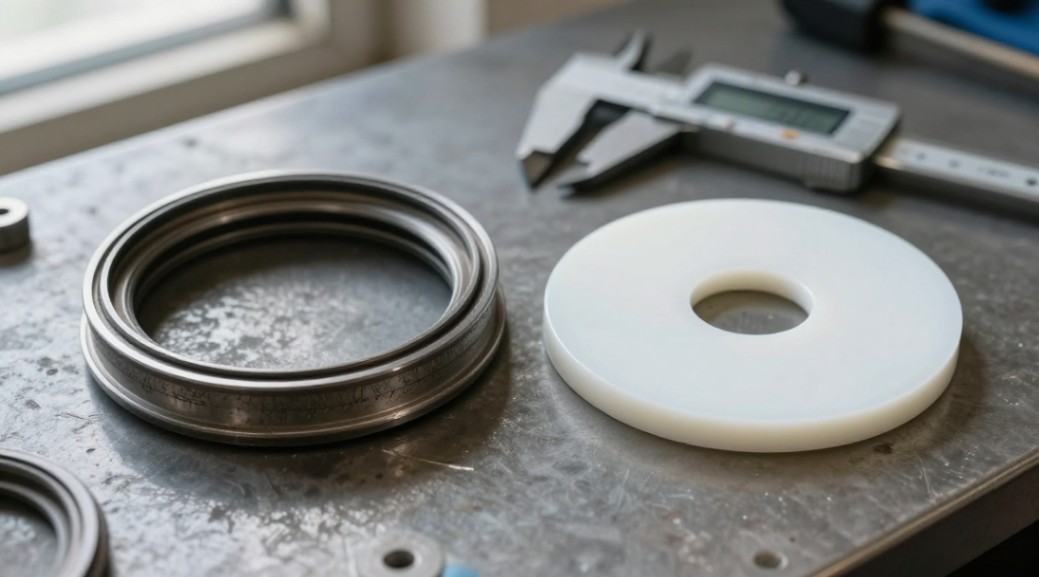
We call it alumina. It’s a manufactured ceramic where aluminum oxide (Al2O3) powder is sintered at high temperature into a dense, polycrystalline structure. Think of it as corundum—the mineral of ruby and sapphire—engineered for industry. Its properties are not a single number but a profile: exceptional hardness (near the top of the Mohs scale), excellent electrical insulation, and superb resistance to chemical attack. This combination is rare.
Where does aluminum oxide ceramic actually get used?
Its applications are a map of modern engineering challenges. In electronics, it forms the substrates for microchips and power modules because it insulates electricity but manages heat. In manufacturing, it lines pump seals and wears plates, outlasting steel in abrasive environments. Surgeons use it for hip joint bearings due to its biocompatibility and low wear. In automotive sensors, it protects delicate electronics from harsh exhaust gases. Many users on technical forums like Reddit highlight its reliability in ‘set-and-forget’ applications where metal would degrade.
How does its hardness compare to other engineering ceramics?
Hardness isn’t a single contest. Aluminum oxide ceramic is extremely hard, but other materials specialize. For pure abrasive wear, silicon carbide ceramic is harder and a better choice. For high-temperature thermal shock, silicon nitride ceramic excels. Alumina’s advantage is its balance. It offers high hardness plus extreme chemical inertness and electrical resistivity at a commercially viable cost. It’s the versatile workhorse, not the niche specialist.
What are the key grades and why does purity matter?
Two grades dominate: 96% and 99.5% (or higher) alumina. The difference is the glassy silicate phase binding the alumina crystals. The 96% grade is tougher and easier to machine post-sintering. The 99.5% grade trades some of that fracture toughness for higher hardness, better wear resistance, and superior performance at high temperatures and in corrosive environments. Choose 96% for complex, load-bearing components; choose 99.5%+ for severe wear, high purity, or extreme environments.
Is aluminum oxide ceramic a good thermal conductor?
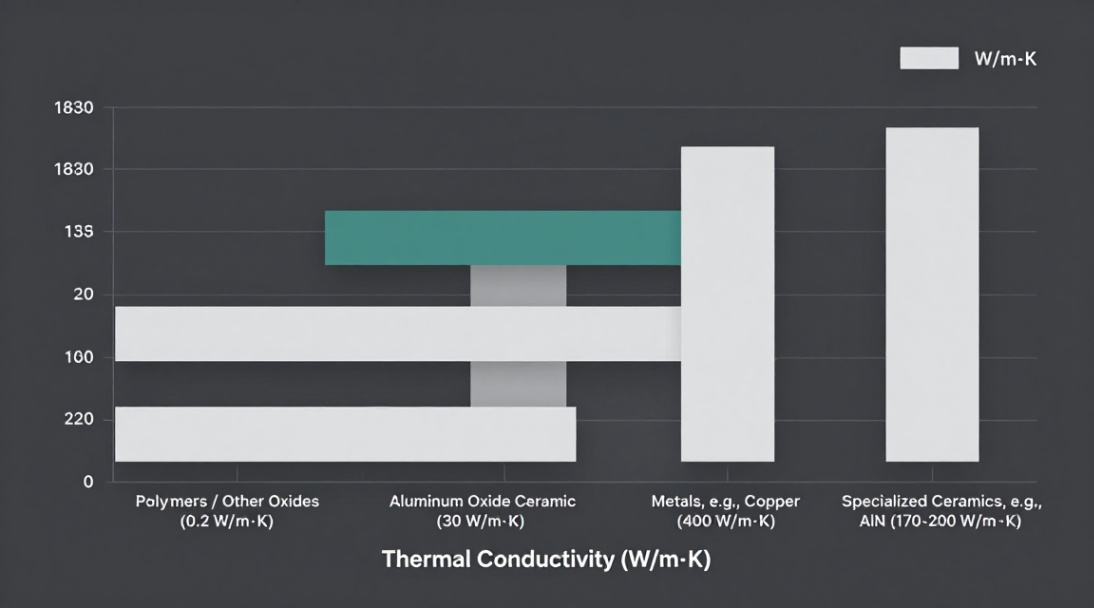
This is a common point of confusion. Compared to polymers or other oxides, yes, it conducts heat reasonably well. Compared to metals or specialized ceramics like aluminum nitride ceramic, no. Its thermal conductivity is moderate. This makes it ideal for electrical insulators that need to dissipate some heat, but not for applications requiring ultimate heat sinking. For that, you look to aluminum nitride or boron nitride ceramic.
What are its main limitations?
Every material has trade-offs. First, alumina is brittle. It has high compressive strength but low tensile strength and limited tolerance for impact or uneven loading. Design must accommodate this. Second, while hard, it is not the hardest. For severe abrasion, silicon carbide ceramic or boron carbide ceramic will last longer. Third, its thermal shock resistance is good but not exceptional; sudden, massive temperature swings can cause cracking.
How is it typically manufactured into parts?
The most common process is uniaxial pressing of powder in a die, followed by sintering. For complex shapes, techniques like injection molding or isostatic pressing are used. After sintering, machining is difficult and expensive, requiring diamond grinding tools. The mantra is ‘net-shape or near-net-shape.’ Get the forming process right to minimize costly finishing.
The Future of an Industrial Staple
The trend is not about replacing alumina, but enhancing it. We see more composite structures, like alumina matrices reinforced with other phases. Advanced coating technologies are being developed for boron nitride ceramic crucibles to extend life. The drive is for even tighter property control, allowing engineers to push the limits of temperature, wear, and corrosion in sectors like semiconductor manufacturing and green energy. Aluminum oxide ceramic has been the backbone for decades. Its evolution will focus on becoming smarter, more reliable, and more precisely tailored to the relentless demands of advanced industry.
For engineers and specifiers, the task is clear. Move beyond the data sheet. Understand the full property profile and its trade-offs against materials like zirconia, silicon nitride, and silicon carbide. Match the material’s inherent strengths—its balanced triad of hardness, insulation, and chemical stability—to the true root cause of failure in your application. That is how you leverage a foundational material to build something enduring.
Suppiler
Synthetic-chemical focus on the research and development, production and sales of ceramic products, serving the electronics, ceramics, chemical and other industries. Since its establishment in 2015, the company has been committed to providing customers with the best products and services, and has become a leader in the industry through continuous technological innovation and strict quality management.
Our products includes but not limited to Aluminum Nitride, Aluminum Oxide, Boron Carbide, Boron Nitride, Ceramic Crucible, ect. If you are interested in any type of these, please feel free to contact us.