Next-Generation Ceramics: Unlocking Superior Properties for Industry

The Hard Truth About Your Ceramic Choice
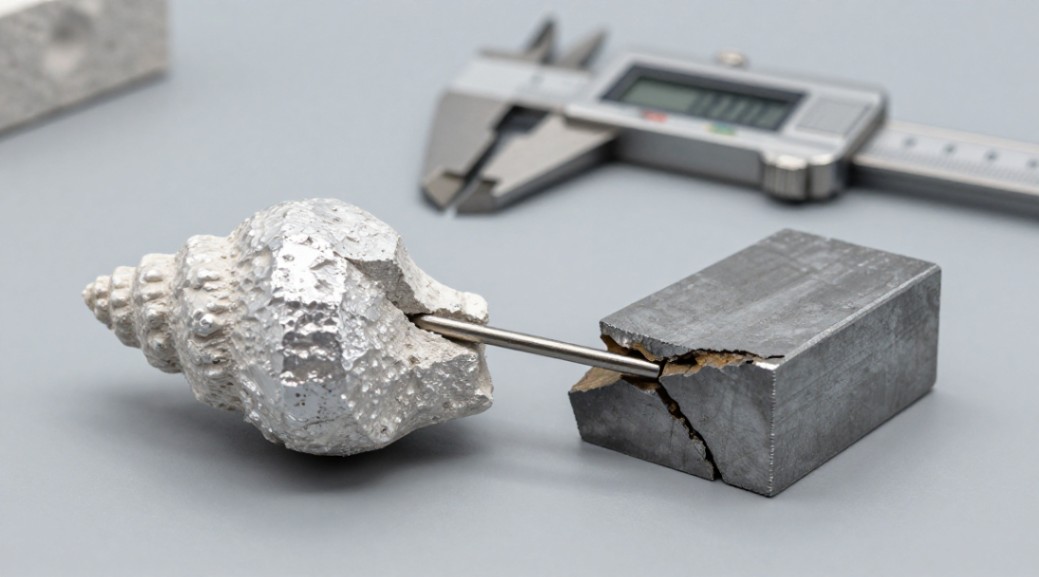
Despite being one of the hardest materials on Earth, second only to diamonds and boron carbide, aluminum oxide ceramic has a critical flaw that dictates its entire application range: its fracture toughness is roughly one-tenth that of structural steel. This single statistic frames every design decision involving this material. Engineers don’t choose alumina for what it can do; they choose it for what it cannot do under the right conditions. It cannot conduct electricity. It cannot deform plastically. It cannot corrode in most environments. This guide provides an objective, technical comparison against its primary competitors to inform your material selection.
What is Aluminum Oxide Ceramic?
Aluminium oxide ceramic, or alumina (Al2O3), is a polycrystalline ceramic formed by sintering aluminium oxide powder at high temperatures. Its properties are a direct function of purity and microstructure. Common grades range from 85% to 99.9% alumina, with mechanical, thermal, and electrical properties scaling accordingly. The manufacturing process-whether pressureless sintered, hot-pressed, or isostatically pressed-controls grain size, density, and final performance. It is the workhorse of technical ceramics due to its balanced properties and cost-effectiveness.
Aluminum Oxide Ceramic vs. Key Competitors: A Head-to-Head Analysis
Selecting a ceramic requires trade-offs. Below is a comparative analysis of aluminum oxide ceramic against other advanced ceramic materials. Many users on engineering forums like Reddit and specialized communities emphasize that no single ceramic is ‘best’; the optimal choice always depends on the primary stressor in the application.
Aluminum Oxide vs. Silicon Nitride (Si3N4)
Silicon nitride excels where thermal shock and high fracture toughness are paramount.
- Alumina Advantages: Superior hardness (Hv ~1600-2000) for wear resistance, excellent dielectric strength, significantly lower cost, wider range of standard parts.
- Silicon Nitride Advantages: Far higher fracture toughness (~2x that of alumina), lower thermal expansion coefficient for better thermal shock resistance, higher strength at elevated temperatures, excellent fatigue resistance.
Decision Path: Use aluminum oxide ceramic for electrical insulators, wear plates, and labware where cost and hardness are key. Switch to silicon nitride ceramic for high-performance ball bearings, turbine blades, or metal-cutting inserts subject to severe thermal and mechanical fatigue.
Aluminum Oxide vs. Silicon Carbide (SiC)
Silicon carbide is the leader in extreme thermal conductivity and environmental stability.
- Alumina Advantages: Better electrical insulation, easier to machine in the green state, lower thermal conductivity (useful for thermal break applications), generally more chemically inert in strong acids.
- Silicon Carbide Advantages: Exceptional thermal conductivity (3-5x that of alumina), retains strength at temperatures above 1400°C, superior oxidation resistance, harder and more wear-resistant in many cases. Note subtypes like reaction-sintered silicon carbide ceramics or recrystallized silicon carbide ceramics for specific property profiles.
Decision Path: Use aluminium oxide ceramic for high-temperature electrical feedthroughs or burner nozzles requiring electrical isolation. Opt for silicon carbide ceramic for semiconductor wafer processing hardware, high-heat-flux heat exchanger tubes, or lightweight armor solutions where thermal management is critical.
Aluminum Oxide vs. Zirconia (ZrO2)
Zirconia’s claim to fame is its transformational toughness, a property alumina fundamentally lacks.
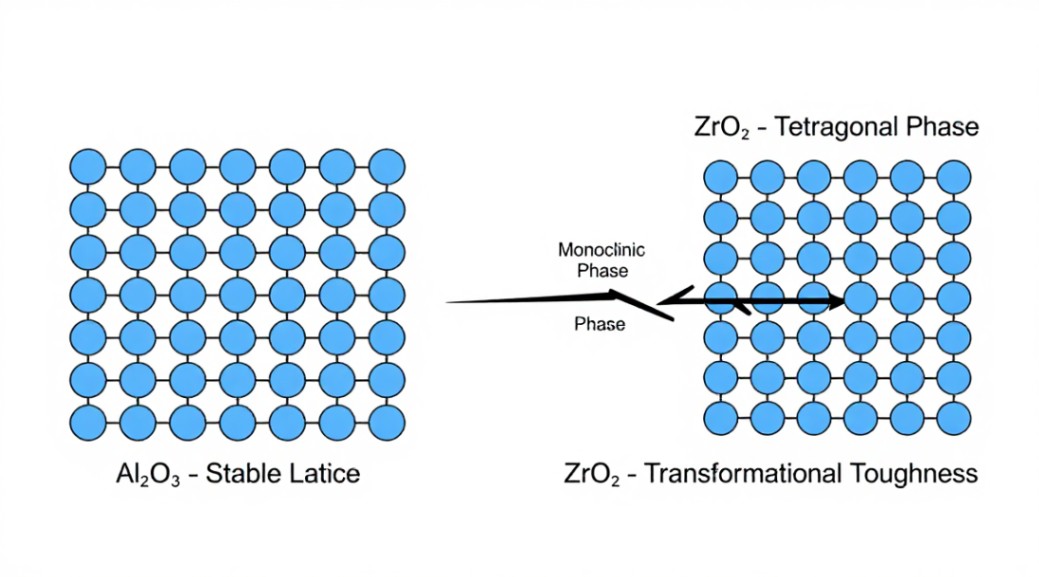
- Alumina Advantages: Higher hardness and wear resistance (zirconia is more prone to abrasion in some conditions), better thermal conductivity, no susceptibility to low-temperature degradation (aging) like some zirconia grades, lower cost.
- Zirconia Advantages: Dramatically higher fracture toughness (often 3-4x that of alumina), the highest flexural strength of common oxide ceramics, low thermal conductivity (for thermal barrier applications), can be polished to a very smooth finish.
Decision Path: Use aluminum oxide ceramic for grinding media, thread guides, and sealing surfaces where abrasion resistance is the top priority. Choose zirconia for mechanical components like pump seals, knife blades, biomedical implants, or any application requiring high strength and resistance to crack propagation.
Core Strengths and Inherent Limitations of Alumina
Primary Advantages
Alumina’s value proposition is built on a combination of properties not found in metals or polymers.
- Extreme Hardness & Wear Resistance: Mohs 9 hardness ensures longevity in abrasive environments. It outperforms hardened tool steels.
- Excellent Electrical Insulation: High dielectric strength and volume resistivity make it ideal for substrates, insulators, and spark plugs.
- High-Temperature Stability: A melting point of 2072°C allows continuous use up to 1600°C in air, depending on purity.
- Chemical Inertness: Resists attack from most acids, alkalis, and molten metals, with exceptions like hydrofluoric acid and concentrated phosphoric acid.
Key Limitations and Design Constraints
Designing with alumina requires respecting its brittle nature.
- Brittleness (Low Fracture Toughness): It is susceptible to catastrophic failure from impact, point loading, or internal flaws. Designs must avoid tensile stress concentrations.
- Low Thermal Shock Resistance: Its moderate thermal conductivity and relatively high thermal expansion coefficient make it vulnerable to rapid temperature changes compared to silicon nitride or silicon carbide.
- Processing Difficulty: Once sintered, it can only be machined with diamond tools, which is expensive. Complex shapes must be formed during the powder pressing stage.
Application Selection: Matching Grade to Function
Purity dictates price and performance. Your selection should follow this logic:
- 85-90% Alumina: For general industrial wear parts, insulators, and tiles where cost is a major driver and ultra-high purity is not required.
- 96-99% Alumina: The sweet spot for most technical applications. Offers excellent mechanical strength, wear resistance, and electrical properties. Used for seal faces, pump components, cutting tool inserts, and electronic substrates.
- 99.5-99.9% Alumina: High-purity grades for demanding semiconductor, medical (bioceramics), and high-temperature furnace applications. They offer superior corrosion resistance, higher operating temperatures, and better dielectric properties. For the most extreme chemical environments, a special coating for boron nitride ceramic crucibles may be considered, but alumina often provides a more cost-effective bulk solution.
The Future: Composites and Advanced Formulations
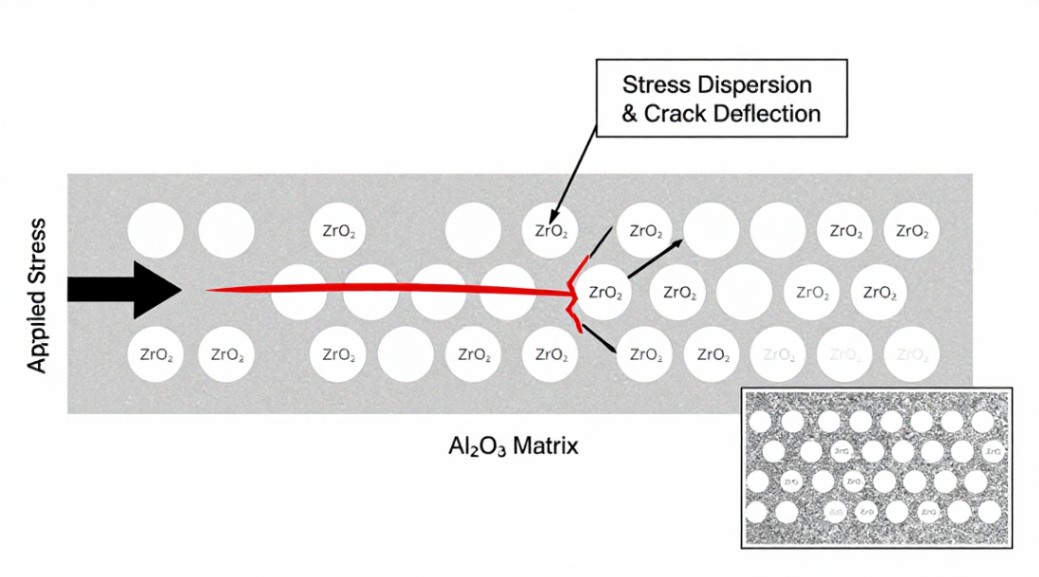
To overcome brittleness, the industry is developing advanced composites. Zirconia-toughened alumina (ZTA) is the most significant evolution. By dispersing fine zirconia particles within the alumina matrix, engineers significantly increase fracture toughness and strength while retaining much of alumina’s hardness and cost advantage. For applications requiring even greater thermal performance, materials like silicon carbide-bonded silicon nitride ceramics push the boundaries, but alumina and its composites remain the cornerstone for a vast array of industrial, electronic, and medical components due to their proven reliability and favorable economics.
Making Your Final Material Decision
Your selection process must start with a clear hierarchy of requirements. Rank these factors: operating temperature, mechanical load type (wear vs. impact), electrical needs, chemical environment, and budget. If hardness and electrical insulation are your top two priorities, aluminum oxide ceramic is likely your default candidate. If thermal shock or extreme toughness leads your list, immediately evaluate silicon nitride or zirconia. Always request material property data sheets from your supplier for the specific grade and process they offer. Finally, consider prototyping with a low-cost alumina grade to validate the design concept before committing to a more expensive engineered ceramic. The right choice is not about finding the ‘best’ material, but the most appropriate one for your specific set of constraints.
Suppiler
Synthetic-chemical focus on the research and development, production and sales of ceramic products, serving the electronics, ceramics, chemical and other industries. Since its establishment in 2015, the company has been committed to providing customers with the best products and services, and has become a leader in the industry through continuous technological innovation and strict quality management.
Our products includes but not limited to Aluminum Nitride, Aluminum Oxide, Boron Carbide, Boron Nitride, Ceramic Crucible, ect. If you are interested in any type of these, please feel free to contact us.