Next-Generation Ceramics: Unlocking Superior Properties for Industry

The Transparency Trap
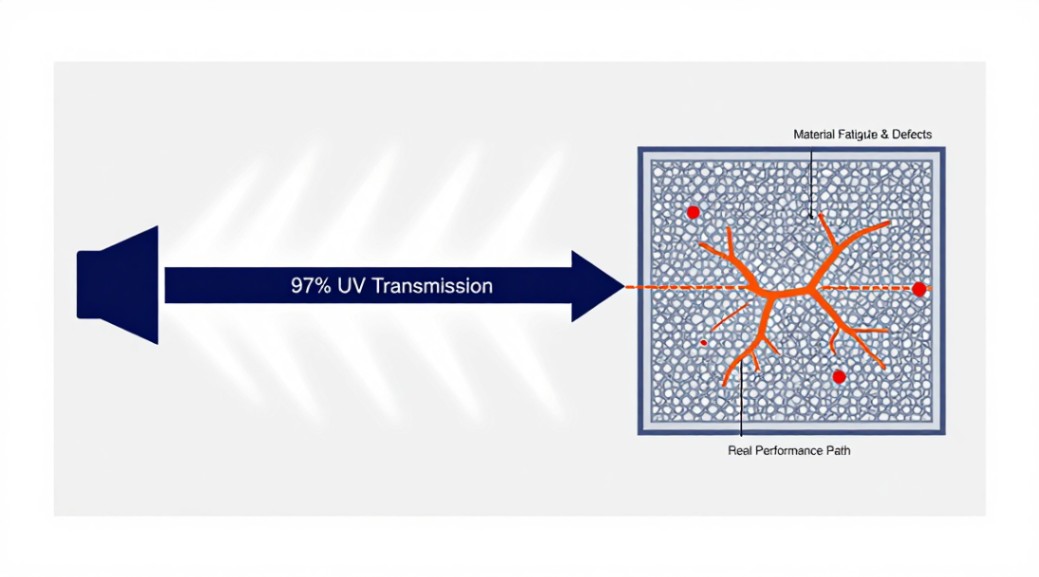
Spec sheets scream about 97% ultraviolet transmission. Engineers chase that number like a holy grail. But here’s the brutal truth: focusing solely on peak transmission guarantees premature system failure in demanding applications. The real battle for performance, stability, and lamp life isn’t fought at the peak; it’s fought at the edges, in the microscopic structure of the material itself. I’ve watched multi-million dollar UV curing lines falter and disinfection reactors underperform because teams selected the wrong envelope material based on a single, glossy data point. The industry’s obsession with that percentage is a dangerous oversimplification. The material that consistently wins isn’t glass. It’s a ceramic. Specifically, fused quartz ceramic tubes for ultraviolet lighting represent not an incremental improvement, but a fundamental shift in philosophy from a disposable component to a system-defining engine.
Material Science: The Invisible Foundation
To understand why fused quartz dominates, you must first reject the common label of ‘glass.’ Traditional soda-lime or borosilicate glass is an amorphous solid with inherent impurities and structural inconsistencies. Fused quartz, specifically the high-purity synthetic variety used for fused quartz ceramic tubes for ultraviolet lighting, is something else entirely. It’s a single-component system: silicon dioxide in its most pristine, disordered crystalline form. This purity is non-negotiable. Metallic impurities like iron or sodium act as UV sponges, absorbing critical 254nm UVC or 365nm UVA photons before they ever leave the lamp. More critically, these impurities and structural flaws create nucleation points for devitrification-the slow, insidious crystallization of the material under intense heat and UV flux. Once devitrification begins, the tube clouds. Transmission plummets. Your 97% claim is now a 50% reality. The lamp overheats. Electrodes fail. The system dies. Quartz’s purity provides innate resistance to this process, a resilience that defines long-term UV output stability and lamp life.
Thermal and Chemical Warfare
Consider the operating environment. A UV disinfection and sterilization lamp runs hot, often cycled from cold to 900°C in seconds. It’s bombarded by 185nm vacuum UV photons that rip apart oxygen molecules to create ozone, a potent oxidizer. A traditional glass tube would shatter from thermal shock resistance failure or etch away from chemical attack. Fused quartz laughs at this abuse. Its coefficient of thermal expansion is vanishingly small. You can take a red-hot tube and quench it in water without fracture. This isn’t a party trick; it’s the key to survival in real-world systems with power surges, cooling failures, and wash-down cycles. Furthermore, its chemical inertness is nearly absolute. Ozone, water vapor, aggressive process chemicals-they glance off the surface. The tube remains optically clean, maintaining light transmission consistency where other materials fog and corrode. This inertness directly enables ozone generation compatibility for advanced oxidation processes, a capability most alternative materials simply cannot offer.
Application Alchemy: Where Theory Meets Plasma
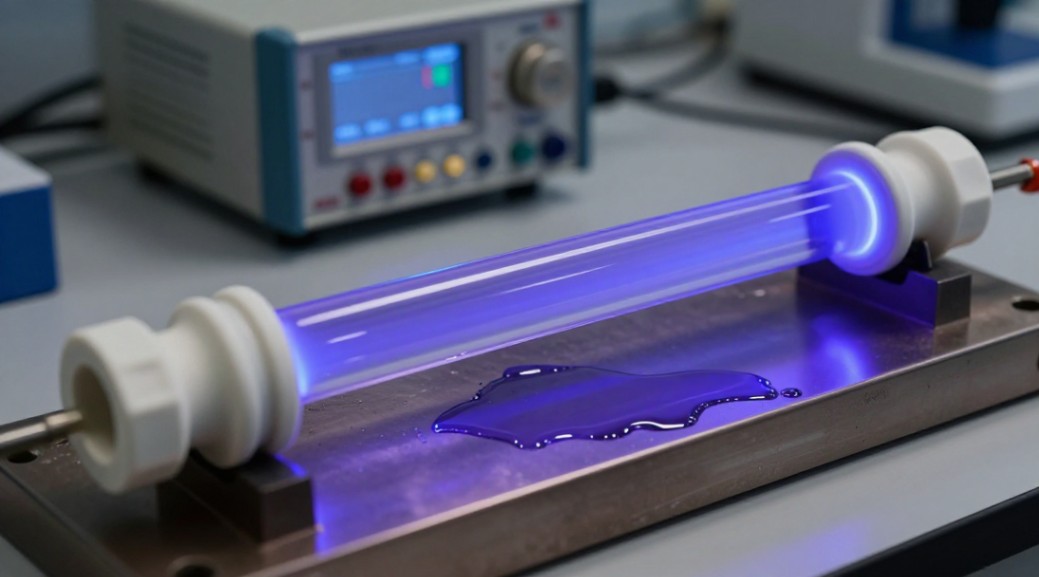
This material superiority translates directly into application dominance. In UV curing and photochemical processes, consistency is currency. A 10% drop in UV irradiance means incomplete cross-linking, sticky coatings, and rejected product batches. The spectral purity of fused quartz ensures that the mercury emission lines-254nm, 313nm, 365nm-are delivered with fidelity. There’s no spectral shifting, no unwanted absorption bands. You get the photons you paid for, hour after hour. The geometry of the tube becomes a critical design consideration. Wall thickness must balance mechanical strength against UV absorption. A thicker wall might survive handling, but it steals precious milliwatts of output. The best manufacturers optimize this for the target wavelength, understanding that UVC requires a different approach than UVA. Surface quality, often overlooked, is paramount. Microscopic pits or streaks become scattering centers, diffusing the beam and reducing effective intensity on the target. Precision control of the molten quartz during forming is what separates a premium tube from a commodity one.
The Integration Imperative
A tube does not operate in isolation. Its integration with lamp electrodes and sealing technologies is a marriage of metallurgy and ceramics. The seals-typically molybdenum foil-must form a vacuum-tight, thermally matched bond with the quartz. This is a ceramic-to-metal seal of incredible precision. A poor seal outgasses, contaminating the lamp fill gas and killing performance. It’s the primary failure point in cheap UV lamps. The fused quartz ceramic tube provides the stable, expansion-matched platform for this seal to endure thousands of thermal cycles. This is why lamp manufacturers willing to guarantee 10,000+ hours of life specify synthetic fused quartz; it’s the only material that allows them to stake their reputation on longevity.
Selection: Moving Beyond the Datasheet
So, how do you choose? Throw away the simplistic comparison to alternative materials like soda-lime glass. That’s a comparison between a race car and a bicycle. The real conversation is about grade and purpose. For high-irradiance UVC germicidal systems, you need the highest purity, ozone-resistant grade. For lower-temperature UVA curing, a slightly less exotic grade may suffice, but never compromise on devitrification resistance. Ask your supplier not just for initial transmission, but for data on transmission after 1,000 hours at operating temperature. Inquire about hydroxyl (OH) content, as it affects infrared absorption and thermal profile. Demand to know the origin of the raw quartz sand. Your selection guidelines for specific lighting system requirements must be ruthless. If your process involves temperature cycling, chemical exposure, or requires absolute spectral stability, the answer is already clear. The upfront cost of a true fused quartz ceramic tube for ultraviolet lighting is higher. The total cost of ownership-factoring in lamp replacements, system downtime, and product spoilage-is dramatically lower. This is the counterintuitive perspective the industry often misses: the most expensive component upfront is the cheapest one over time. Stop buying a tube. Start specifying a system core.
Suppiler
Synthetic-chemical focus on the research and development, production and sales of ceramic products, serving the electronics, ceramics, chemical and other industries. Since its establishment in 2015, the company has been committed to providing customers with the best products and services, and has become a leader in the industry through continuous technological innovation and strict quality management.
Our products includes but not limited to Aluminum Nitride, Aluminum Oxide, Boron Carbide, Boron Nitride, Ceramic Crucible, ect. If you are interested in any type of these, please feel free to contact us.