Next-Generation Ceramics: Unlocking Superior Properties for Industry

The Million-Dollar Crack
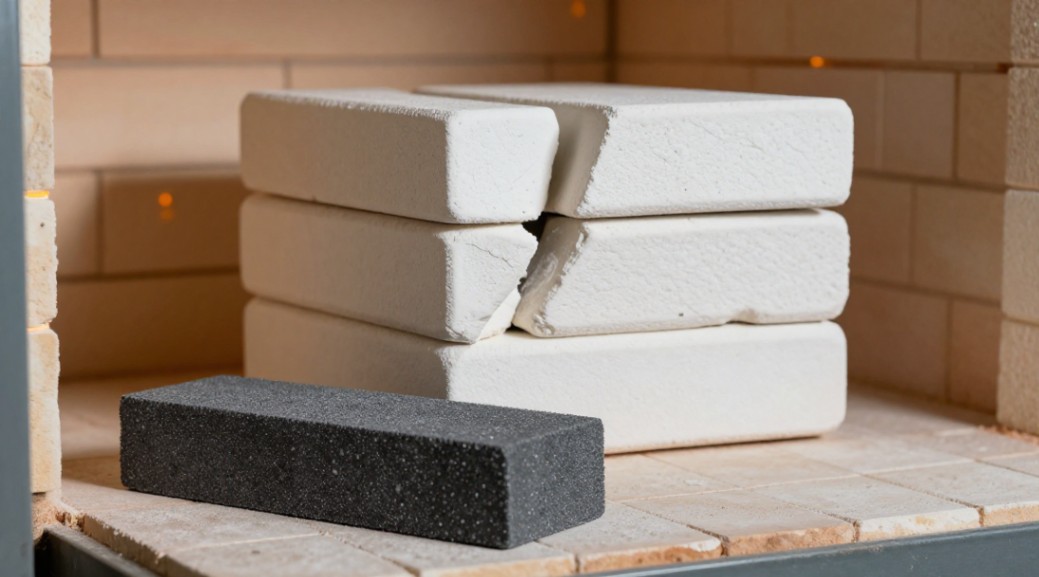
A client called me last year, frantic. They were firing high-value technical ceramics, and their yield had plummeted. We traced it to a subtle, costly warping in their sagger stack. The culprit? Standard alumina setters buckling under the thermal load. This isn’t a rare glitch; it’s a silent profit killer happening in kilns worldwide. The wrong sagger setter doesn’t just fail; it fails expensively, taking your product and your schedule down with it. Let’s talk about the only material engineered to stop this: recrystallized silicon carbide for sagger setters.
Why Your Current Sagger Setters Are a Liability
You wouldn’t use a paper plate under a cast-iron skillet. So why trust clay-bonded SiC or alumina to support tons of saggers at 1600°C? This is the first mistake. These materials creep and deform. The result isn’t immediate collapse. It’s a slow drift, a barely perceptible sag that misaligns your entire stack. Gas flow is disrupted. Hot spots develop. Your firing profile becomes a guess. Product consistency dies.
The Recrystallized Silicon Carbide Difference: Physics, Not Hype
Recrystallized silicon carbide (R-SiC) is a different beast. It’s not “bonded” with a clay phase that softens. Instead, SiC grains are fused directly to each other at extreme temperatures, creating a pure, monolithic ceramic skeleton. This structure delivers brutal, non-negotiable advantages for sagger setters:
- Near-Zero Creep: Minimal deformation at temperatures up to 1650°C in air. Your stack stays plumb, cycle after cycle.
- Thermal Shock Immunity: Forget pre-heating protocols. You can load R-SiC setters cold into a hot kiln. They won’t crack.
- Mechanical Crushing Strength: It carries the load, period. High porosity (typically 15-20%) doesn’t mean weakness; it means optimized thermal insulation and lightweight handling.
Critical Warnings: What NOT to Do with R-SiC Sagger Setters
Buying R-SiC setters isn’t a magic bullet. It’s a strategic tool. Misuse it, and you’ll blame the material for your own error.
1. Never Compromise on Kiln Atmosphere Compatibility
R-SiC oxidizes slowly above 1350°C in air, forming a protective silica skin. This is fine. But in reducing or carbon-rich atmospheres, that skin can’t form. Unprotected SiC will react and degrade rapidly. I’ve seen forums where users complain about short life, not realizing their nitrogen/hydrogen atmosphere was the killer. Match the material to your furnace environment. For strongly reducing conditions, a siliconized silicon carbide (SiSiC) coating may be mandatory.
2. Never Assume All Sizes Are Created Equal
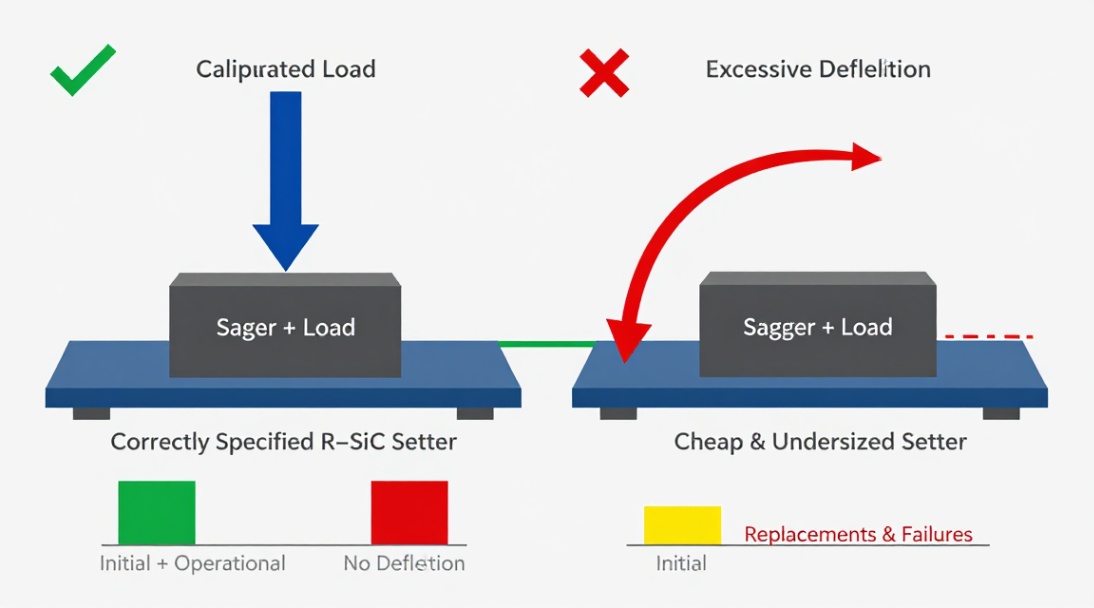
The biggest cost saving isn’t the setter’s price tag; it’s the total cost of ownership. A cheap, undersized R-SiC tile will deflect under load, defeating its purpose. You must calculate the span-to-thickness ratio based on your maximum sagger weight and operating temperature. A rule of thumb fails here. This is an engineering calculation. Skimp on thickness to save 10% on material, and you’ll pay 200% more in failed firings and replacements.
3. Never Neglect Handling and Stacking Discipline
R-SiC is hard and brittle. Dropping a corner on a metal kiln car will chip it. These chips become stress concentrators. Stacking must be precise. The setter must sit flat on the kiln furniture below. Any rocking or point loading invites catastrophic failure. This isn’t clay. It doesn’t forgive sloppiness.
The Real ROI: Justifying the Premium
Yes, recrystallized silicon carbide for sagger setters costs more upfront than clay-bonded SiC or alumina. Let’s do the math you’re not seeing. A standard setter might last 50 cycles before replacement due to deformation. R-SiC regularly exceeds 500 cycles. Factor in the yield loss from one warped-firing batch. Factor in the downtime for replacement. Suddenly, the 5x initial price premium translates to a 10x reduction in cost-per-cycle. This is the calculus that separates profitable operations from struggling ones.
User Feedback: The Proof is in the Stack
You don’t have to take my word for it. The shift is happening on the ground. In industrial ceramic communities, the sentiment is clear. One production manager on a specialty ceramics forum noted, “Switching to R-SiC setters was the single biggest factor in eliminating sag-related scrap. We run them in our tunnel kiln for over a year now with no measurable wear.” Another shared, “We finally stopped the quarterly ‘sagger shuffle’ to replace bent setters. Our thermal profiles are now predictable.” This is the real-world proof: stability and predictability.
Your Next Move is Critical
Continuing with subpar sagger setters is a choice-a choice to accept hidden costs, unpredictable yields, and unnecessary furnace downtime. Recrystallized silicon carbide for sagger setters isn’t an expense; it’s an investment in process control and profitability. The data is unambiguous. The user testimony is consistent.
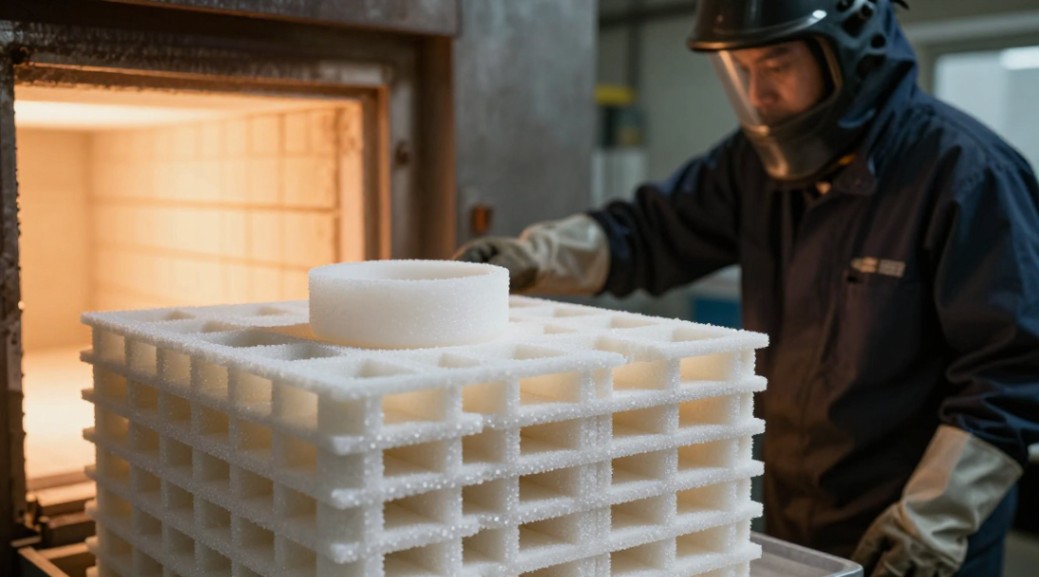
Stop guessing. Start engineering. The next step is to audit your current setters. Measure their deflection. Count their cycles. Then, consult with a specialist who understands both the material science and the brutal realities of kiln operation. Specify R-SiC setters with the correct dimensions and properties for your exact application. The upgrade path is clear. Your only mistake now would be waiting.
Suppiler
Synthetic-chemical focus on the research and development, production and sales of ceramic products, serving the electronics, ceramics, chemical and other industries. Since its establishment in 2015, the company has been committed to providing customers with the best products and services, and has become a leader in the industry through continuous technological innovation and strict quality management.
Our products includes but not limited to Aluminum Nitride, Aluminum Oxide, Boron Carbide, Boron Nitride, Ceramic Crucible, ect. If you are interested in any type of these, please feel free to contact us.