Next-Generation Ceramics: Unlocking Superior Properties for Industry

What is Aluminum Oxide Ceramic? The Workhorse Material Defined
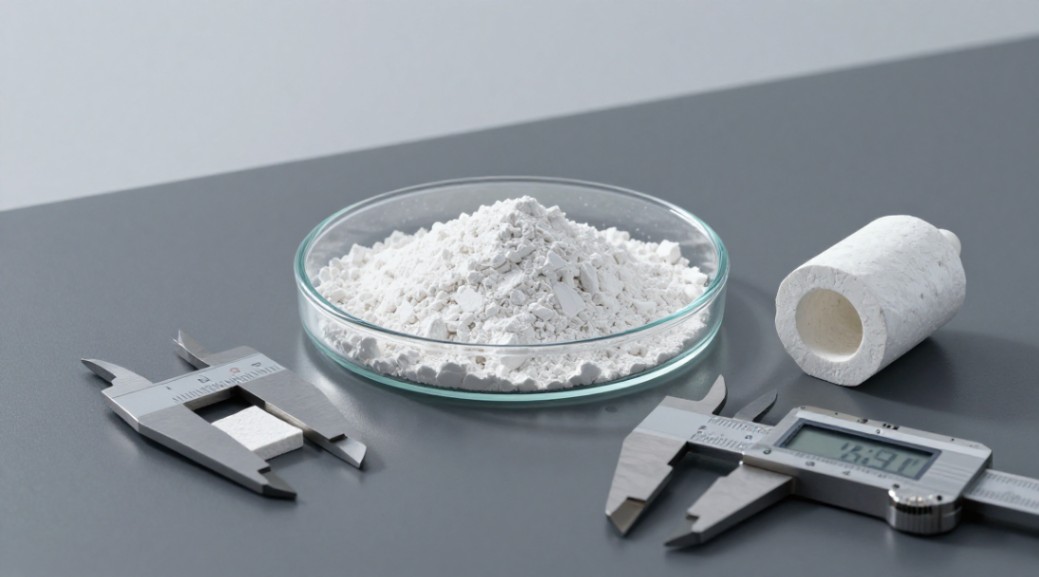
Aluminum oxide ceramic, commonly known as alumina, is a high-performance technical ceramic prized for its excellent combination of mechanical, thermal, and electrical properties. As one of the most versatile and widely used advanced ceramics, it serves as a benchmark against which many other materials, like silicon nitride ceramic or zirconia, are often compared. Its fundamental structure consists of aluminum and oxygen (Al2O3), engineered through precise manufacturing to achieve remarkable performance.
Core Material Characteristics
Think of alumina as a reliable, multi-talented engineer. It doesn’t always hold the single top spot in every category, but its balanced profile makes it the first choice for countless applications.
- Extreme Hardness & Wear Resistance: It resists abrasion exceptionally well, making it ideal for components like seal faces, wear plates, and cutting tools.
- Superior Electrical Insulation: Alumina offers high dielectric strength and volume resistivity, even at elevated temperatures.
- Excellent Chemical Inertness: It resists attack from most acids, alkalis, and molten metals, outperforming many metals and polymers in corrosive environments.
- High-Temperature Stability: It maintains its shape and strength at temperatures exceeding 1500°C, a key differentiator from polymer-based materials.
- Good Biocompatibility: High-purity grades are inert in the body, enabling use in orthopedic and dental implants.
A Step-by-Step Guide to Choosing the Right Aluminum Oxide Ceramic
Selecting the correct grade is not a guessing game. Follow this systematic approach to ensure your project’s success and avoid costly material failures.
Step 1: Diagnose Your Primary Performance Requirement
First, identify the single most critical challenge your component must overcome. This focus will narrow your options immediately. For instance, a furnace liner prioritizes thermal stability, while a semiconductor wafer handler demands supreme surface finish and purity.
- Is wear or abrasion the main issue? Focus on high-density, fine-grained alumina grades. Their tightly packed structure provides the best resistance to material loss.
- Is electrical insulation at high voltage or frequency the key? Prioritize high-purity (99.5%+ Al2O3) formulations. Trace impurities can degrade dielectric performance. For extreme high-frequency needs, you might later compare it to low-loss options like aluminum nitride ceramic.
- Is chemical corrosion from acids or molten salts the threat? Ensure the selected grade has a very low glassy phase content. This phase can be vulnerable to chemical attack.
- Is extreme temperature (>1600°C) or thermal shock the challenge? While alumina is good, materials like silicon carbide ceramic or mullite ceramic may offer superior thermal conductivity or shock resistance for the most severe cases.
Step 2: Understand the Manufacturing Process & Finishing
The “how” of making the part is as important as the “what.” The production method dictates geometry, tolerances, and cost. Many leading suppliers, like those offering specialized silicon carbide-bonded silicon nitride ceramics, use similar advanced processes.
- Sintering: The most common method. Powder is pressed into a ‘green’ body and fired at high temperature. It’s cost-effective for high volumes but has some geometric constraints.
- Finishing: As-sintered alumina often requires grinding, lapping, or polishing with diamond tools to achieve tight tolerances and specific surface characteristics, such as the Ra value needed for a sealing surface.
- Advanced Forms: For complex, thin-walled, or near-net-shape parts, techniques like injection molding or slip casting are used. These methods often require expertise comparable to producing reaction-sintered silicon carbide ceramics.
Step 3: Compare with Alternative Materials
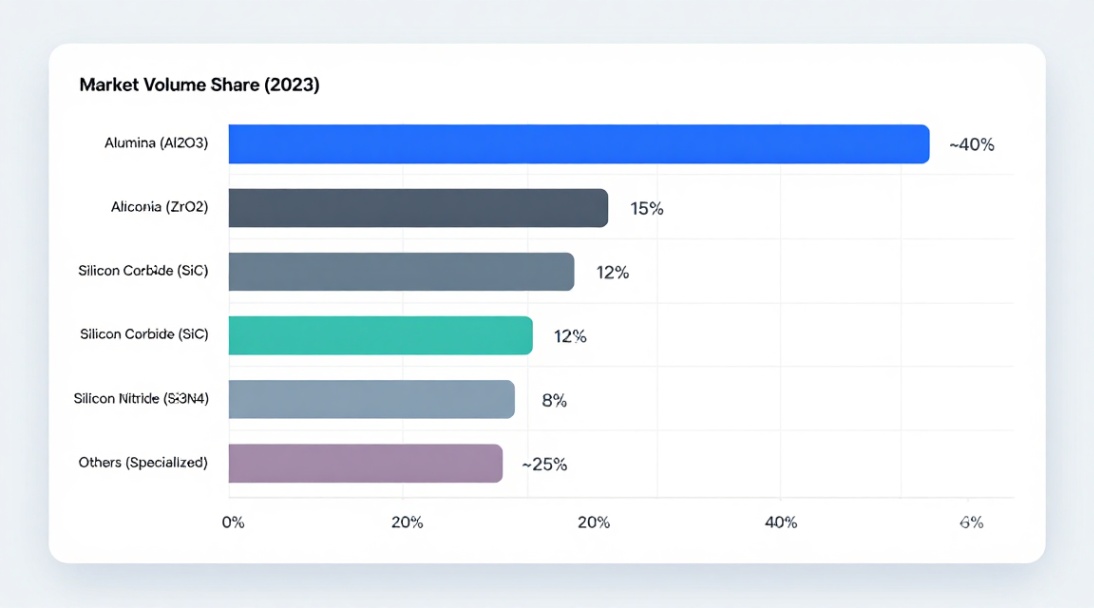
Alumina is fantastic, but it’s not a universal solution. Be objective about where its limits lie compared to other engineering ceramics. According to a 2023 market analysis by Ceramic Industry Magazine, alumina holds a ~40% volume share, but specialized ceramics are growing faster for niche applications.
- vs. Zirconia (ZrO2): Zirconia is significantly tougher and stronger, making it better for applications involving high impact or tensile stress. However, alumina typically offers better wear resistance and is more cost-effective.
- vs. Silicon Carbide (SiC): Silicon carbide ceramic has much higher thermal conductivity and superior resistance to extreme temperatures and thermal shock. Alumina is a better electrical insulator. For furnace components, you’d compare standard alumina against recrystallized silicon carbide ceramics.
- vs. Boron Carbide (B4C): Boron carbide ceramic is harder and used for armor. It’s a specialist material, whereas alumina is a generalist.
Where Aluminum Oxide Ceramic Excels: Key Applications
Putting theory into practice, here are the areas where alumina consistently delivers exceptional results.
Industrial & Mechanical Wear Parts
This is alumina’s home turf. Its hardness makes it the default choice for components subject to sliding, grinding, or abrasive particle flow. Dr. Lena Schmidt, a tribology expert, notes: “For non-lubricated or marginally lubricated wear environments, a high-grade alumina often outlasts tool steel by a factor of ten or more.”
- Pump seals and bushings
- Wire drawing cones and guides
- Textile thread guides
- Valve seats and balls
Electronics & Electrical Systems
Alumina’s electrical insulation properties are legendary in the industry. It’s the backbone of many electronic components.
- Circuit substrates and chip carriers
- High-voltage insulators and spark plugs
- Sensor housings in harsh environments
- Crucibles for crystal growth (though for certain high-purity metals, a special coating for boron nitride ceramic crucibles might be preferred)
Medical & Laboratory Equipment
Its biocompatibility and chemical inertness make it indispensable in sensitive fields.
- Orthopedic hip and knee implant bearings
- Dental brackets and implants
- Labware: crucibles, tubes, and quartz ceramic alternatives for specific chemistries
- Prosthetic limbs and surgical tools
Moving Forward with Your Project
You now have a robust framework for evaluating aluminum oxide ceramic. The next step is to engage with a technical specialist. Reputable manufacturers don’t just sell a product; they partner to solve problems. Bring your specific requirements—load, temperature, environment, and lifetime goals—to their engineers. They can help you navigate the final details, from choosing between a 96% and a 99.8% alumina grade to specifying the optimal surface finish. Start a conversation with a trusted supplier today to translate this knowledge into a successful, high-performance component.
Suppiler
Synthetic-chemical focus on the research and development, production and sales of ceramic products, serving the electronics, ceramics, chemical and other industries. Since its establishment in 2015, the company has been committed to providing customers with the best products and services, and has become a leader in the industry through continuous technological innovation and strict quality management.
Our products includes but not limited to Aluminum Nitride, Aluminum Oxide, Boron Carbide, Boron Nitride, Ceramic Crucible, ect. If you are interested in any type of these, please feel free to contact us.