Next-Generation Ceramics: Unlocking Superior Properties for Industry

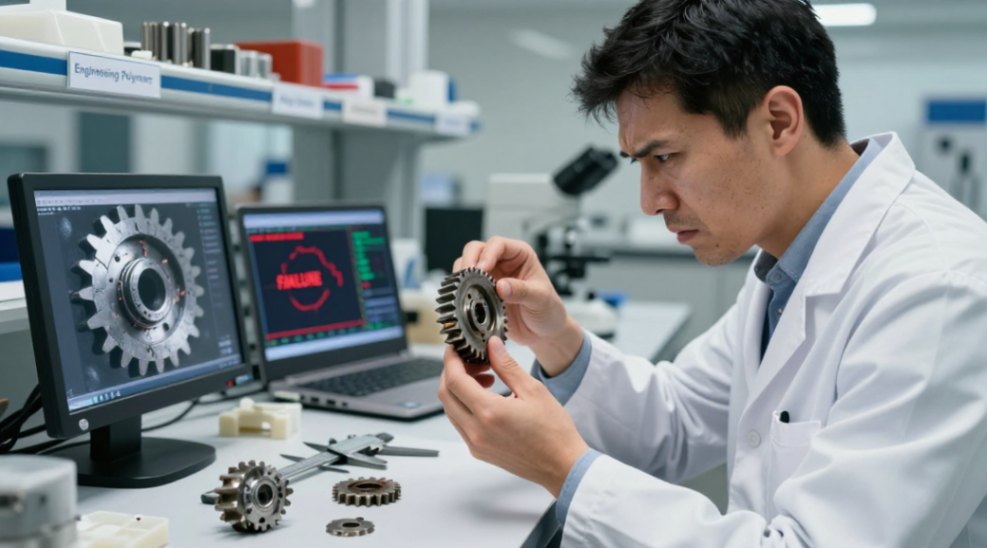
We’ve all been there, haven’t we? You’re staring at a component design that’s repeatedly failing. It’s too hot, wearing out in weeks instead of years, or it’s shorting out under load. You’ve tried the latest engineering polymers and premium steels, but they’re just not cutting it. The frustration is real. You start hearing whispers: ‘Have you considered ceramic?’ And then you’re thrown into a sea of acronyms: Al2O3, Si3N4, ZrO2, SiC. It’s overwhelming. If this sounds familiar, take a breath. Let’s walk through this together. We’re going to strip away the marketing gloss and talk about the workhorse of the advanced ceramics world: aluminium oxide ceramic.
The Foundation: What You’re Actually Working With
Aluminum oxide ceramic, known to us in the lab as Al2O3, isn’t a mysterious new material. It’s the scientific refinement of common alumina into a dense, engineered solid. Forget the image of a delicate porcelain cup. This is a material forged for battle. At its core, its performance comes from a brutally strong ionic bond between aluminum and oxygen atoms. This atomic-level architecture dictates everything that follows. The primary metric we obsess over isn’t a dimension or a colour-it’s purity. Is it 96% alumina? 99.5%? 99.9%? That single-digit percentage difference isn’t a rounding error; it’s the defining line between a commodity component and a mission-critical performer. That’s where our conversation truly begins.
A Pragmatic Look at Performance: Where It Shines and Where It Stumbles
Let’s get straight to the data points that matter on a drawing. Hardness and wear resistance are aluminum oxide ceramic’s headline acts. It will outlast most metals in abrasive environments by an order of magnitude, making it the default choice for slurry pump seals, wear plates, and thread guides. Its thermal stability is robust-it won’t melt or creep until you’re north of 1700°C, and it retains its strength remarkably well as the temperature climbs. Electrically, it’s an excellent insulator with high dielectric strength, which is why it’s the undisputed king of the electronics industry for substrates and insulators. This combination is potent, but it’s not magic. The trade-off is brittleness. It lacks the fracture toughness of its more expensive cousins, zirconia or silicon nitride. You design with alumina by managing stress concentrations, avoiding impact loads, and understanding that it’s a material that demands respect for its limits. Compared to a carbide like boron carbide, it’s less hard and less expensive. Versus a silicon carbide ceramic, it’s a better electrical insulator but may not handle thermal shock as gracefully.
The Making of a Workhorse: From Powder to Part
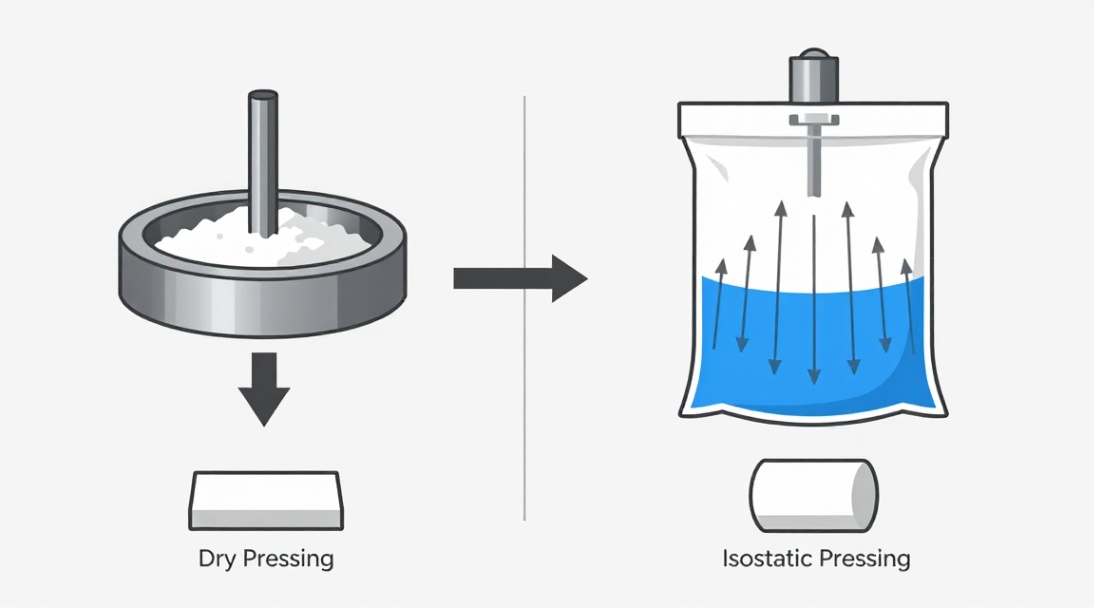
The journey from a fine white powder to a precise, rock-solid component is a lesson in controlled pressure and heat. The most common path is dry pressing, a fast, economical method akin to powder metallurgy, perfect for high volumes of simple shapes like tiles or substrates. When geometry gets complex or absolute density is non-negotiable, we turn to isostatic pressing, which applies uniform pressure from all directions, eliminating density gradients. For the most intricate parts-think a lab crucible with thin walls and a complex lip-ceramic injection molding is the answer, borrowing techniques from the plastics industry. The final, transformative step is sintering. We fire the ‘green’ part in a kiln at temperatures that make steel melt look tame. The particles fuse, the part shrinks predictably, and that loose aggregate of powder becomes a monolithic, fully dense engineering ceramic. Machining it afterwards is a specialist’s game, requiring diamond-tipped tools and a deep understanding of its brittle nature.
Its Place in the World: From Circuit Boards to Artificial Joints
You’ll find aluminum oxide ceramic working quietly everywhere. Flip open any electronic device, and the tiny green chip carrier is likely an alumina substrate, providing a cool, stable, insulating home for sensitive circuits. In a harsh chemical plant, alumina seals and bushings are shrugging off corrosive fluids that would eat metal for breakfast. On the factory floor, it’s the insert in a cutting tool, shearing through cast iron. The biomedical field trusts its biocompatibility for hip joint bearings and dental implants, where its hardness ensures decades of low-wear performance. Its abrasive nature is even harnessed directly, as the material for grinding media, sandpaper grit, and polishing compounds. For a furnace, an alumina tube or a crucible lined with a special coating for boron nitride ceramic crucibles might be the only thing that can contain a molten reactive metal. It’s a material defined by utility.
The Honest Conclusion: Is It Right for Your Problem?
So, when do we specify aluminum oxide ceramic? It’s the logical first choice when you need excellent wear and corrosion resistance at a reasonable cost, when high-temperature stability under 1600°C is required, or when electrical insulation is paramount. It’s not the answer for high-impact applications or where extreme thermal shock is a daily occurrence-that’s the domain of silicon nitride or certain silicon carbide ceramics. The decision tree is clear. Consider the stress state, the thermal cycle, the chemical environment, and your budget. Alumina often wins on a pure performance-per-dollar basis for a vast swath of industrial challenges. It’s not the flashiest ceramic, but it’s the one that gets the job done, year after relentless year. That reliability is its greatest strength.
Your Next Step: Move Beyond Theory
Reading about properties is one thing. Holding the material in your hand, testing it in your specific environment, is another. If the data points we’ve discussed resonate with the failure mode on your desk, it’s time to move from analysis to action. Don’t just spec a generic ‘ceramic.’ The devil is in the details-the purity, the grain structure, the finishing process. We strongly recommend you engage with a specialist manufacturer who can provide material samples and engineering support. Request test coupons. Run them in your application. Feel the difference a truly engineered aluminum oxide ceramic component can make. The solution to your wear, heat, or insulation problem is likely sitting on a shelf, waiting for you to specify it correctly. Start that conversation today.
Suppiler
Synthetic-chemical focus on the research and development, production and sales of ceramic products, serving the electronics, ceramics, chemical and other industries. Since its establishment in 2015, the company has been committed to providing customers with the best products and services, and has become a leader in the industry through continuous technological innovation and strict quality management.
Our products includes but not limited to Aluminum Nitride, Aluminum Oxide, Boron Carbide, Boron Nitride, Ceramic Crucible, ect. If you are interested in any type of these, please feel free to contact us.