Next-Generation Ceramics: Unlocking Superior Properties for Industry

What Exactly is Recrystallized Silicon Carbide Kiln Furniture Shelf Life?
The shelf life of recrystallized silicon carbide (R-SiC) kiln furniture refers to its total usable service period before oxidation, creep, or thermal fatigue necessitates replacement. It’s not a single number. Shelf life depends entirely on how you use it. We measure this lifespan in years of service or numbers of successful high-temperature firing cycles. Let’s define our terms first.
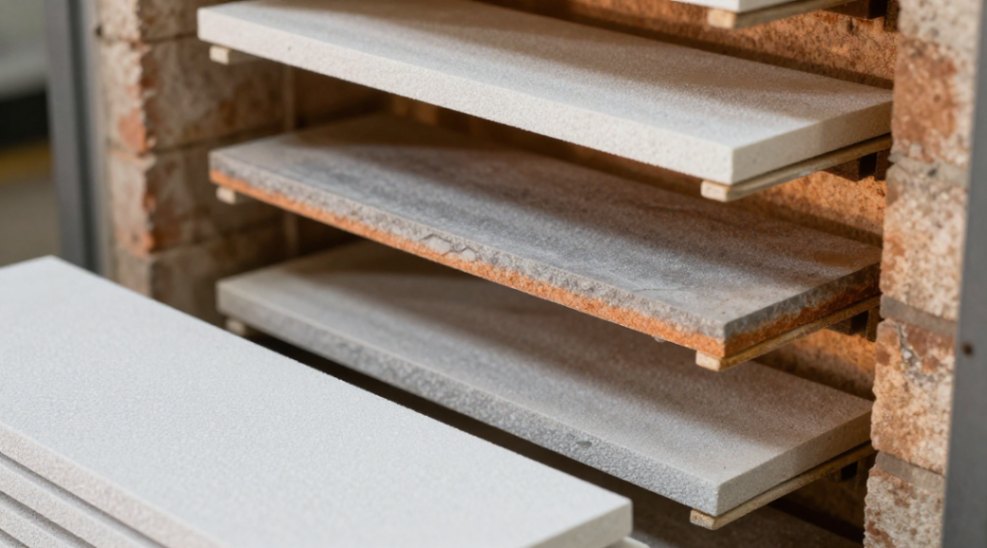
Recrystallized Silicon Carbide (R-SiC) is a premium, single-phase ceramic. Manufacturers sinter SiC grains at extreme temperatures until they bond directly, without a secondary glassy phase. This process creates a material with exceptional purity, high thermal conductivity, and superb resistance to thermal shock. Think of it as the high-performance alloy of kiln furniture.
Kiln Furniture includes shelves, setters, posts, and beams that hold ceramic ware during firing. They are the workhorses of the kiln, bearing immense weight at temperatures often exceeding 1300°C.
The Three Factors That Dictate Your R-SiC Shelf Life
Forget calendar time. Your R-SiC furniture’s lifespan is consumed by three active processes. Manage these, and you manage your costs.
1. Oxidation: The Silent, Predictable Wear
Above 1200°C in an oxygen-rich atmosphere, SiC begins to oxidize. It forms a passive silica (SiO2) glass layer on the surface. This is key.
- The Good: This thin layer seals the surface and dramatically slows further oxidation. It’s a self-protecting mechanism.
- The Bad: Over thousands of hours, this layer grows. It can eventually spall or crack during thermal cycling, exposing fresh SiC to restart the cycle. The shelf life indicator here is a consistent, milky-white surface appearance.
2. Thermal Cycling and Fatigue: The Cycle Counter
Every heating and cooling cycle induces stress. R-SiC handles this better than most materials due to its high thermal conductivity and strength. But nothing lasts forever.
- Rapid quenches or uneven heating create steep thermal gradients. This is the primary source of stress.
- Micro-cracks can initiate and slowly propagate over hundreds of cycles. This is thermal fatigue.
- Your shelf life in cycles depends heavily on your kiln’s ramp rates and cooling procedures.
3. Mechanical Load and Creep: The Weight of Time
At high temperatures, even ceramics can slowly deform under constant load. This is called creep.
- Overloading shelves or stacking posts too high accelerates creep deformation.
- The result is sagging or warping, which then leads to uneven heating and more stress.
- This factor directly links your loading practices to your furniture’s shelf life.
R-SiC vs. Other Materials: A Shelf Life Showdown
Why pay more for R-SiC? The shelf life value is in the details.
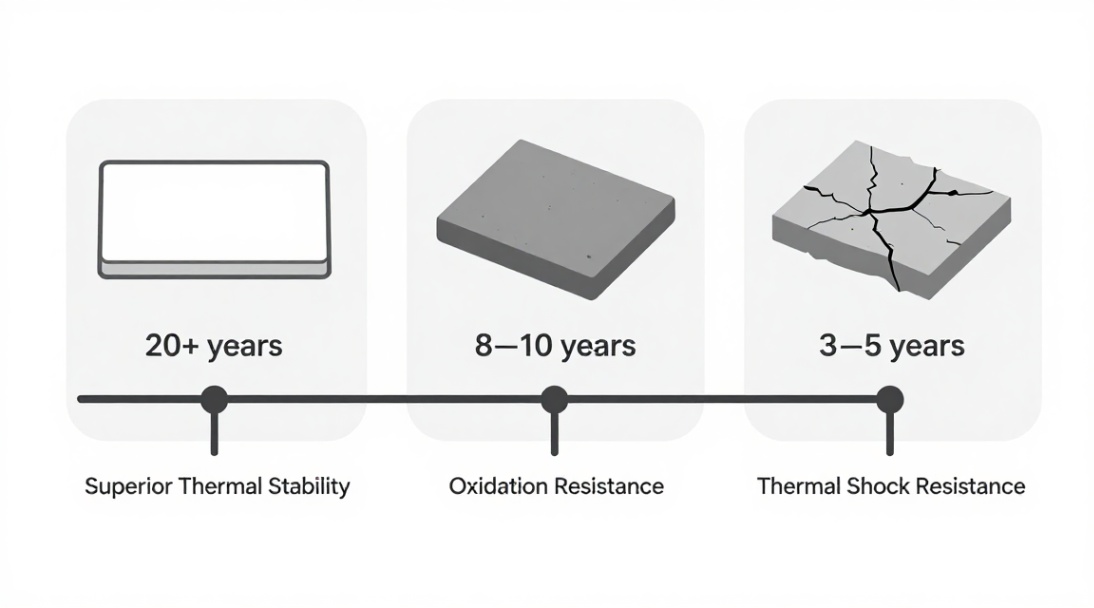
- vs. Reaction-Bonded SiC: RB-SiC contains free silicon metal. It oxidizes faster and has lower maximum use temperature. Its shelf life under identical conditions is typically shorter than R-SiC.
- vs. Cordierite or Mullite: These oxide ceramics don’t oxidize like SiC, but they have much lower thermal shock resistance and load-bearing capacity at high temperatures. They fail suddenly from thermal shock, while R-SiC degrades slowly and predictably.
- vs. Oxide-Bonded SiC: The clay bond can soften and degrade, limiting cycle life. R-SiC’s pure, bond-free structure offers a longer, more stable shelf life in aggressive environments.
Your Action Plan: How to Maximize R-SiC Kiln Furniture Shelf Life
Follow these steps. This is how you get the maximum return on your investment.
Step 1: Perfect Handling and Initial Storage
Damage often happens before the first firing.
- Handle with Care: Always lift, never drag. Support the entire shelf. Chipped edges become stress concentrators.
- Store Flat: Store shelves on a perfectly flat, supported surface. Never lean them against a wall.
- Control Environment: Keep in a dry, stable environment. While not hygroscopic, avoiding physical damage is key.
Step 2: Optimize Kiln Operation
Your firing profile is your control knob for shelf life.
- Respect Ramp Rates: Especially during cooling below 800°C, slower ramps reduce thermal stress. Don’t slam the kiln door open at top temperature.
- Distribute Load Evenly: Center loads on shelves. Keep weight uniform to prevent warping.
- Avoid Direct Contact: Use kiln wash or alumina powder to prevent glaze drips from fusing to the SiC. This localized bonding causes differential expansion and cracks.
Step 3: Conduct Regular Inspections
Schedule a visual cheque every 20-50 cycles. Look for these tell-tale signs:
- Healthy: Uniform light grey to white surface. No major cracks or chips.
- Concerning: Localized heavy white oxidation spots, small edge chips, or hairline cracks on the surface.
- End of Life: Severe warping (check with a straight edge), deep cracks that go through more than half the thickness, or significant spalling of the surface oxide layer.
Making the Smart Investment Decision
Think in terms of Total Cost of Ownership (TCO), not just unit price.
A higher upfront cost for R-SiC spreads over a longer shelf life, more reliable cycles, and less downtime from failures. Calculate your cost per successful firing cycle. R-SiC almost always wins for high-temperature, heavy-load, and fast-cycle applications. For occasional hobbyist use, the math may differ.
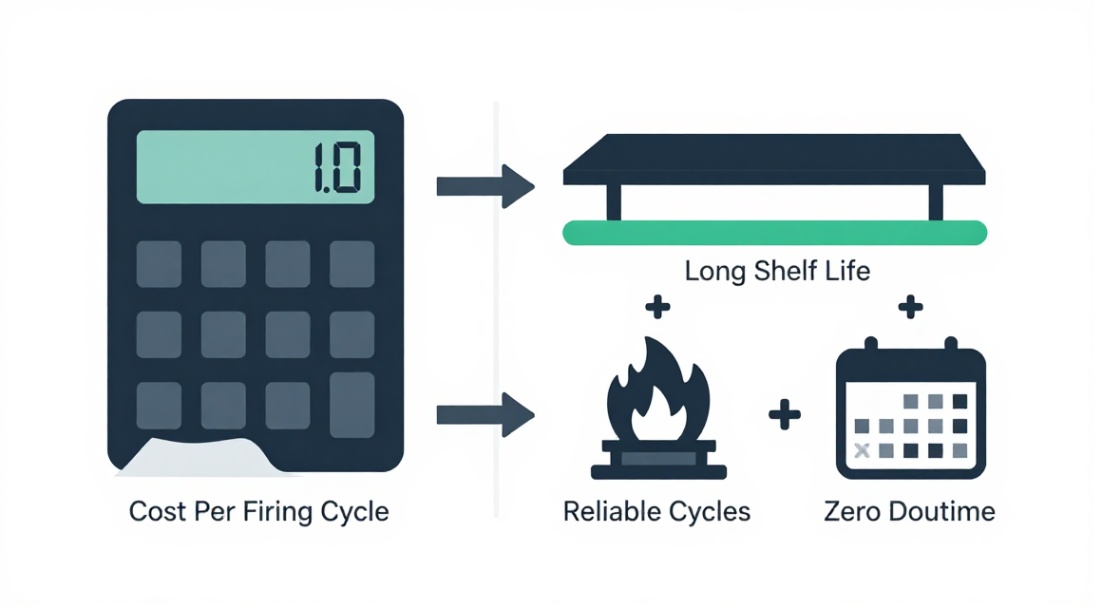
The final indicator of a good shelf life isn’t just longevity. It’s predictable, uneventful performance. Your R-SiC furniture should be the last thing you worry about in the kiln. By understanding the factors at play and implementing these simple best practices, you ensure it is.
Suppiler
Synthetic-chemical focus on the research and development, production and sales of ceramic products, serving the electronics, ceramics, chemical and other industries. Since its establishment in 2015, the company has been committed to providing customers with the best products and services, and has become a leader in the industry through continuous technological innovation and strict quality management.
Our products includes but not limited to Aluminum Nitride, Aluminum Oxide, Boron Carbide, Boron Nitride, Ceramic Crucible, ect. If you are interested in any type of these, please feel free to contact us.