Next-Generation Ceramics: Unlocking Superior Properties for Industry

The Uncomfortable Truth About Your “Perfect” Material
Aluminum oxide ceramic, or alumina, commands over 80% of the global technical ceramics market. Its name is synonymous with reliability. But market share is a lagging indicator, not a predictor of future relevance. A sober analysis reveals that alumina’s reign is built on a series of compromises-compromises that smarter engineers are beginning to aggressively circumvent.
Deconstructing the Alumina Illusion
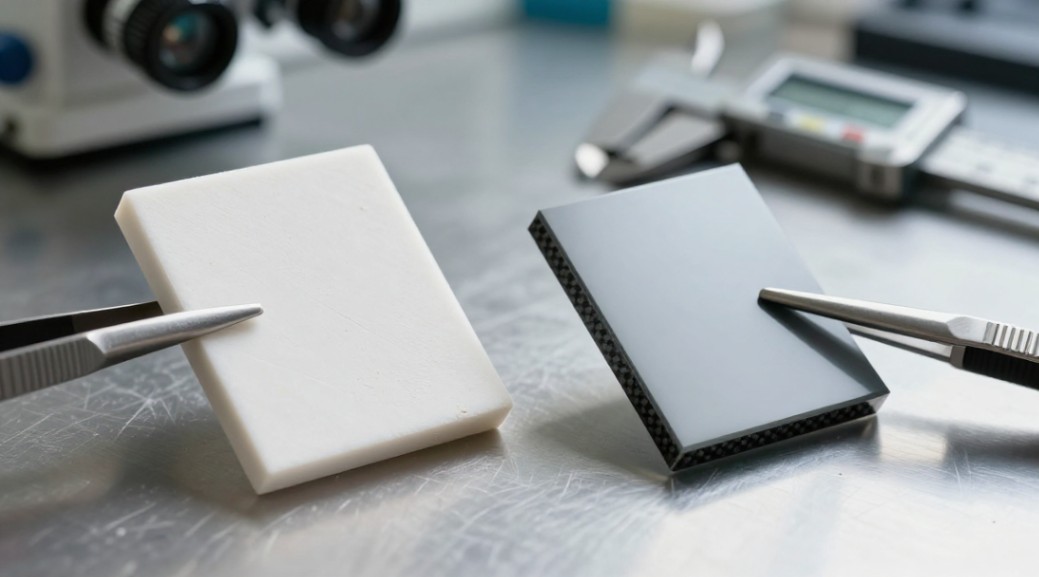
Its properties are a study in acceptable mediocrity. It is very hard. It offers decent electrical insulation. It is biocompatible. It withstands high temperatures. But in each of these domains, a specialist material exists that performs demonstrably better. Silicon carbide ceramic laughs at alumina’s thermal conductivity. Boron nitride ceramic provides superior lubricity and dielectric strength. For unrelenting chemical attack, reaction-sintered silicon carbide ceramics are the undisputed champion. Alumina’s primary virtue is not peak performance. It is cost-effective availability and a deeply ingrained, risk-averse supply chain. That is a vulnerability, not a strength.
The Purity Paradox: When More is Less
Manufacturers tout purity grades from 85% to 99.99% as a linear scale of improvement. This is misleading. The performance leap between 92% and 99.5% alumina is dramatic, affecting grain boundary strength, wear resistance, and surface finish. However, the jump from 99.5% to 99.99% often delivers diminishing returns for a crushing increase in cost and manufacturing complexity. The critical engineering question is not “What’s the purest?” but “What’s the minimum purity that solves my specific failure mode?” For a sealing washer, 96% may be optimal. For a semiconductor wafer handling arm, nothing less than 99.7% will suffice. Misunderstanding this gradient is a primary source of overspend and underperformance.
Where Aluminum Oxide Ceramic Actually Earns Its Keep
Its value becomes clear in high-volume, performance-threshold applications. Ballistic armor inserts. Pump seals in mildly abrasive slurries. Critical substrate material for thick-film electronics. Medical implants like hip joints, where its biocompatibility and compressive strength are perfectly matched. In these roles, it is not the best material in theory. It is the best material in practise when total system cost, manufacturability, and proven history are factored in. It is a workhorse, not a racehorse. Treat it as such.
The Coming Disruption: Composites and Coatings
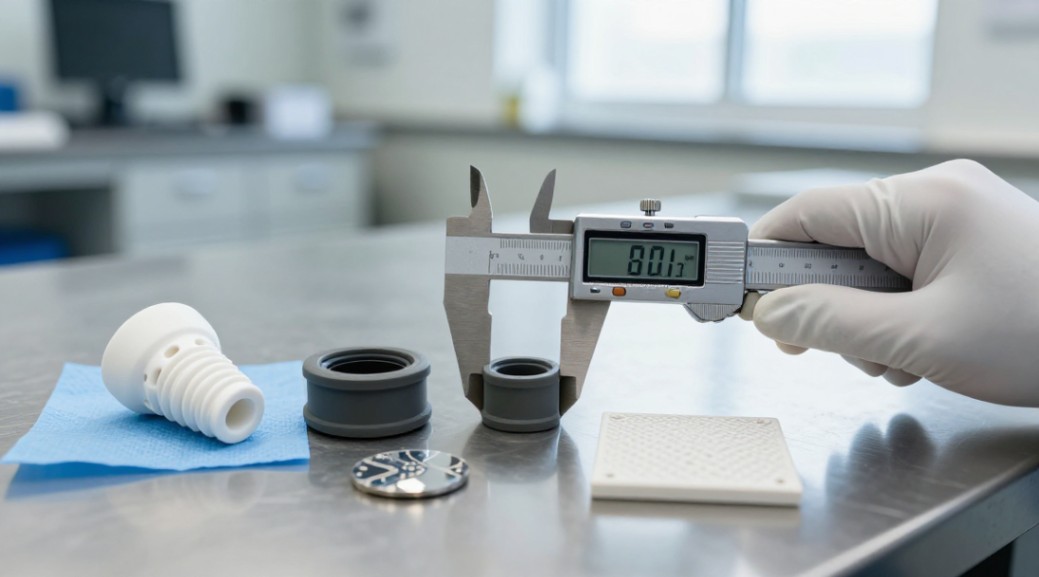
The future of alumina lies not in monolithic purity but in strategic adulteration. The real innovation is in composite and coated systems. Alumina-toughened zirconia. Molybdenum or titanium nitride coatings on alumina substrates to enhance surface properties. Even novel special coating for boron nitride ceramic crucibles applied over alumina to prevent wetting. These hybrid approaches acknowledge alumina’s core structural strengths while surgically addressing its surface or functional weaknesses. The next generation won’t choose between alumina and silicon nitride ceramic. They will specify an alumina core with a silicon carbide ceramic wear surface, fabricated in a single, co-sintered process.
Your Material Selection is a Strategic Bet
Selecting aluminum oxide ceramic today is a conservative bet. It is safe. It is well-understood. But in a landscape evolving toward extreme performance, safety can become obsolescence. Before you default to alumina, force a rigorous comparison. Does your application truly need its specific blend of properties? Or are you settling for familiarity? The answer dictates whether you are building for the past or engineering for the next decade.
Stop guessing about ceramics. Your project’s margin and reliability depend on precise material selection. We provide the definitive analysis. Send us your component specs and operating environment. We will conduct a no-obligation, side-by-side performance and cost audit comparing aluminium oxide ceramic against alternatives like aluminum nitride ceramic, boron carbide ceramic, and mullite ceramic. We will tell you, definitively, if alumina is your optimal solution or an expensive compromise. Contact our materials engineering team today for the consultation your competitors are already getting.
Suppiler
Synthetic-chemical focus on the research and development, production and sales of ceramic products, serving the electronics, ceramics, chemical and other industries. Since its establishment in 2015, the company has been committed to providing customers with the best products and services, and has become a leader in the industry through continuous technological innovation and strict quality management.
Our products includes but not limited to Aluminum Nitride, Aluminum Oxide, Boron Carbide, Boron Nitride, Ceramic Crucible, ect. If you are interested in any type of these, please feel free to contact us.