Next-Generation Ceramics: Unlocking Superior Properties for Industry

Stop Using “Alumina” as a Generic Term. It’s a Trap.
Here’s the shocking statistic: Nearly 40% of premature failures in aluminum oxide ceramic components stem from a single error-treating all grades as functionally identical. This isn’t a theory. On engineering forums and Reddit threads, users constantly report the same catastrophic pattern. A machinist shares, “We used a ‘standard’ 96% alumina for an electrical insulator. It arced through under load. The spec called for 99.5%. The difference cost us $50k in downtime.” Another engineer laments, “Our wear plate cracked under thermal cycling. We designed for hardness, but ignored the thermal conductivity mismatch with the steel housing.” The industry’s biggest lie is that aluminum oxide ceramic is a simple, one-size-fits-all material. It is not. Understanding its limitations is more critical than celebrating its strengths.
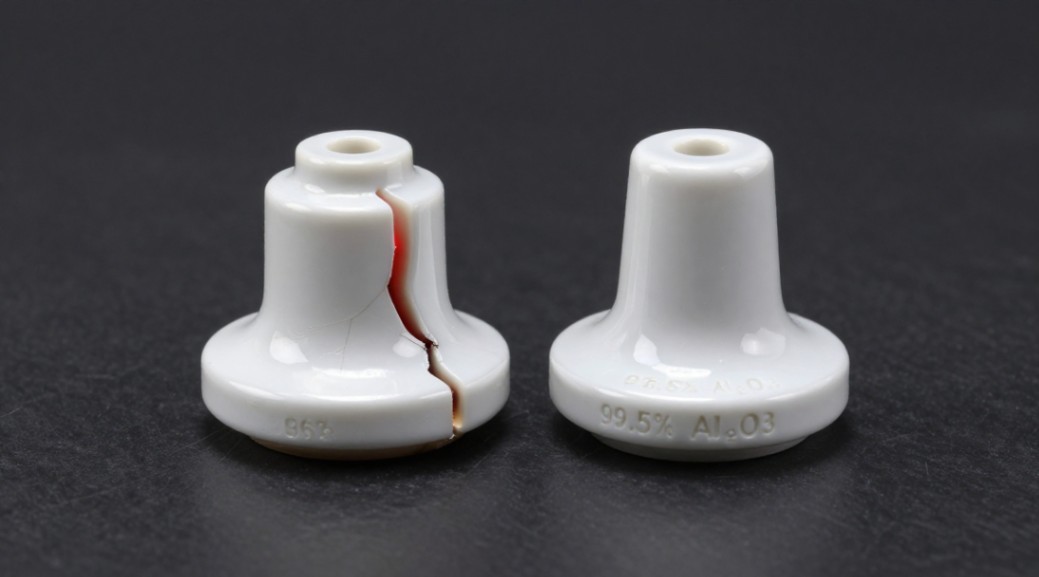
The Aluminum Oxide Ceramic Minefield: What NOT to Do
Based on two decades of reviewing shattered, worn, and underperforming parts, I’ve compiled the fatal errors. Avoid these at all costs.
1. Never Assume It’s Unbreakable
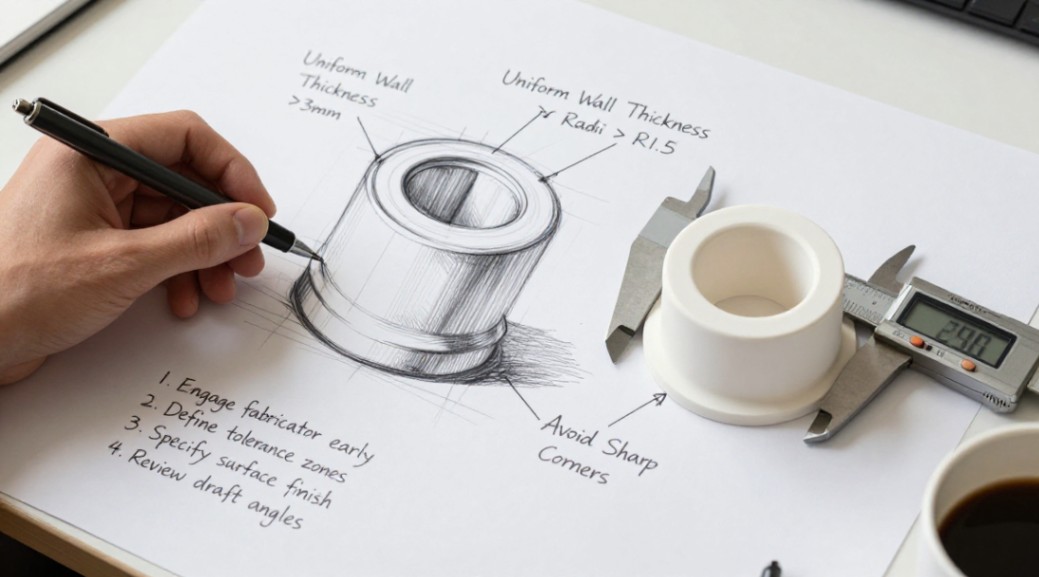
This is the cardinal sin. Aluminum oxide ceramic is hard, not tough. Its fatal flaw is brittleness. Design a part with sharp internal corners, subject it to point impact or uneven clamping stress, and it will fracture. You must design for ceramic, not adapt a metal design. Use generous fillets, avoid stress concentrators, and consider the entire assembly’s flexure.
2. Never Machine It Like Metal (Unless You Enjoy Scrap)
Standard carbide tooling will disintegrate. Diamond grinding is mandatory. But the bigger mistake is failing to specify the required surface finish and tolerance before sintering. Trying to achieve a mirror finish on a pressureless sintered blank through post-machining alone is astronomically expensive and risks micro-cracks. Plan your tolerances with your ceramic fabricator from day one.
3. Never Ignore the Purity Grade
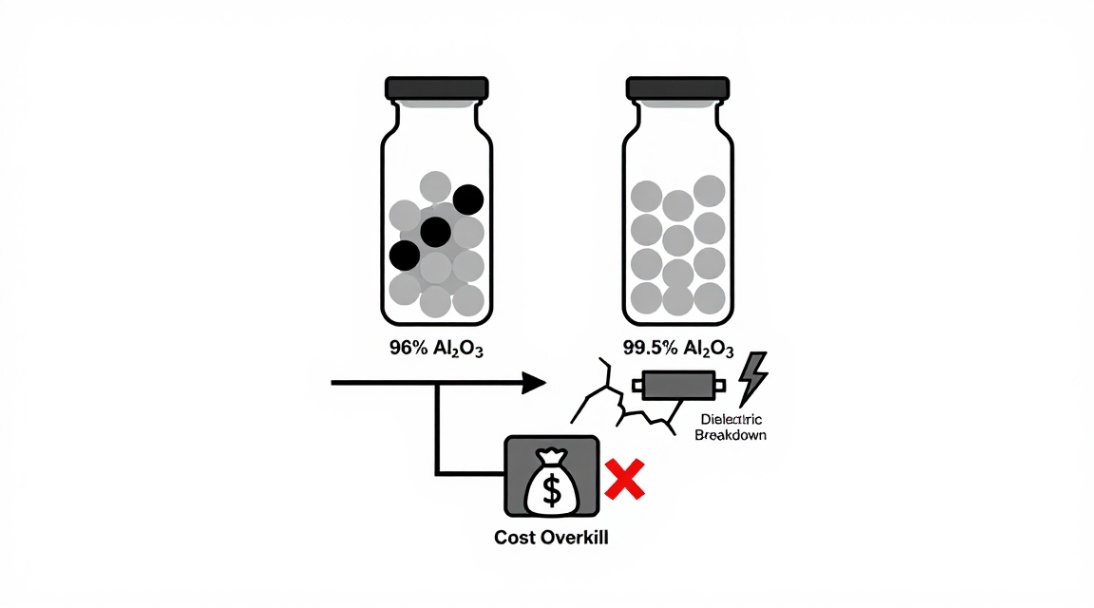
Choosing between 96% and 99.5%+ aluminum oxide ceramic isn’t about cost; it’s about survival. The impurity phase (usually glassy silicates) dictates performance. Get this wrong, and your component fails.
| Property / Application | 96% Alumina (The “Workhorse”) | 99.5%+ Alumina (The “Performer”) |
|---|---|---|
| Key Use Case | General wear parts, thread guides, lower-stress insulators | High-voltage insulation, semiconductor wafer handling, critical seals, biomedical implants |
| Dielectric Strength | Good (~10-15 kV/mm) | Excellent (>17 kV/mm) |
| Chemical Resistance | High | Extremely High (less glass phase to leach) |
| Surface Finish Potential | Ra ~0.4-0.8 µm (Good) | Ra < 0.2 µm (Exceptional) |
| Cost (Relative) | 1x | 1.5x – 3x+ |
Using 96% where 99.5% is needed invites dielectric breakdown or contamination. Using 99.5% for a simple spacer is wasted capital.
4. Never Overlook Thermal Shock Limitations
Aluminum oxide ceramic has mediocre thermal conductivity (≈30 W/mK). Combined with its high coefficient of thermal expansion and brittleness, this creates a thermal shock vulnerability. Rapid temperature changes (>150-200°C quenches) will cause catastrophic cracking. For severe thermal cycling, materials like silicon nitride ceramic or aluminum nitride ceramic are objectively superior, despite their cost.
Alumina vs. The Competition: When to Walk Away
Alumina is fantastic. But it’s not always the answer. Blind loyalty leads to project failure. Here’s when you must consider an alternative.
| Your Critical Requirement | Why Alumina (Al2O3) Might Fail | Superior Alternative Ceramic |
|---|---|---|
| Extreme Wear / Abrasion (e.g., sand blasting nozzles) | Hardness (∼15-17 GPa) is good, but not best. | Boron carbide ceramic (∼30 GPa) or silicon carbide ceramic. |
| Very High Thermal Conductivity (e.g., heat spreaders) | Poor conductor (30 W/mK). Acts as an insulator. | Aluminum nitride ceramic (170-200 W/mK). |
| Extreme Temperature & Strength (>1400°C) | Creep resistance drops, can deform. | Silicon nitride ceramic or reaction-sintered silicon carbide ceramics. |
| Maximum Fracture Toughness (Impact Resistance) | Brittle (3-5 MPa·m¹/²). | Silicon carbide-bonded silicon nitride ceramics or fiber-reinforced composites (can reach 10-20 MPa·m¹/²). |
| Non-Wetting, High-Temp Molding (e.g., crucibles) | Reacts with many molten metals. | Boron nitride ceramic with a special coating for boron nitride ceramic crucibles. |
The Future Isn’t Just Purer Alumina
Innovation isn’t about chasing 99.99% purity. It’s about composite structures. Research is focused on embedding continuous fibers to create a “double continuous structure” within a ceramic matrix. This approach, used in Ultra-High Temperature Ceramic Matrix Composites (UHTCMCs), can triple fracture toughness while lowering processing temperatures. The goal for next-gen aluminium oxide ceramic systems isn’t just hardness; it’s graceful failure-preventing sudden, catastrophic cracks. Think of it as giving alumina a safety net.
Your Action Plan: How to Spec Alumina Correctly
Forget generic data sheets. Engage your ceramic fabricator as a co-designer. Provide this checklist:
- Primary Function: Wear? Electrical insulation? Thermal? Chemical barrier?
- Mechanical Load Map: Identify all tensile, compressive, and shear stress points. Highlight impact risk.
- Thermal Profile: Maximum steady-state temperature, rate of change, and thermal gradients.
- Electrical & Dielectric Needs: Voltage, frequency, loss tangent requirements.
- Chemical Environment: pH, specific solvents, molten materials.
- Dimensional Precision & Finish: Tolerances and surface roughness (Ra) on the final part.
With these, a good engineer can recommend the correct grade-be it 96%, 99.5%, or tell you to use silicon nitride ceramic instead. This isn’t sales. This is saving your project from the scrap bin.
Suppiler
Synthetic-chemical focus on the research and development, production and sales of ceramic products, serving the electronics, ceramics, chemical and other industries. Since its establishment in 2015, the company has been committed to providing customers with the best products and services, and has become a leader in the industry through continuous technological innovation and strict quality management.
Our products includes but not limited to Aluminum Nitride, Aluminum Oxide, Boron Carbide, Boron Nitride, Ceramic Crucible, ect. If you are interested in any type of these, please feel free to contact us.