Next-Generation Ceramics: Unlocking Superior Properties for Industry

A Statistic That Changes Everything
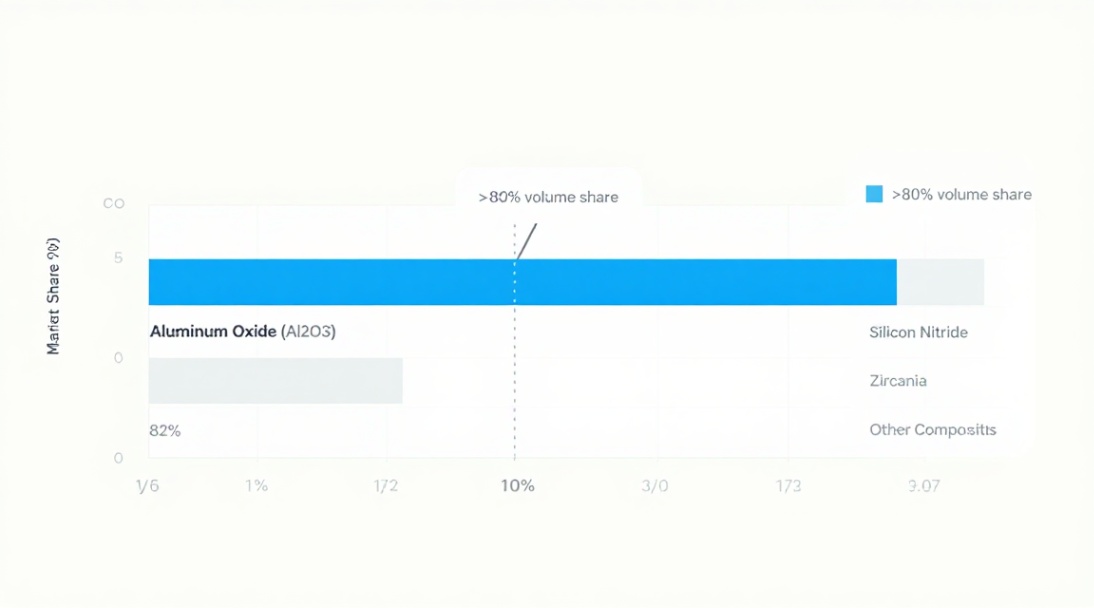
For over 20 years, we’ve seen ceramic trends come and go. But here’s a fact that stops many engineers: aluminum oxide ceramic (Al2O3) still accounts for over 80% of the global technical ceramics market by volume. Think about that. With all the talk about silicon nitride, zirconia, and fancy composites, the simple workhorse, alumina, is still the undisputed heavyweight. Why does a material discovered over a century ago refuse to be dethroned? It’s not about being the best at any one thing. It’s about being exceptionally good at almost everything. Let’s look at the data and the trends shaping its future.
The Core: What Makes Al2O3 Tick
Aluminum oxide ceramic, or alumina, is the baseline. It’s the reference point we compare everything else against-from silicon carbide to boron nitride. Its power lies in a balanced property profile few materials can match.
The Property Trifecta
- Hardness & Wear Resistance: It’s brutally hard. On the Mohs scale, it’s a 9, second only to diamond. This makes it the first choice for any component facing abrasion, from pump seals to textile guides. It simply outlasts metals by orders of magnitude.
- Electrical Insulation & Dielectric Strength: This is a superstar property. Alumina provides excellent insulation with high dielectric strength, even at elevated temperatures. That’s why it’s the foundation for substrates, insulators, and spark plugs worldwide.
- Chemical Inertness & Thermal Stability: Alumina laughs at acids and bases. It remains stable in most chemical baths up to 1600°C, resisting corrosion where metals fail. This makes it perfect for crucibles, labware, and thermocouple tubes.
The Purity Game
Not all alumina is equal. The magic number is purity.
- 99.5% Alumina and Above: This is high-purity territory. At these grades, grain boundaries are cleaner, leading to superior strength, thermal conductivity (a key advantage over zirconia), and corrosion resistance. This is the go-to for demanding applications.
- 94-99% Alumina: The workhorse grade. It offers an outstanding cost-performance balance for most industrial wear parts and electrical insulators. It provides 90% of the benefits of high-purity material at a significantly lower cost.
Beyond the Basics: Where It Wins (and Where It Doesn’t)
After years on the shop floor, we know the real choice comes down to application fit. Let’s be blunt.
Alumina’s Sweet Spots
- Industrial Wear Parts: Lining for pipes, wear plates, nozzles. Nothing beats it for cost-effective abrasion resistance.
- Electrical & Electronics: Substrates for circuits, high-voltage insulators, sensor housings. Its dielectric properties are predictable and reliable.
- Medical Implants: Its excellent biocompatibility makes it ideal for dental implants, joint replacements, and surgical tools. The body accepts it.
Know Its Limits
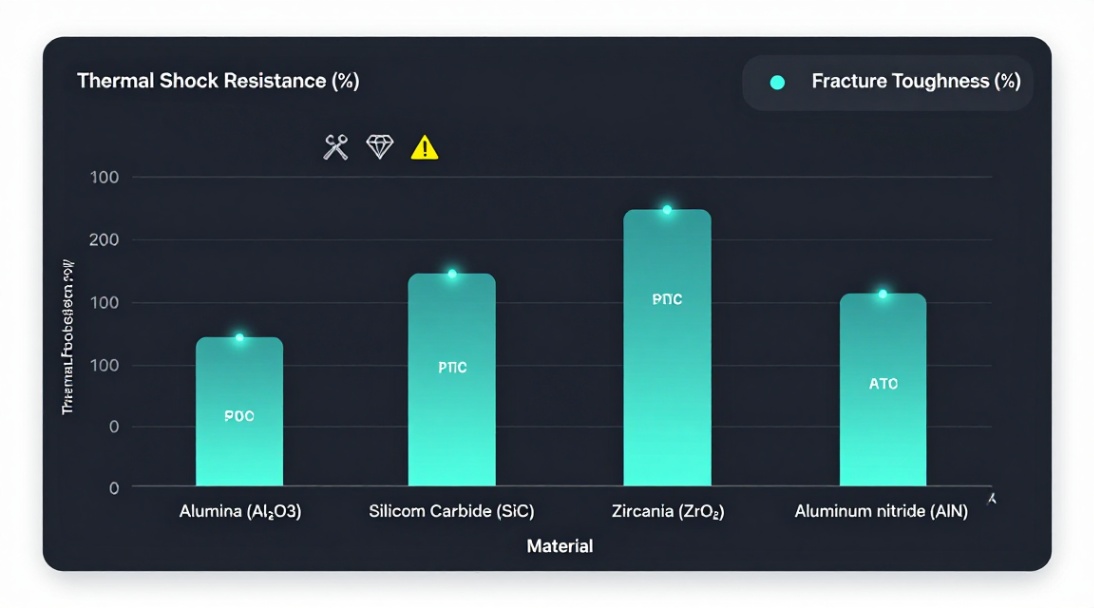
We must be honest. For pure thermal shock resistance, silicon carbide or mullite ceramic often win. For ultimate fracture toughness, you look at zirconia. For thermal conductivity in electronics, aluminum nitride ceramic is the specialist. And machining? It’s hard. Design for it. Use diamond tools. Don’t expect to modify it on a standard mill.
The Future: Trends and Adaptations
The industry isn’t standing still. The data points to evolution, not replacement. While research pushes the limits of ultra-high-temperature ceramics (UHTCs) past 3000°C, alumina’s role is solidifying in smarter ways.
- The Composite Edge: Borrowing from UHTC research, we’re seeing slurry infiltration and fiber-reinforced composites. Imagine adding silicon carbide whiskers or carbon fibers to an alumina matrix. This ‘double continuous structure’ concept can dramatically boost fracture toughness, moving it from brittle to resilient.
- Surface Engineering: The development of specialized coatings is a major trend. Just as a special coating for boron nitride ceramic crucibles enhances performance, advanced surface treatments on alumina can tailor it for specific chemical or tribological environments, extending its life even further.
- High-Purity Focus: The push for more reliable electronics and medical devices is driving demand for ultra-high-purity, fine-grained aluminas with perfectly controlled sintering. This isn’t your grandfather’s alumina.
The Final Verdict and Your Next Step
The data is clear. Aluminum oxide ceramic remains the cornerstone of industrial ceramics because its value proposition is unshakeable. It’s the versatile, reliable, and cost-effective solution for thousands of engineering problems. When you need a material that’s hard, insulating, chemically inert, and thermally stable-all at once-alumina is usually the answer.
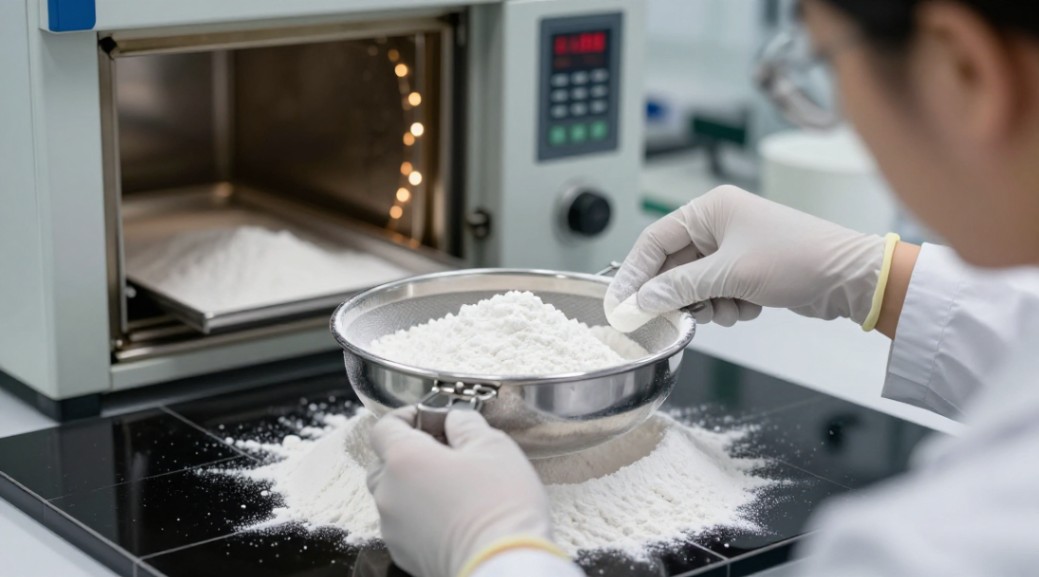
But specifications on a datasheet only tell half the story. The other half is in the manufacturing-the sintering cycle, the grain size control, the quality of the raw powder. That’s where decades of experience make all the difference.
Ready to see what high-performance alumina can do for your design? Don’t just source a material; partner with an expert who understands its soul. Contact our technical team today for a free application review and sample evaluation. Let’s put the #1 ceramic to work for you.
Suppiler
Synthetic-chemical focus on the research and development, production and sales of ceramic products, serving the electronics, ceramics, chemical and other industries. Since its establishment in 2015, the company has been committed to providing customers with the best products and services, and has become a leader in the industry through continuous technological innovation and strict quality management.
Our products includes but not limited to Aluminum Nitride, Aluminum Oxide, Boron Carbide, Boron Nitride, Ceramic Crucible, ect. If you are interested in any type of these, please feel free to contact us.