Next-Generation Ceramics: Unlocking Superior Properties for Industry

At its core, aluminum oxide ceramic is one of the most widely used advanced ceramic materials in the world. We often call it alumina. It’s the substance we turn to when other materials fail under extreme pressure, heat, or chemical attack. Let me walk you through what makes it the cornerstone of so many critical systems.
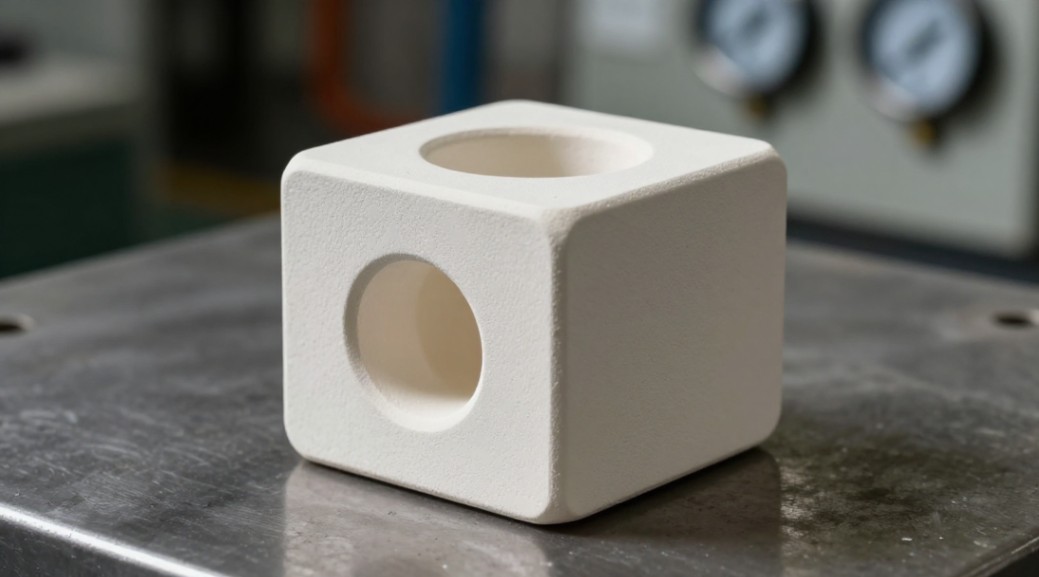
The Nature of Alumina: A Simple Formula, Extraordinary Properties
Its chemical name gives it away: it’s primarily aluminium and oxygen bonded together (Al₂O₃). The simplicity ends there. This bond creates a dense, crystalline structure. That structure is the source of its power. It’s not just hard; it’s incredibly hard. We use it where steel wears down in days. It laughs at abrasion. In fact, in the spectrum of technical ceramics, its wear resistance is a primary reason we select it over other options like silicon carbide ceramic or boron carbide ceramic for many non-impact applications. You’ll find it lining pipes transporting abrasive slurries, as guide rollers in textile mills, and as seal faces in pumps. It just doesn’t quit.
That crystal structure also makes it a superb electrical insulator. Its dielectric strength is excellent. This is why your smartphone’s circuit board might sit on an aluminum oxide ceramic substrate. It provides a stable, non-conductive platform that can also handle the heat from the components. We see this same principle in high-voltage insulators for power transmission and spark plug insulators. The material doesn’t conduct, and it doesn’t break down under electrical stress.
Where Other Materials Fear to Tread
Chemical resistance is another superpower. Outside of hydrofluoric acid and hot, concentrated phosphoric or sulfuric acids, alumina is remarkably inert. This is a game-changer. In our labs and chemical plants, we use it for crucibles, tubes, and labware because it doesn’t contaminate processes. I’ve seen aluminum nitride ceramic chosen for better thermal conductivity in electronics, and boron nitride ceramic might get a special coating for crucibles handling molten metals, but for broad-spectrum chemical stability, alumina is often the first choice. This inertness translates directly to the medical field. Hip replacements, dental implants, and surgical tools leverage alumina’s biocompatibility. The body tolerates it well, and it doesn’t corrode.
Then there’s the heat. Aluminum oxide ceramic maintains its strength and shape at temperatures that would cause metals to creep and polymers to vanish. It’s stable up to about 1700°C. Its thermal conductivity is moderate-higher than stainless steel but lower than materials like aluminum nitride or silicon carbide ceramic. This makes it useful for furnace components, thermocouple tubes, and heat exchanger plates where thermal shock isn’t the primary concern. For extreme thermal cycling, we might look at silicon nitride ceramic or mullite ceramic, which handle rapid temperature changes better.
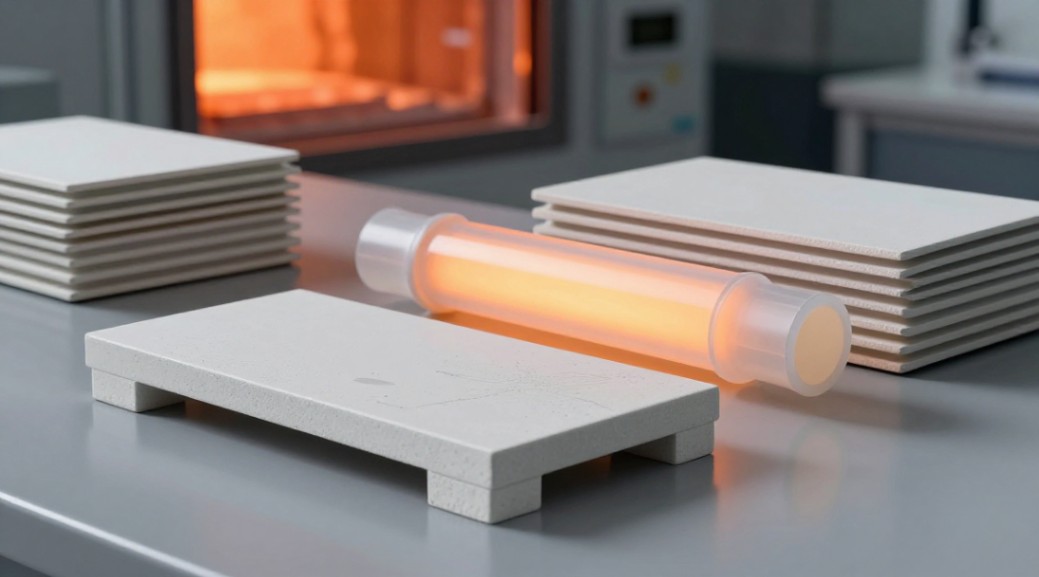
From Powder to Part: How We Make It
We start with a fine, pure powder. The purity is critical. Common grades are 96% and 99.5% alumina. That small percentage difference in purity has a big impact on properties. The 99.5% grade is harder, stronger, has better surface finish, and superior corrosion resistance. We mix the powder with binders, form it into a shape-through pressing, casting, or extrusion-and then fire it in a kiln at incredibly high temperatures. This sintering process fuses the powder particles into a solid, dense mass. The craftsmanship is in controlling every variable: particle size, forming pressure, sintering temperature and atmosphere. Get it wrong, and you introduce weaknesses. Get it right, and you create a part that outlasts everything around it.
The Real-World Proof Is in the Performance
You don’t have to take just my word for it. The proof is in decades of silent service. On engineering forums and in plant maintenance discussions, the feedback is consistent. A common refrain we hear is about wear parts. “We swapped the steel chute lining for alumina tiles and the replacement interval went from six months to over five years.” Or in electronics: “The aluminum oxide ceramic substrates give us the thermal management and electrical isolation we need for this high-power module.” These aren’t lab results; they are field reports from engineers who have solved real problems.
Choosing the Right Ceramic for the Job
No material is perfect. Alumina’s main limitation is its brittleness and relatively low fracture toughness compared to metals. It doesn’t like sharp impacts or severe thermal shock. That’s why we have a whole family of technical ceramics. Need higher thermal conductivity? Consider aluminium nitride. Need extreme hardness for armor or abrasives? Boron carbide is harder. For components facing severe thermal shock and high strength, like turbine blades or bearing rollers, silicon nitride ceramic often wins. For ultra-high temperature furnace elements, you might look at recrystallized silicon carbide ceramics. The key is matching the material’s strengths to the application’s demands.
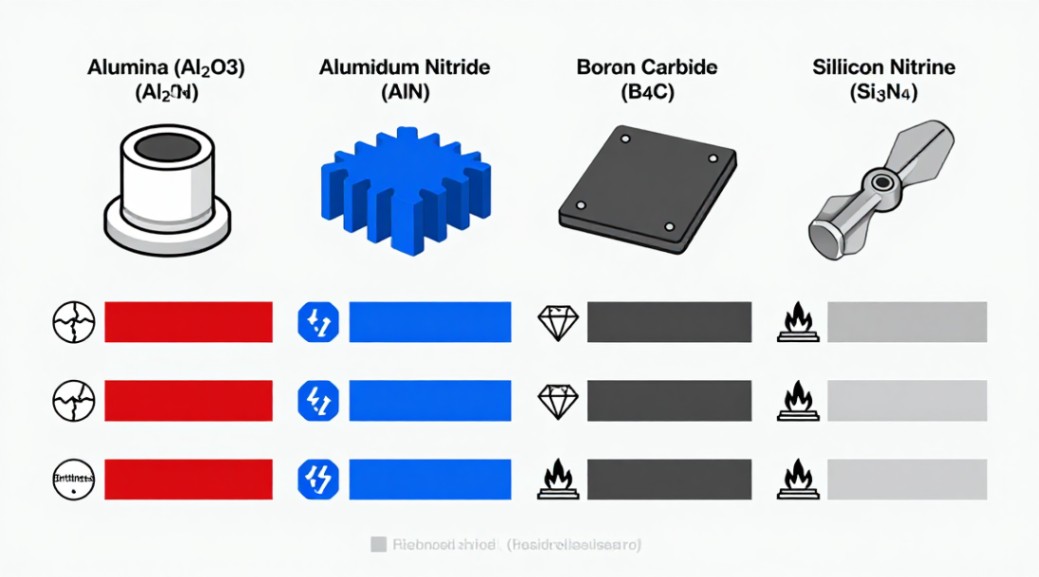
So, when is aluminum oxide ceramic the right answer? When you need a cost-effective, highly available material with a proven balance of wear resistance, electrical insulation, chemical inertness, and high-temperature capability. It’s the workhorse. From the cutting tools machining your engine blocks to the insulator in your car’s spark plug, from the hip joint implant restoring mobility to the lab crucible enabling a new discovery, alumina is there. It’s the quiet, dependable foundation upon which so much of modern engineering is built. If your project involves any of these harsh conditions, evaluating aluminium oxide ceramic components isn’t just an option; it’s a necessary step in the design process to ensure longevity and reliability.
Suppiler
Synthetic-chemical focus on the research and development, production and sales of ceramic products, serving the electronics, ceramics, chemical and other industries. Since its establishment in 2015, the company has been committed to providing customers with the best products and services, and has become a leader in the industry through continuous technological innovation and strict quality management.
Our products includes but not limited to Aluminum Nitride, Aluminum Oxide, Boron Carbide, Boron Nitride, Ceramic Crucible, ect. If you are interested in any type of these, please feel free to contact us.