Next-Generation Ceramics: Unlocking Superior Properties for Industry

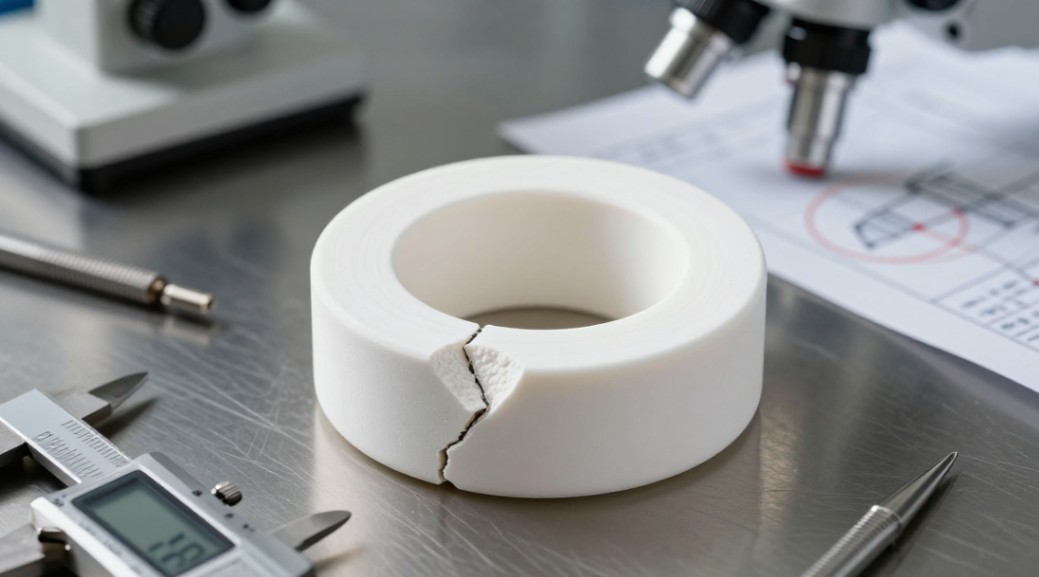
Ten years ago, a design team presented me with a fractured prototype. It was a critical seal component for a high-pressure pump, made from a premium-grade aluminum oxide ceramic. It had passed all initial material property checks. In testing, it failed catastrophically. The issue wasn’t the material’s hardness or chemical resistance. The team had specified a 99.8% pure alumina for extreme wear resistance, but neglected to account for the notch sensitivity of its sharp internal corners under cyclical pressure. They chose the wrong grade for the wrong reason. The resulting redesign and production delay cost over six figures. This is a common story. Engineers trust aluminum oxide ceramic for its excellent properties, but specification errors lead to wasted budgets and project failures. Do not make these mistakes.
1. NEVER Confuse Hardness with Fracture Toughness in Wear Applications
Aluminum oxide ceramic possesses exceptional hardness, often exceeding 9 on the Mohs scale. This makes it a go-to for wear plates, liners, and cutting tool inserts. However, hardness alone is a deceptive metric.
The critical failure point is brittleness. Aluminium oxide ceramic has relatively low fracture toughness compared to metals or even some other technical ceramics like zirconia. In high-impact or high-stress concentration scenarios, a hard alumina component can chip, spall, or shatter.
What you must do instead:
- Analyze the wear mechanism. Is it pure abrasion (alumina excels) or involves impact (reconsider)?
- For combined abrasion and impact, evaluate silicon carbide ceramic or silicon nitride ceramic. They offer better toughness-to-hardness ratios.
- If you must use alumina, design out stress concentrators. Use generous radii on all internal corners and edges.
- Consider a composite approach, like aluminum oxide ceramic tiles in a metal or polymer matrix to absorb shock.
2. NEVER Assume All Alumina Grades Are Interchangeable
Specifying just “alumina ceramic” is a guaranteed path to performance mismatch. The properties are dictated by purity and microstructure.
Common Grades and Their Fatal Misapplications:
- 85-90% Alumina: Good mechanical strength and lower cost. Never use it for high-voltage insulation or in ultra-pure chemical processes. Trace impurities and porosity cause electrical leakage and contamination.
- 96-99% Alumina: The workhorse for most industrial and technical applications. Offers the best balance of strength, wear, and electrical resistivity. Never assume its thermal conductivity is sufficient for high-power semiconductor substrates-that’s the domain of aluminum nitride ceramic.
- 99.5-99.9% Alumina: High purity for critical applications. Essential for medical implants due to superior biocompatibility, for thin-film electronic substrates, and as a refractory material in extreme environments. Never waste this expensive grade on a simple wear bushing where a 96% grade performs identically.
3. NEVER Overlook the Thermal Shock Limitation in High-Temperature Designs
Alumina‘s thermal stability is impressive, withstanding temperatures up to 1700°C. This makes it a staple for furnace linings, thermocouple tubes, and refractory components. The trap is thermal shock resistance.
Alumina has a moderate coefficient of thermal expansion and modest thermal conductivity. Rapid temperature changes create severe internal stresses, leading to crack initiation and propagation.
The Warning Signs You’re in Danger:
- Your application involves rapid cycling (e.g., a brazing fixture, a lab crucible for melting/solidification).
- Localized heating or cooling is present.
- You need a part that survives a flame impingement directly on one surface.
Your Alternatives: For severe thermal cycling, materials like silicon carbide ceramic (higher conductivity) or mullite ceramic (lower expansion) often outperform. For the most extreme temperature limits exceeding 2000°C, research is pushing into new oxide ceramic systems, but these are not yet standard engineering materials.
4. NEVER Underestimate the Cost and Challenge of Precision Machining
Aluminum oxide ceramic is typically sintered to a near-net shape. Post-sintering machining is expensive and specialized. A poorly considered tolerance callout can double the part cost.
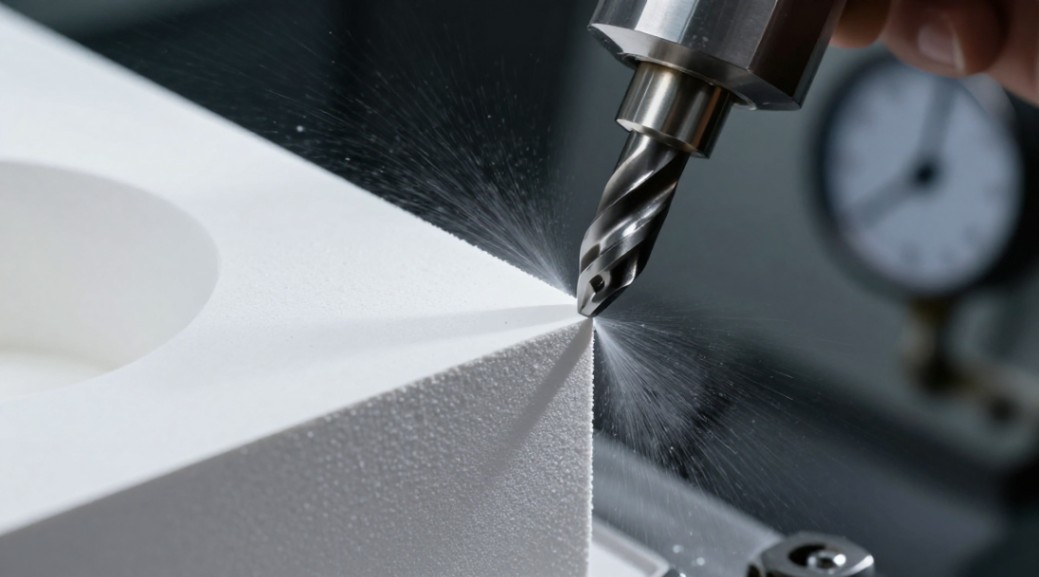
The material must be machined in the fired state using diamond-grinding tools. It is slow, wears tools quickly, and generates significant cost.
The Machining Cost Traps to Avoid:
- Tight Diametrical Tolerances (< 0.01mm): Requires multiple grinding passes and precise fixturing. Ask if you truly need it.
- Deep, Small-Diameter Holes: Extremely difficult and prone to tool breakage. Redesign if possible.
- Mirror Surface Finish (Ra < 0.2µm): Achievable with lapping, but adds significant labour. Specify the finish you functionally require, not the best possible.
- Complex, Undercut Geometries: Often impossible to machine after sintering. This must be designed into the green body mold.
5. NEVER Treat It as a Direct Substitute for Another Material Without Re-Engineering
This is the cardinal sin. Engineers often seek to replace a failing metal part with a “superior” ceramic like alumina. They copy the metal design exactly. It fails.
Ceramics behave fundamentally differently. They are stiff, brittle, and sensitive to stress concentrations. A direct substitution ignores these principles.
The Re-Design Imperatives:
- Load Types: Ceramics excel in compression, are weak in tension, and poor in bending/shear. Redistribute loads into compression.
- Joining: You cannot weld or thread ceramic like metal. Use shrink fits, compliant adhesives, or mechanical clamping designed to avoid point loads.
- Interfaces: Never have a hard ceramic part bearing directly on another hard surface without a designed-in tolerance for misalignment or a compliant interlayer.
- Failure Mode: Metal yields and deforms; ceramic fractures without warning. Your design must have a higher factor of safety and eliminate tensile stress risers.
The Objective Path Forward
Aluminum oxide ceramic remains a cornerstone of advanced engineering. Its combination of hardness, wear resistance, electrical insulation, and biocompatibility is unmatched for countless applications. The key is disciplined, knowledge-based selection.
Start with the functional requirement, not the material name. Map the environmental stresses-thermal, mechanical, chemical, electrical-against the full spectrum of material properties, from purity and density to fracture toughness and thermal conductivity. Compare it logically to alternatives like zirconia for toughness, silicon carbide for thermal conductivity, or aluminum nitride for electronic heat sinking.
The trends are clear: future innovation lies in composites and advanced microstructures. Concepts like fiber-reinforced UHTCMCs (Ultra-High Temperature Ceramic Matrix Composites) or novel high-entropy oxides aim to push temperature limits and fracture toughness. For now, mastering the disciplined application of standard aluminium oxide ceramic separates successful projects from expensive lessons.
Stop Guessing. Start Engineering with Precision.
The nuances of aluminum oxide ceramic specification are not theoretical. They dictate on-the-line performance and project viability. Missteps are costly. If your application demands the unique properties of alumina-for a critical medical implant component, a high-wear industrial seal, or a precision electronic substrate-you need absolute certainty in the material specification, design, and sourcing.
Do not leave this to chance or generic suppliers. You need to consult with an application engineer who understands these ceramics at a fundamental level. They will perform a failure mode analysis on your design, recommend the optimal purity and grade, and connect you with a manufacturer capable of delivering the required surface finish and precision. This is not a commodity purchase. It is a precision engineering decision. Make the right one.
Suppiler
Synthetic-chemical focus on the research and development, production and sales of ceramic products, serving the electronics, ceramics, chemical and other industries. Since its establishment in 2015, the company has been committed to providing customers with the best products and services, and has become a leader in the industry through continuous technological innovation and strict quality management.
Our products includes but not limited to Aluminum Nitride, Aluminum Oxide, Boron Carbide, Boron Nitride, Ceramic Crucible, ect. If you are interested in any type of these, please feel free to contact us.