Next-Generation Ceramics: Unlocking Superior Properties for Industry

Facing the Heat, Wear, and Corrosion: Is Your Material Failing?
You’re designing a component that must survive aggressive chemicals, punishing abrasion, and high temperatures. The metal part you specified corrodes within months. The polymer alternative deforms under load. You need a material that simply endures. For decades, engineers have turned to one solution as the first line of defense against severe environments: Aluminum Oxide Ceramic, often called alumina. It’s the workhorse of advanced ceramics. But is it the right choice for you, or are you sacrificing performance by defaulting to the familiar option? This analysis cuts through the noise.
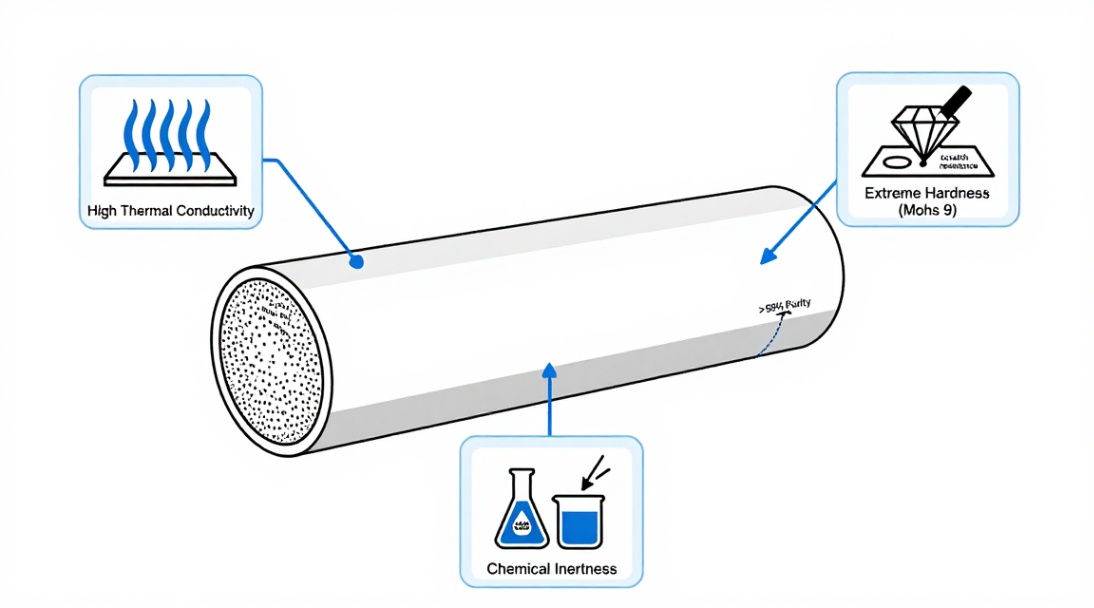
Core Competencies: What Aluminum Oxide Ceramic Actually Delivers
Aluminium Oxide Ceramic is not a single material but a family based on purity and microstructure. Its dominance stems from a brutally effective combination: exceptional hardness (second only to diamonds and a few carbide ceramics), excellent electrical insulation, and resistance to a vast array of chemicals. It doesn’t melt until over 2000°C. Think of it as the reliable, high-floor, medium-ceiling performer. You get predictable, robust performance across a wide range, but it may not be the absolute champion in any single category.
The Alumina Spectrum: Purity Dictates Performance
The grade matters. A 96% Al2O3 content ceramic offers a superb balance of properties and cost, ideal for wear plates and insulator bodies. Jump to 99.5% alumina, and you gain significant improvements in mechanical strength and thermal conductivity, making it suitable for more critical substrate and package applications in electronics. The manufacturing process-be it dry pressing, isostatic pressing, or injection molding-further tailors the grain structure and final properties.
The Hard Truth: Comparing Alumina to Its Peers
Forums like Reddit and engineering communities are filled with debates. Many users report success with alumina for general wear parts and electrical insulators but switch to more specialized ceramics when pushed to extremes. This comparison table lays out the cold, hard facts.
| Material | Key Advantages | Key Limitations | Best For (When Alumina Isn’t Enough) |
|---|---|---|---|
| Aluminum Oxide Ceramic | Excellent wear resistance, high hardness, superb electrical insulation, wide chemical inertness, cost-effective. | Relatively low fracture toughness (brittle), moderate thermal conductivity, lower strength at very high temps. | Standard wear liners, grinding media, electrical insulators, lab equipment, biocompatible components. |
| Silicon Carbide Ceramic | Exceptional thermal conductivity, extreme hardness, superior high-temperature strength, excellent oxidation resistance. | More expensive, more difficult to machine, lower electrical insulation. | High-heat-exchanger parts, seal faces in hot pumps, demanding abrasion applications, armor. |
| Aluminum Nitride Ceramic | Very high thermal conductivity (close to metals), excellent electrical insulation, matched thermal expansion to silicon. | High cost, sensitive to moisture degradation if uncoated, lower mechanical strength than alumina. | Critical electronic substrates and packages where heat dissipation is paramount. |
| Boron Nitride Ceramic | High thermal conductivity, excellent lubricity (low friction), easy machinability, thermal shock resistance. | Lower hardness and wear resistance, higher cost, can oxidize at high temps. | Release surfaces, thermal interface materials, crucibles for metal handling (with special coating). |
Engineering Reality: When to Choose Alumina and When to Walk Away
Stop wondering. Follow this logic.
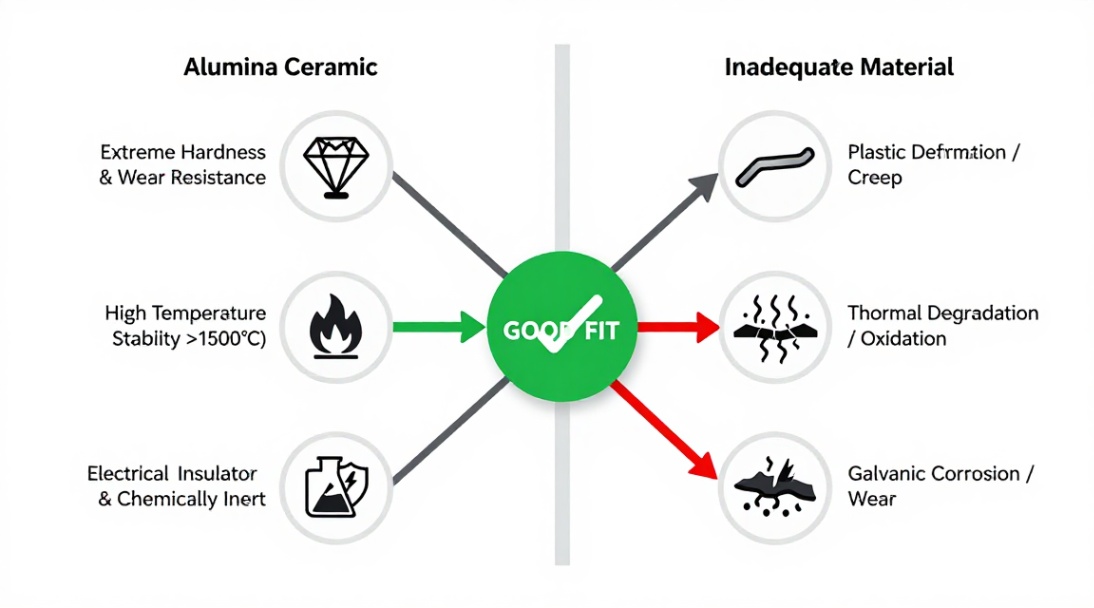
Choose Aluminium Oxide Ceramic if: Your primary threats are abrasion and corrosion at low to moderate temperatures. You need a strong electrical insulator. Budget is a significant constraint, but you cannot compromise on basic inertness and hardness. Applications include: slurry pump seals, thread guides, medical prosthetics, and cutting tool inserts for cast iron.
Reject Aluminium Oxide Ceramic if: Your design faces extreme thermal shock (rapid heating/cooling). You require maximum heat dissipation (opt for Silicon Carbide Ceramic or Aluminum Nitride Ceramic). The component is under high tensile or impact load. In these cases, the brittleness and moderate thermal conductivity of alumina become fatal flaws.
The Machinist’s Burden: Working With Alumina
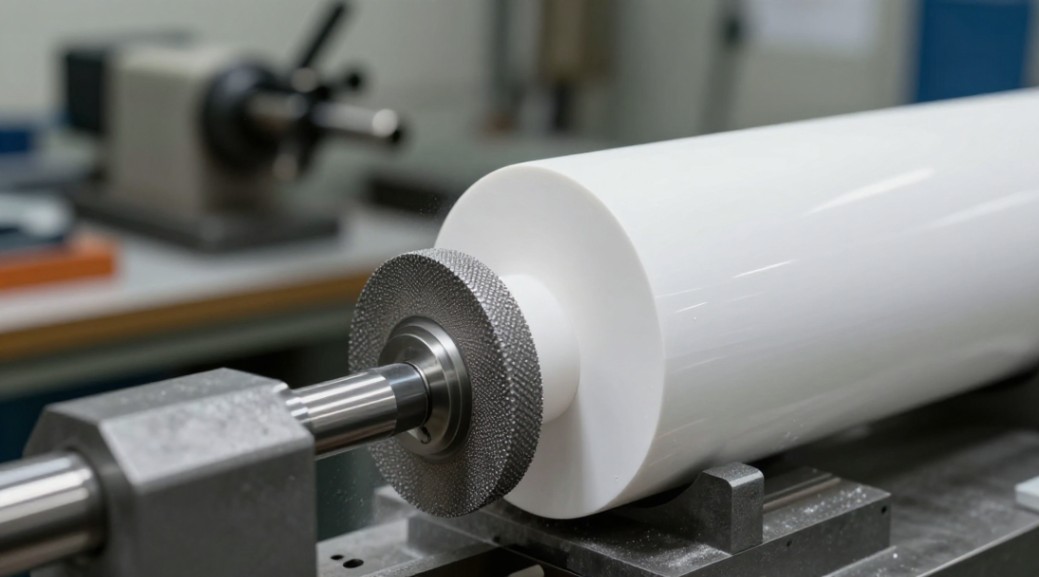
You cannot machine it like steel. Period. Net-shape forming via pressing or molding is preferred. Post-sintering machining requires diamond-grinding tools. This adds cost. Understand this constraint early in the design phase. Tolerances are also different from metals; work with your ceramic supplier from the start. The surface finish, however, can be made exceptionally smooth, which is a major advantage for wear parts and seals.
The Final Verdict: A Material of Necessary Compromise
Aluminum Oxide Ceramic is not magical. It is a pragmatic engineering solution. It offers a fortress-like defense against common industrial enemies-wear, heat, and corrosion-at a relatively accessible point. Its limitations in toughness and thermal performance are well-documented. The decision matrix is clear. For broad-spectrum, cost-conscious durability, it remains unmatched. For pushing the boundaries of thermal management or surviving impact, look to its more specialized ceramic cousins. The data is on the table. Your environment dictates the choice.
Suppiler
Synthetic-chemical focus on the research and development, production and sales of ceramic products, serving the electronics, ceramics, chemical and other industries. Since its establishment in 2015, the company has been committed to providing customers with the best products and services, and has become a leader in the industry through continuous technological innovation and strict quality management.
Our products includes but not limited to Aluminum Nitride, Aluminum Oxide, Boron Carbide, Boron Nitride, Ceramic Crucible, ect. If you are interested in any type of these, please feel free to contact us.