Next-Generation Ceramics: Unlocking Superior Properties for Industry

You’ve Been Using Alumina Wrong
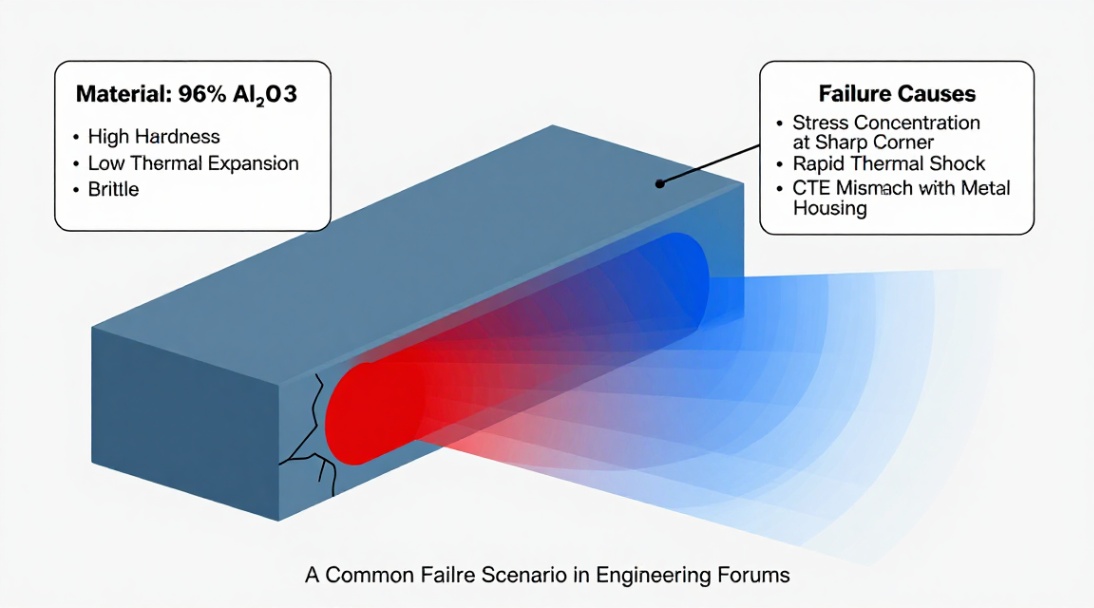
Is your aluminum oxide ceramic part cracking under thermal load? Are your seals failing prematurely? You’re not alone. Across Reddit threads and engineering forums, the same cries for help appear. “My 96% alumina substrate delaminated.” “The ceramic insulator failed in a corrosive bath.” The problem isn’t the material. It’s a fundamental misunderstanding of its brutal strengths and unforgiving weaknesses. Let’s fix that.
Critical Q&A: What You MUST Know About Aluminium Oxide Ceramic
1. What is Aluminum Oxide Ceramic?
Forget vague descriptors. Aluminum oxide ceramic (Al2O3) is a crystalline, inorganic compound formed from aluminum and oxygen. Think of it as a rigid, ionic lattice. It’s not “like” a ceramic. It defines the classic engineering ceramic. Its properties are a direct function of purity-85%, 96%, 99.5%, 99.9%-and grain structure from sintering. Higher purity means better properties, but also higher cost and machining difficulty. This isn’t a one-size-fits-all material.
2. Is alumina the hardest, best ceramic for everything?
Absolutely not. This is the most dangerous myth. Alumina is hard and wear-resistant, but it’s not the champion. For pure hardness, boron carbide (B4C) wins. For thermal conductivity, aluminum nitride (AlN) is 10x better. For fracture toughness and strength, zirconia dominates. Alumina’s sweet spot is a balanced portfolio: excellent hardness, good compressive strength, supreme electrical insulation, and stellar chemical inertness-all at a reasonable cost. Choosing alumina for a high-impact or high-thermal-shock application is a recipe for failure.
3. 96% vs. 99.5% Alumina: Does 3.5% purity really matter?
It’s the difference between a economy sedan and a race car. That 3.5% is typically silicate glass phase left from sintering aids. It controls everything. 99.5% alumina has significantly higher:
- Hardness (closer to 9 on Mohs scale)
- Dielectric strength
- Chemical resistance (the glass phase can leach)
- Maximum use temperature (up to 1700°C vs. 1500°C)
Use 96% for robust wear plates, insulator bodies, and thread guides. Use 99.5%+ for high-performance semiconductor substrates, critical seal faces, and high-temperature furnace components. Never substitute one for the other to save cost.
4. I need a part machined. What’s the biggest mistake to avoid?
Demanding tight tolerances and fine surface finishes on as-sintered parts. Aluminum oxide ceramic is sintered to a “near-net-shape.” The final dimensions are achieved through diamond grinding, lapping, or polishing-all expensive. Every extra decimal point on a tolerance callout can double the part cost. Specify only the tolerances you truly need. And remember, alumina is brittle. Avoid sharp internal corners and thin walls. Design with generous radii. A good fabricator will push back on bad designs. A cheap one will just quote it and deliver a box of fragments.
5. How does alumina fail in “extreme” environments?
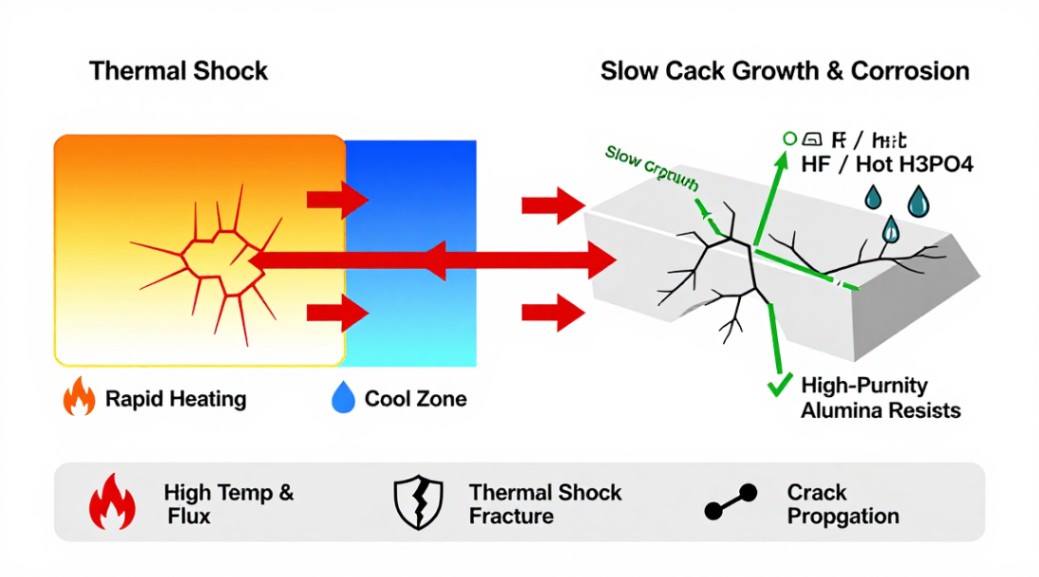
It fails from thermal shock and slow crack growth. While alumina handles continuous high temperatures beautifully, rapid temperature changes cause stress fractures. Its low fracture toughness is the culprit. In corrosive environments, the high-purity grades excel, but beware of hydrofluoric acid and hot, concentrated phosphoric acid-they attack it. For truly extreme environments above 1800°C or under extreme thermal flux, newer materials like hafnium-tantalum oxides (with melting points >3000°C) or silicon carbide ceramics are the real choices. Alumina has a ceiling.
6. When should I choose alumina over silicon carbide or zirconia?
Follow this brutal simplification:
- Choose Alumina for: Electrical insulation, wear resistance without extreme impact, chemical resistance, biocompatibility (implants), and cost-effectiveness.
- Choose Silicon Carbide for: Extreme thermal conductivity, superior high-temperature strength, and abrasion resistance in aggressive slurries.
- Choose Zirconia for: Maximum fracture toughness (it’s the “tough ceramic”), needing metal-like resilience in a wear part, or requiring very high bending strength.
Mixing up this hierarchy is where projects go over budget and fail.
7. I see it used in medical implants and cutting tools. Is it the same material?
In name only. Implant-grade alumina is 99.9%+ pure, with a meticulously controlled fine-grain microstructure (< 2µm) to maximize strength and minimize wear debris. It's biocompatible and inert. Cutting tool inserts use alumina, often toughened with zirconia or combined with titanium carbide (TiC) in composites, to handle high-speed steel cutting. The powder formulation, sintering cycle, and finishing are completely different. The lesson: “Alumina” is a category, not a specification.
The Truth About the Future
Innovation isn’t about making better plain alumina. It’s about composites and hybrid systems. Alumina matrices reinforced with silicon carbide whiskers. Nano-coatings on alumina substrates for specific functions. The future is application-engineered materials. Using off-the-shelf alumina for a cutting-edge problem is like using a hammer on a microchip.
Stop Guessing. Get It Right.
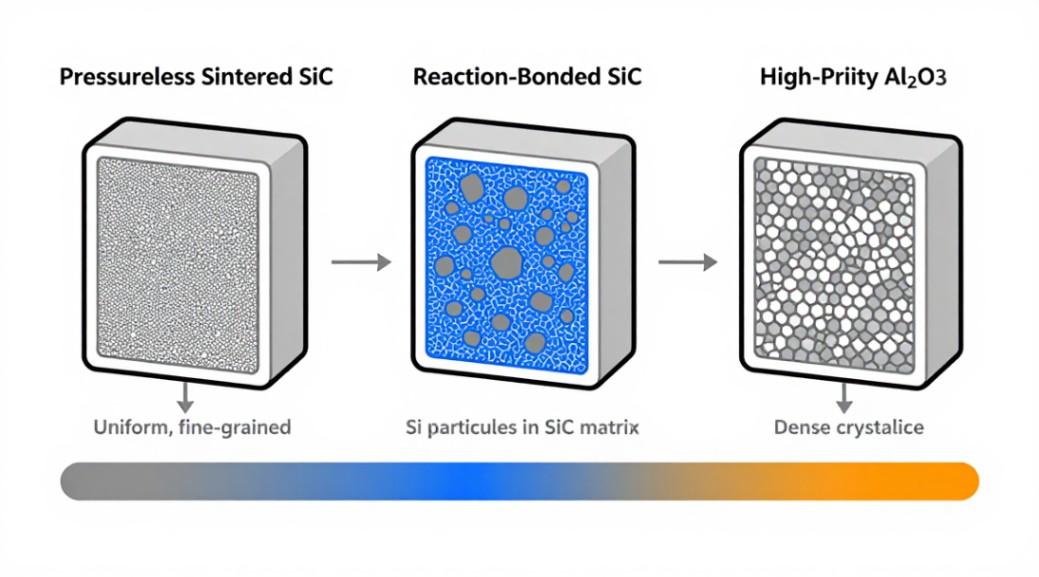
You’ve seen the warnings. You know the pitfalls. The gap between a successful alumina component and a costly mistake is knowledge and partnership. Don’t trust a generic ceramics supplier who just presses and sinters. You need a partner who understands the science behind pressureless sintered silicon carbide ceramics versus reaction-bonded versions, and where alumina fits in that spectrum.
Ready to stop compromising? Submit your project’s mechanical, thermal, and electrical requirements now. Our engineers will perform a no-cost material selection analysis. We’ll tell you if alumina is your answer-or if you need boron nitride with a special coating, mullite, or another advanced ceramic. We provide the hard truth and the right part. Click here to start your application review.
Suppiler
Synthetic-chemical focus on the research and development, production and sales of ceramic products, serving the electronics, ceramics, chemical and other industries. Since its establishment in 2015, the company has been committed to providing customers with the best products and services, and has become a leader in the industry through continuous technological innovation and strict quality management.
Our products includes but not limited to Aluminum Nitride, Aluminum Oxide, Boron Carbide, Boron Nitride, Ceramic Crucible, ect. If you are interested in any type of these, please feel free to contact us.