Next-Generation Ceramics: Unlocking Superior Properties for Industry

Over 70% of the world’s advanced ceramic components rely on a single, ubiquitous material: aluminum oxide ceramic, or alumina. This staggering figure isn’t just about volume; it’s a testament to solving a fundamental engineering paradox. How do you achieve the hardness of a cutting tool, the inertness of a biomedical implant, and the insulating properties of a circuit board substrate-all from one base material? The answer lies not in a singular formula, but in mastering the practical variables that transform a simple oxide into a high-performance engineered component. This guide provides the steps to do exactly that.
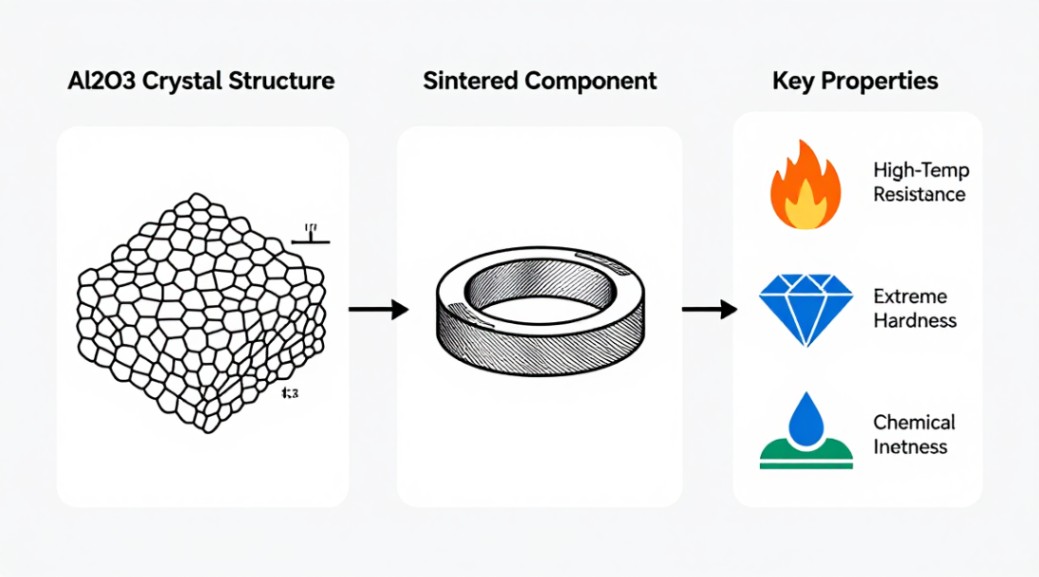
The Foundation: Understanding What Aluminium Oxide Ceramic Is
At its core, aluminum oxide ceramic is a synthetic material produced by fusing or sintering purified alumina (Al2O3) powder. Its performance, however, is anything but simple. Unlike metals or polymers, its properties are not malleable through alloying in a traditional sense. Instead, you engineer them through three primary levers: purity, microstructure, and processing. The alumina content, typically ranging from 85% to over 99.9%, dictates the baseline. Higher purity equates to higher hardness, better corrosion resistance, and superior electrical insulation. Microstructure-the size, shape, and distribution of the ceramic grains-controls toughness and wear characteristics. This fundamental understanding separates effective application from costly failure.
A Step-by-Step Guide to Specifying Alumina for Your Application
Selecting the correct grade of alumina is a systematic process, not a guess. Follow these steps.
Step 1: Define the Primary Failure Mode
Begin by asking one question: What will cause this part to fail first? Is it abrasive wear from particulate matter? Chemical attack from a harsh process fluid? Thermal shock from rapid heating and cooling? Or electrical breakdown under high voltage? Your answer directly points to the most critical property. For wear, prioritize hardness and fine grain size. For corrosion, maximize purity. For thermal shock, consider a compromise with materials like mullite ceramic or engineered alumina compositions with controlled porosity.
Step 2: Select the Alumina Grade and Manufacturing Process
With the failure mode identified, match it to a material grade and forming method. For electrical substrates or seals requiring extreme purity and density, specify 99.5% Al2O3 or higher, formed via isostatic pressing. For a robust wear liner in mining equipment, a 92% alumina formed by dry pressing may offer the optimal balance of performance and cost. Remember, the manufacturing process locks in the microstructure. Isostatic pressing yields more uniform, isotropic properties than dry pressing. Injection molding allows for complex shapes but may introduce organic binders that affect final purity. Do not select a material in isolation from its production method.
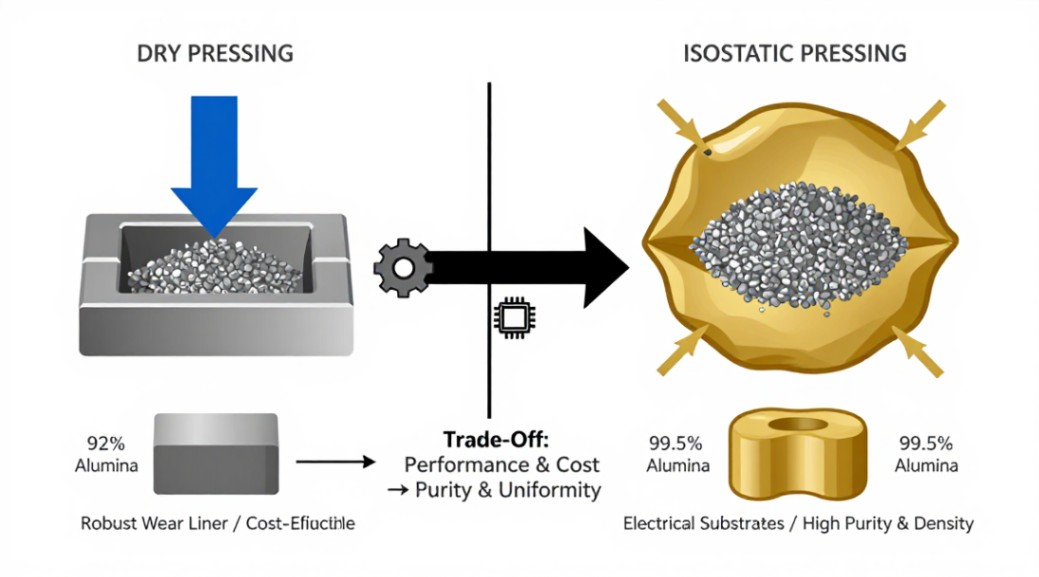
Step 3: Design for Ceramics, Not Metals
This is the most common pitfall. Aluminum oxide ceramic possesses exceptional compressive strength but is intrinsically brittle. Its tensile strength is a fraction of its compressive strength. Avoid sharp corners and design generous radii. Accommodate its low fracture toughness by using supportive housings or designing components to be loaded in compression, not tension or bending. For assemblies, always account for its different coefficient of thermal expansion compared to metals to avoid stress cracking during operation. Expert designers treat alumina not as a direct metal substitute, but as a unique material requiring its own design rules.
Alumina in Context: Comparing Advanced Ceramic Options
Alumina is not always the answer. A proper engineer’s toolkit contains multiple options. When extreme thermal conductivity is needed for a heat sink, aluminum nitride ceramic is superior. For applications demanding the ultimate in wear resistance and hardness, such as abrasive waterjet nozzles or heavy-duty seals, silicon carbide ceramic or boron carbide ceramic are the materials of choice, though at a higher cost and with more challenging machining. For high-temperature structural applications above 1600°C where creep resistance is vital, silicon nitride ceramic often outperforms alumina. The choice between alumina and zirconia, for instance, often hinges on the trade-off between alumina’s higher hardness and zirconia’s superior fracture toughness. Knowing when *not* to use alumina is as critical as knowing how to use it.
Future Trends and the Path Forward
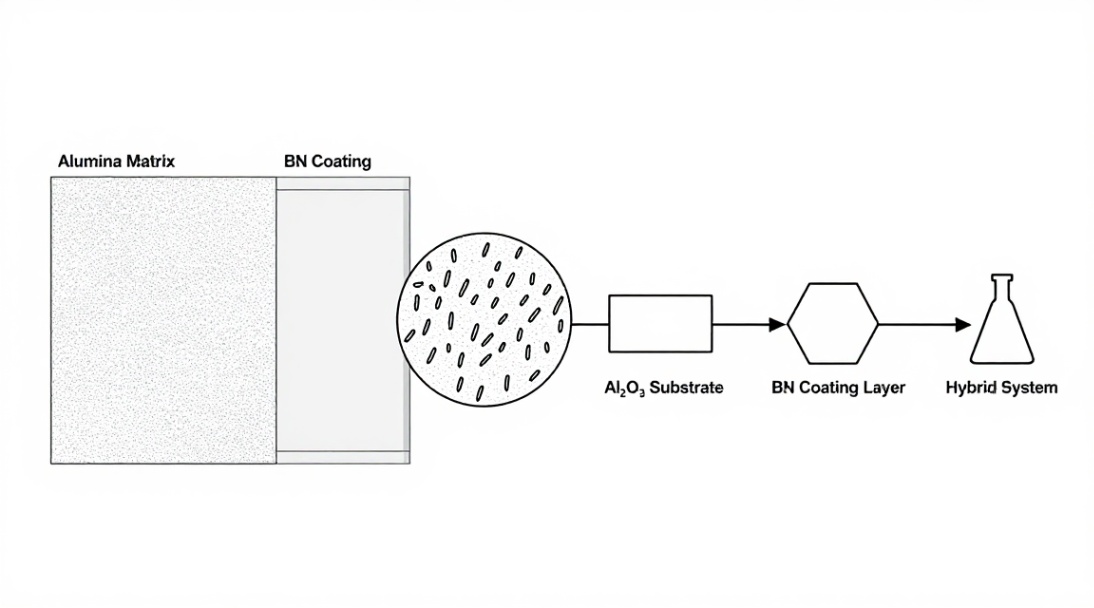
The frontier of aluminium oxide ceramic lies in composite and nanoscale engineering. Researchers are integrating secondary phases, such as silicon carbide whiskers or particles, to dramatically improve fracture toughness, creating materials that resist chipping and catastrophic failure. Another key advancement is the development of advanced coatings. For example, applying a special coating for boron nitride ceramic crucibles to alumina components can create a hybrid system with the wetting resistance of BN and the structural integrity of alumina. The ultimate goal, as seen in ultra-high temperature ceramic (UHTC) research, is creating dense, continuous oxide layers that provide unprecedented ablation resistance in extreme environments, pushing operational limits ever higher.
Your next step is to translate this knowledge into a specification. Begin by consulting with a technical specialist who can review your application requirements, suggest a specific alumina grade, and advise on manufacturability. The most successful projects treat alumina not as a commodity, but as a engineered solution that demands expertise from design through to production.
Suppiler
Synthetic-chemical focus on the research and development, production and sales of ceramic products, serving the electronics, ceramics, chemical and other industries. Since its establishment in 2015, the company has been committed to providing customers with the best products and services, and has become a leader in the industry through continuous technological innovation and strict quality management.
Our products includes but not limited to Aluminum Nitride, Aluminum Oxide, Boron Carbide, Boron Nitride, Ceramic Crucible, ect. If you are interested in any type of these, please feel free to contact us.