Next-Generation Ceramics: Unlocking Superior Properties for Industry

You’re Using the Wrong Material
Do you constantly replace worn-out parts? Are you battling component failure in high-temperature or corrosive environments? The core problem often isn’t your design. It’s your material selection. As a specialist in technical ceramics for over two decades, I see the same mistakes. Engineers default to metals or plastics, only to face premature breakdown. Or, they choose an advanced ceramic like silicon carbide without needing its premium cost. The workhorse solution is often aluminium oxide ceramic.
The Unmatched Versatility of Aluminium Oxide Ceramic
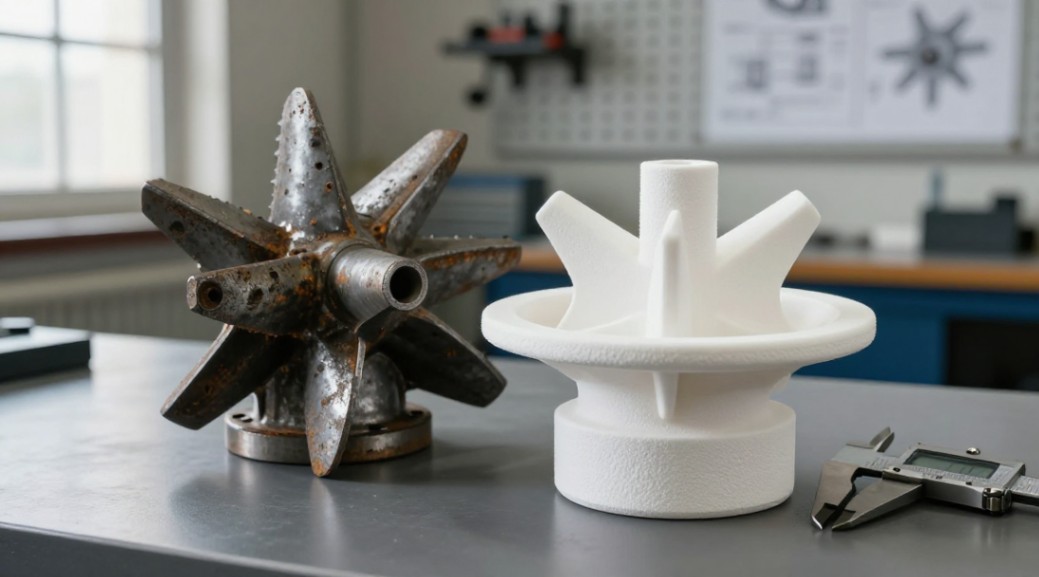
Aluminum oxide ceramic, or alumina, is not just another material. It’s a cornerstone of industrial engineering. Synthesized from high-purity alumina powder and densified through firing, it delivers a unique balance of properties that metals and polymers cannot match. Its success hinges on a fundamental combination of hardness, stability, and resistance.
1. Defining the Core Properties
Before you specify a single component, understand what alumina brings to the table. Its value is defined by these interconnected characteristics:
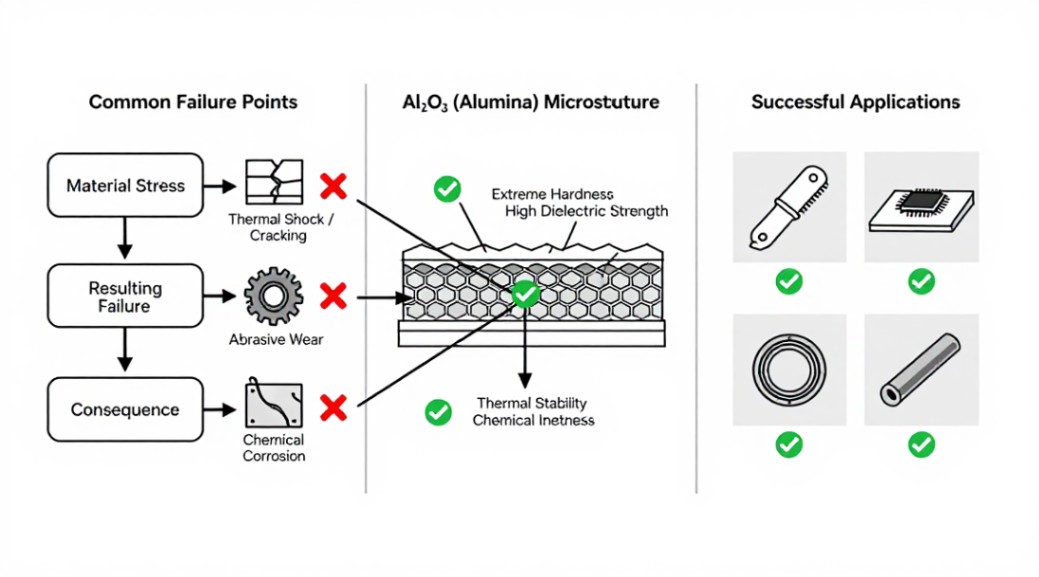
- Exceptional Hardness: Alumina ranks 9 on the Mohs scale. Only diamond is harder. This directly translates to superior wear resistance, making it ideal for abrasive environments.
- High Temperature Stability: It maintains structural integrity at continuous operating temperatures up to 1750°C. It does not oxidize or creep like metals.
- Excellent Electrical Resistivity: With volume resistivity exceeding 10^14 Ω·cm, it is a premier insulator, even at elevated temperatures.
- Superior Compressive Strength: It withstands crushing loads far better than its tensile strength suggests. Design to put it in compression.
- Chemical Inertness: Alumina resists attack from strong acids, alkalis, and molten metals. It won’t corrode in the vast majority of chemical processes.
2. The Manufacturing Reality: It’s All About Density
The performance of an aluminum oxide ceramic part is dictated by its manufacturing process. Higher density means fewer pores, leading to better mechanical and dielectric properties.
Uniaxial Dry Pressing: For simple, high-volume shapes. Powder is compacted in a rigid steel die at pressures ranging from 50 to 200 MPa. Tolerances are typically ±0.5% on dimensions.
Isostatic Pressing (CIP): For more complex geometries and superior density uniformity. Powder in a flexible mold is subjected to equal pressure from all directions, typically using hydraulic oil at 100-300 MPa.
Sintering: The final, critical step. The pressed “green” part is fired in a kiln. Temperatures ramp up precisely, often holding at 1500-1800°C for several hours. This process drives out binders and causes the alumina particles to fuse, achieving near-theoretical density.
3. The Aluminum Oxide Ceramic Application Matrix
Where does alumina deliver the highest return on investment? These applications are proven.
- Wear Technology: Pump seals, liners, nozzles, and cutting tool inserts. It outlasts steel in abrasive slurry applications by factors of 10 to 100.
- Electrical & Electronic Insulation: Substrates for thick-film circuits, spark plug insulators, high-voltage feedthroughs, and sensor housings. Its dielectric strength and thermal conductivity are a perfect blend.
- Biomedical Implants: Hip joint bearings and dental implants. Its biocompatibility and lubricity in aqueous environments make it a trusted material.
- Thermal Management: Furnace tubes, thermocouple protection sheaths, and kiln furniture. It withstands thermal shock better than many silicon nitride ceramic or reaction-sintered silicon carbide ceramics options in cyclical heating.
4. The Grade Dictates Performance: Purity is Power
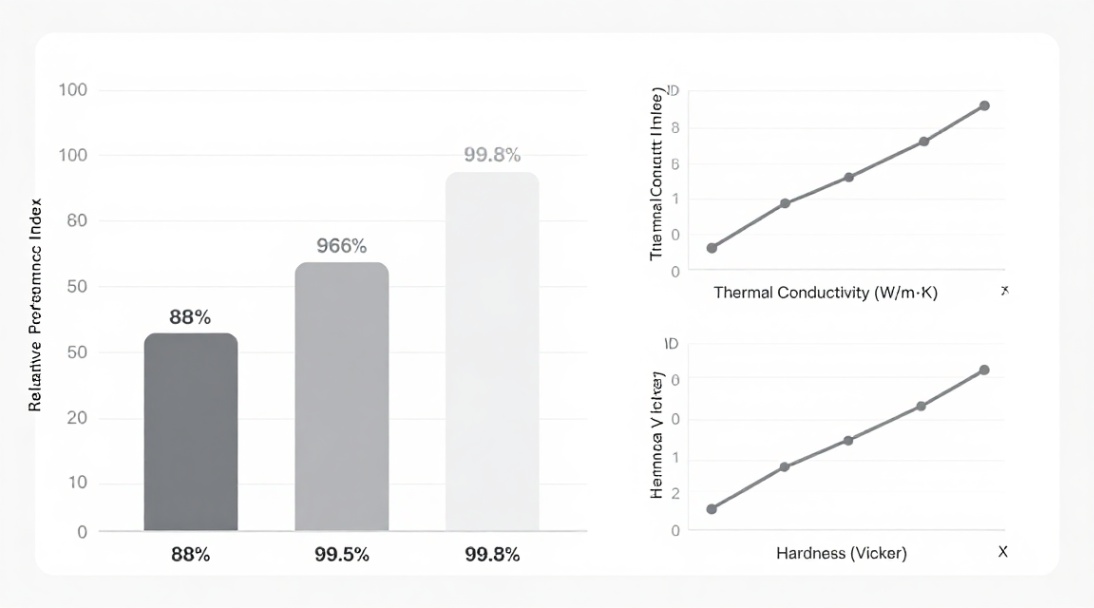
Not all alumina is equal. The alumina content, expressed as a percentage, is the primary performance driver. This trade-off is non-negotiable.
| Grade | Al2O3 Content | Key Characteristics | Typical Applications |
|---|---|---|---|
| Standard | 85% – 95% | Good mechanical strength, cost-effective. Higher glass phase content. | General wear parts, thread guides, insulators. |
| High Purity | 99.5% – 99.9% | Superior hardness, better corrosion resistance, excellent dielectric properties. Lower porosity. | Precision seals, semiconductor processing components, advanced substrates. |
| Specialty Co-doped | 99.8%+ | Ultra-fine grain structure, enhanced fracture toughness, very high surface finish. | Biomedical implants, ballistic armor, precision tooling. |
5. Alumina vs. The Competition: An Honest Comparison
Choosing alumina often means choosing cost-effectiveness and reliability over niche superiority. Here’s where it stands against other technical ceramics.
- vs. Zirconia (ZrO2): Zirconia has higher fracture toughness and strength. Use it for impact-prone components. Choose alumina for superior hardness, lower cost, and better long-term stability at high temperatures.
- vs. Silicon Carbide Ceramic: Silicon carbide ceramics, including pressureless sintered and recrystallized types, have much higher thermal conductivity (3-4x alumina) and better oxidation resistance above 1600°C. Use SiC for heat exchangers. Choose alumina for electrical insulation and chemical resistance in wet processes.
- vs. Boron Nitride Ceramic: Boron nitride ceramic is a soft, machinable insulator with excellent thermal conductivity. It’s often used for breakable crucibles, sometimes with a special coating for boron nitride ceramic crucibles. Alumina is harder, more wear-resistant, and significantly less expensive for permanent fixtures.
6. The Machining Hurdle: You Can’t Machine It Like Steel
This is the most common point of failure in design. Once sintered, alumina is extremely hard and brittle. Post-firing machining is expensive and requires diamond-impregnated tools.
Critical Design Rule: Machine as-sintered (AS-FIRED) whenever possible. Design to the capabilities of the green machining state for cost-sensitive projects. Standard sintered tolerances for pressed parts are typically ±0.5% on dimensions, with precision-ground tolerances achievable down to ±0.0005 inches.
7. Where The Industry Is Heading: Future-Proofing with Alumina
The future of aluminum oxide ceramic is not about obsolescence. It’s about enhancement and specialization.
- Ultra-Fine Grained and Nanostructured Alumina: Grain sizes below 1 micron dramatically increase strength and wear resistance. This pushes alumina into applications previously reserved for more expensive ceramics.
- Alumina Matrix Composites: Reinforcing alumina with zirconia platelets, silicon carbide whiskers, or graphene creates materials with tailored toughness and thermal properties, blurring the lines between ceramic families.
- Additive Manufacturing (3D Printing): Binder jetting and stereolithography of alumina pastes are enabling complex, monolithic geometries previously impossible to press or machine, reducing assembly and failure points.
The Verdict: Stop Guessing, Start Specifying
Industry forums like Reddit are full of engineers sharing frustration. One user lamented, “Our pump seals lasted three weeks. Switched to 99.5% alumina and we’re at nine months and counting.” Another noted, “The initial quote for alumina substrates seemed high, but we eliminated three cooling stages in our power module.” The evidence is clear.
Alumina is not a miracle material. It’s a predictable, high-performance engineering tool. If your application demands hardness, electrical insulation, thermal stability, or chemical resistance-and you need a cost-effective solution-you are likely overlooking the optimal candidate.
Your next step is non-negotiable. Stop retrofitting failures. Contact a reputable technical ceramic manufacturer with your operating parameters: temperature, chemical environment, mechanical load, and required lifespan. Request material samples-99.5% and 96% alumina-and test them under real-world conditions. The data from a simple wear or corrosion test will provide more clarity than months of theoretical analysis. The long-term reliability you gain will validate the choice. Make the call today.
Suppiler
Synthetic-chemical focus on the research and development, production and sales of ceramic products, serving the electronics, ceramics, chemical and other industries. Since its establishment in 2015, the company has been committed to providing customers with the best products and services, and has become a leader in the industry through continuous technological innovation and strict quality management.
Our products includes but not limited to Aluminum Nitride, Aluminum Oxide, Boron Carbide, Boron Nitride, Ceramic Crucible, ect. If you are interested in any type of these, please feel free to contact us.