Next-Generation Ceramics: Unlocking Superior Properties for Industry

What is Aluminium Oxide Ceramic? (The Workhorse Defined)
You’ve hit a wall. Your metal part is failing from corrosion. Your electronic component is overheating. The cutting tool is wearing down far too quickly. You need a material that can handle extreme conditions without complaint. This is where aluminum oxide ceramic shines. Often called alumina, it’s a technical ceramic made from aluminium and oxygen (Al2O3). Think of it as the dependable, unbreakable workhorse of the materials world. It doesn’t have the flash of some newer materials, but for sheer reliability across a vast range of punishing environments, nothing beats a well-specified piece of alumina.
Common Questions About Aluminum Oxide Ceramic
What exactly is aluminum oxide ceramic made of?
At its core, aluminum oxide ceramic is a simple compound: two atoms of aluminum bonded to three atoms of oxygen. This simple chemical formula, Al2O3, creates a remarkably stable and robust structure. Manufacturers take high-purity alumina powder, form it into a desired shape-like a substrate, tube, or wear plate-and then fire it at extremely high temperatures in a process called sintering. This fuses the powder grains together into a dense, polycrystalline solid that is incredibly hard and inert.
How strong and hard is aluminium oxide ceramic?
It’s exceptionally hard and stiff. With a hardness second only to diamonds and boron carbide ceramic on the Mohs scale, alumina resists abrasion and scratching superbly. Its mechanical strength is excellent in compression. However, like most ceramics, it is brittle. It can withstand huge crushing forces but is sensitive to sharp impacts or tension. For pure toughness under shock, engineers might look at zirconia or silicon nitride ceramic instead.
Is aluminium oxide ceramic a good electrical insulator?
This is one of its superstar properties. Yes, aluminum oxide ceramic is an outstanding electrical insulator, even at very high temperatures. This, combined with its good thermal conductivity (for a ceramic), makes it the #1 choice for substrates in electronics. It reliably isolates electrical circuits while effectively dissipating heat away from sensitive components.
Can it handle high temperatures and corrosive chemicals?
Absolutely. Alumina maintains its strength and shape up to about 1700°C (3092°F). It doesn’t oxidize or melt. In terms of corrosion resistance, few materials compare. It laughs off attacks from most acids, alkalis, and molten metals. This makes it perfect for furnace linings, labware, and parts in harsh chemical processing environments.
What are the most common forms and applications?
You’ll find alumina in shapes tailored to its job:
- Substrates & Insulators: The green boards in your electronics? Often alumina. It’s the foundation for circuits and microchips.
- Wear Plates & Liners: In mining, agriculture, and manufacturing, alumina tiles protect equipment from abrasive materials.
- Tubes & Crucibles: Used in high-temperature furnaces and for melting high-purity metals. (For ultra-reactive melts, a special coating for boron nitride ceramic crucibles might be needed).
- Cutting Tools: Alumina-based tools machine cast iron and superalloys at high speeds.
- Biomedical Implants: Its biocompatibility makes it ideal for hip joint bearings and dental implants.
How does it compare to other engineering ceramics?
Choosing the right ceramic is critical. Here’s a quick, opinionated comparison:
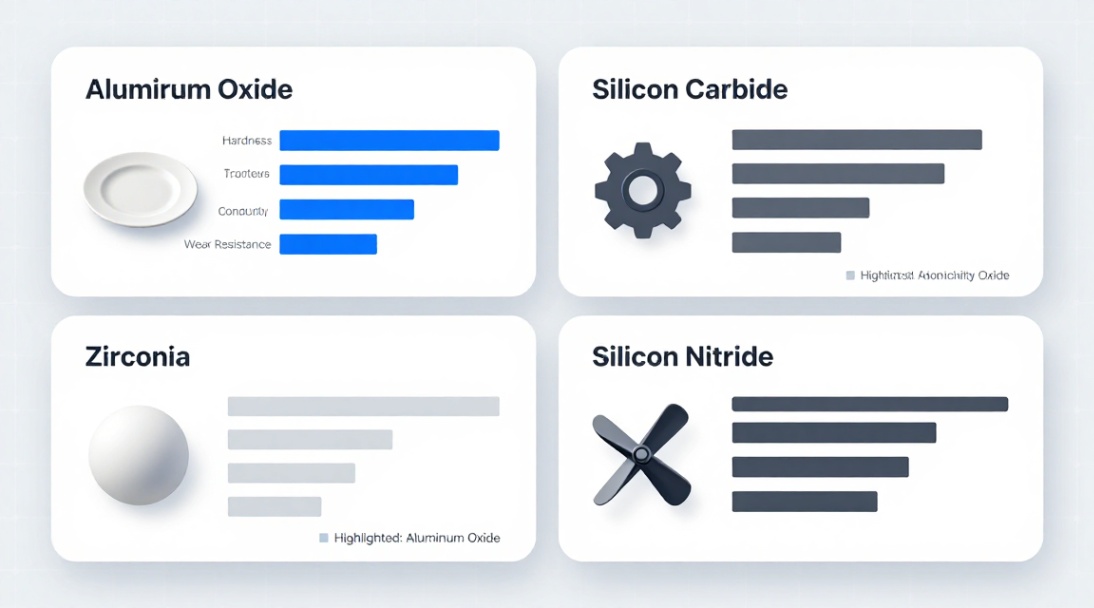
- vs. Zirconia (ZrO2): Zirconia is much tougher (impact-resistant) and has higher flexural strength. Choose zirconia for parts subject to shock. But alumina wins on hardness, temperature limit, cost, and wear resistance.
- vs. Silicon Nitride (Si3N4): Silicon nitride has superb thermal shock resistance and fracture toughness. It’s the go-to for high-performance bearings and engine components. Alumina is harder and a better electrical insulator.
- vs. Silicon Carbide (SiC): Silicon carbide ceramic has higher thermal conductivity and is even harder and more wear-resistant. It’s better for extreme abrasion and very high thermal applications. Alumina is generally more cost-effective and easier to manufacture into complex shapes.
What are the key advantages and disadvantages?
Let’s be blunt. The advantages are compelling: extreme hardness, excellent wear and corrosion resistance, superb electrical insulation, high-temperature capability, and good biocompatibility. It’s also widely available and relatively cost-effective.
The main drawback is brittleness. Design with this in mind. Avoid sharp corners and stress concentrators. It also has lower thermal shock resistance than silicon nitride or mullite ceramic. Sudden temperature changes can cause cracking.
Real-World Guidance: How to Specify Aluminum Oxide
On forums like Reddit, engineers often ask, “My component failed, should I switch to alumina?” The community feedback is clear: first, define your failure mode. Is it wear? Corrosion? Electrical breakdown? Heat? Alumina excels when multiple of these factors are present.
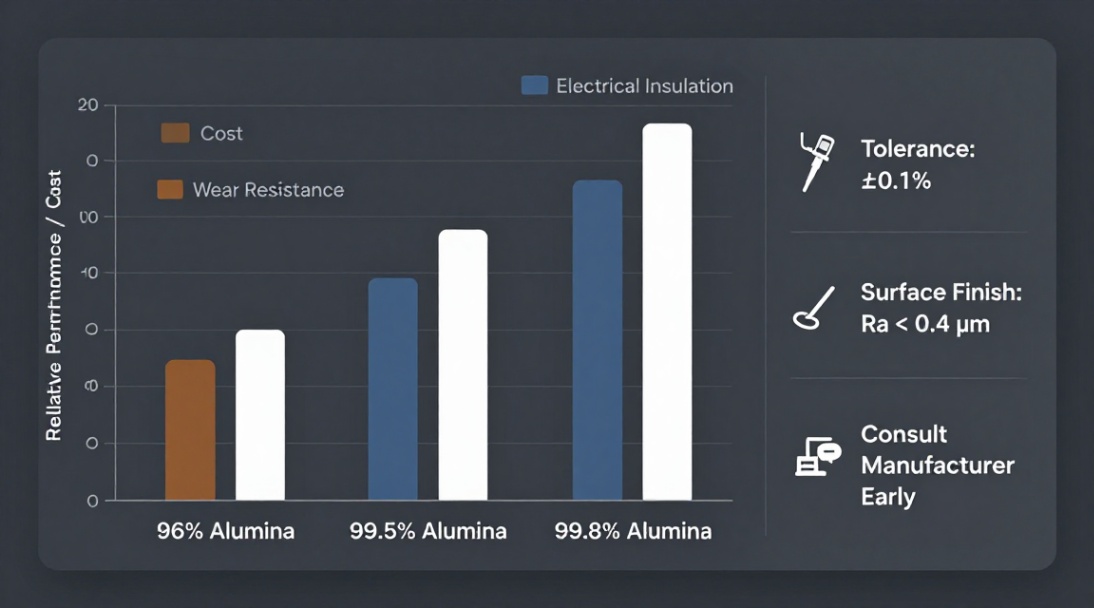
When you spec it, don’t just ask for “alumina.” Specify the purity (e.g., 96%, 99.5%, 99.8%). Higher purity improves properties but increases cost. Define the required surface finish and tolerance-machining ceramics is specialized work. And always, always talk to an experienced ceramic manufacturer early in your design process. Their insight on formability and stress points is invaluable.
Your Next Step
Now you understand the power and the limits of aluminium oxide ceramic. This knowledge puts you ahead. Before you commit to a material, list your top three performance demands. Is electrical insulation non-negotiable? Is this a wear part in a corrosive slurry? Match your needs to alumina’s strengths. For pure abrasion, consider boron carbide. For wild thermal cycling, look at silicon nitride. But for that beautiful combination of hardness, insulation, and chemical defiance, alumina is often the perfect, unshakeable answer. You’ve got this.
Suppiler
Synthetic-chemical focus on the research and development, production and sales of ceramic products, serving the electronics, ceramics, chemical and other industries. Since its establishment in 2015, the company has been committed to providing customers with the best products and services, and has become a leader in the industry through continuous technological innovation and strict quality management.
Our products includes but not limited to Aluminum Nitride, Aluminum Oxide, Boron Carbide, Boron Nitride, Ceramic Crucible, ect. If you are interested in any type of these, please feel free to contact us.