Next-Generation Ceramics: Unlocking Superior Properties for Industry

The Corrosion Conundrum and a 99%+ Solution
Despite billions spent on stainless steel and exotic alloys, a staggering 80% of chemical plant failures stem from corrosion. The industry has long sought a material with near-perfect chemical inertness. Enter pressureless sintered silicon carbide. This advanced ceramic doesn’t just resist acids; it often ignores them. Professor Alan T. Ritter, a materials scientist with 30 years in corrosion engineering, puts it plainly: ‘For sulfuric, hydrochloric, and nitric acids, pressureless sintered SiC isn’t a choice. It’s the benchmark.’
What Is Pressureless Sintered Silicon Carbide?
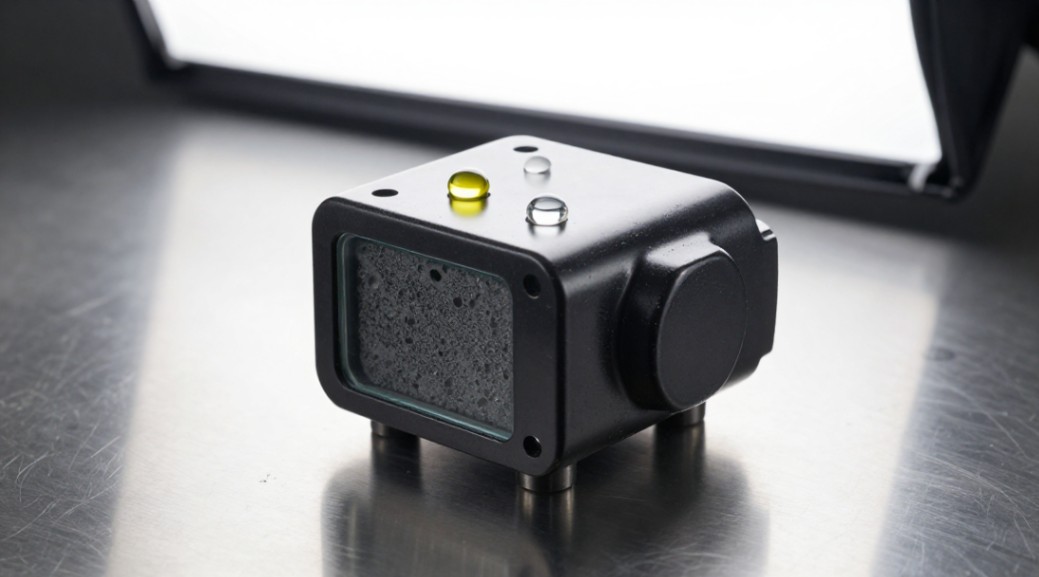
Pressureless sintered silicon carbide (PLS SiC) is a monolithic, fully dense ceramic material. It achieves its final, non-porous form through high-temperature heating without external pressure. This unique manufacturing process distinguishes it from other SiC types. Let’s break down this definition.
The Power of Pressureless Sintering
Unlike reaction-bonded or hot-pressed SiC, the pressureless sintering process relies on precisely formulated powder blends and sintering aids. Manufacturers fire the formed parts in an inert atmosphere at temperatures exceeding 2000°C. The key? No applied mechanical pressure. This allows for the production of complex, near-net-shape components with remarkable consistency.
The Microstructure That Defines Performance
The result is a uniform, fine-grained, single-phase microstructure with zero open porosity. That density is non-negotiable. Pores are highways for corrosive attack. By eliminating them, pressureless sintered silicon carbide creates an impenetrable barrier. This gives the material its legendary corrosion resistance and mechanical integrity.
Unrivaled Corrosion Resistance in Acids
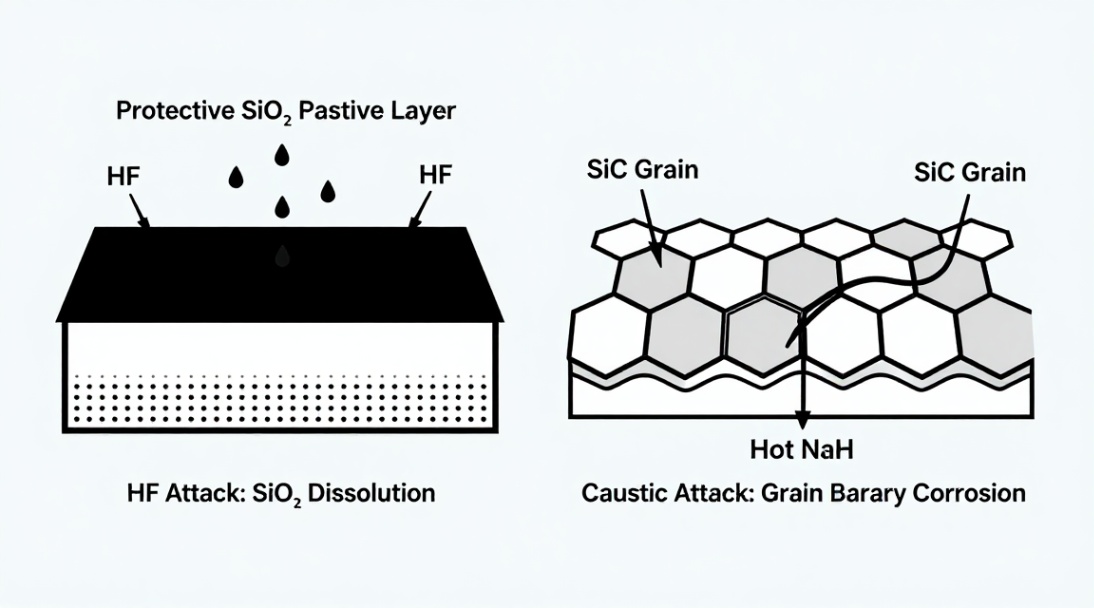
This is where PLS SiC truly excels. Its chemical inertness stems from the strong silicon-carbon covalent bond and the protective silica (SiO₂) passive layer that forms on its surface.
Dominant Performance Against Mineral Acids
PLS SiC handles the most aggressive acids with ease. It shows exceptional corrosion resistance to concentrated sulfuric acid (H₂SO₄) at boiling points. It remains completely inert in hydrochloric acid (HCl) at all concentrations and temperatures. It also withstands nitric acid (HNO₃) and phosphoric acid (H₃PO₄). The material maintains this resistance across a vast temperature range, from cryogenic to well over 1000°C in some environments. This thermal stability directly enhances its acid resistance where heat accelerates corrosion in metals.
Knowing the Boundaries: Exceptions and Limitations
No material is universal. Understanding boundaries is critical for safe application. Pressureless sintered silicon carbide has two primary vulnerabilities. The first is hydrofluoric acid (HF) and acidic fluorides, which actively dissolve the protective silica layer. The second is hot, concentrated caustic alkalis (like NaOH or KOH), which can slowly attack the silicon carbide grain boundaries. For these environments, you must select an alternative engineered ceramic.
Why PLS SiC Outperforms Other Industrial Ceramics
When specifying materials for acid service, engineers compare options. Here is how PLS SiC stacks up.
- Alumina (Al₂O₃): Good for many acids but vulnerable to hot hydrochloric and sulfuric acids. PLS SiC offers a broader, more reliable acid resistance profile.
- Zirconia (ZrO₂): Excellent mechanical properties but can degrade in hot acidic conditions, especially with certain ions. PLS SiC provides superior chemical stability.
- Reaction-Bonded Silicon Carbide: Contains free silicon metal, which is susceptible to attack by strong alkalis and some oxidizers. The fully dense, single-phase structure of pressureless sintered SiC provides superior purity and resistance.
The core advantage is mechanical strength retention. Metals corrode and weaken. Polymers swell and degrade. PLS SiC components keep their hardness, wear resistance, and structural integrity year after year in the corrosion loop.
Real-World Applications in Acidic Environments
This isn’t lab theory. This is field-proven performance under punishing conditions.
- Chemical Processing: Linings, thermowells, support beams, and burner nozzles in acid-producing reactors and distillation columns.
- Pump Seals & Bearings: The standard for sealing aggressive, abrasive acid slurries in centrifugal and seal-less pumps. Failure is not an option here.
- Valve Components: Trims, seats, and balls for control and shut-off valves handling hot acids.
- Pollution Control: Critical components in acid-waste gas scrubbers, flue gas desulfurization systems, and acid recovery units.
Your Practical Guide to Material Selection
Specifying pressureless sintered silicon carbide requires a methodical approach. Follow this framework.
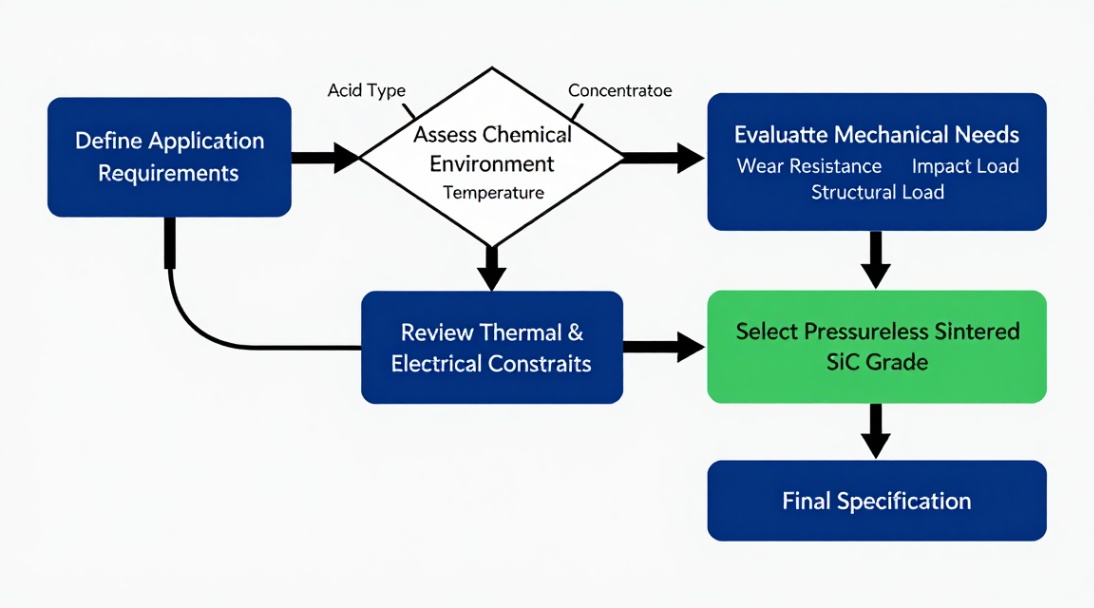
- Identify the Corrodent: List every chemical, its concentration, and any impurities or particulates.
- Define the Temperature Profile: Include both steady-state operating temperatures and any thermal cycling or spikes.
- Map the Mechanical Stress: Consider pressure, wear from abrasives, and potential for thermal shock.
- Consult Corrosion Data Charts: Always reference manufacturer-specific isocorrosion diagrams for PLS SiC. Do not assume all SiC grades are equal.
- Prototype and Test: For critical applications, conduct field trials with sample components under actual process conditions.
The journey through corrosive processing is challenging. But with the right knowledge, you can specify materials with confidence. Focus on the full chemical and physical environment. Understand that pressureless sintered silicon carbide delivers a level of passive reliability that metals and polymers simply cannot match. Its performance in acid corrosion resistance redefines what is possible for pump longevity, valve reliability, and reactor safety. Your path forward is clear: define the environment, consult the data, and trust in the science of a truly inert material.
Suppiler
Synthetic-chemical focus on the research and development, production and sales of ceramic products, serving the electronics, ceramics, chemical and other industries. Since its establishment in 2015, the company has been committed to providing customers with the best products and services, and has become a leader in the industry through continuous technological innovation and strict quality management.
Our products includes but not limited to Aluminum Nitride, Aluminum Oxide, Boron Carbide, Boron Nitride, Ceramic Crucible, ect. If you are interested in any type of these, please feel free to contact us.