Next-Generation Ceramics: Unlocking Superior Properties for Industry

A Tale of a Worn-Out Pump Seal
I remember a frantic call from a client years ago. Their slurry pump seal had failed-again. Abrasive particles were chewing through metal seals in weeks, causing costly downtime. We were facing a classic battle of wear. The solution we turned to wasn’t a fancy new alloy. It was aluminium oxide ceramic. This simple material, essentially refined and toughened ceramic, extended the seal’s life by over a year. That experience, repeated in countless industries, convinced me of the quiet power of understanding this fundamental engineering material.
What is Aluminium Oxide Ceramic?
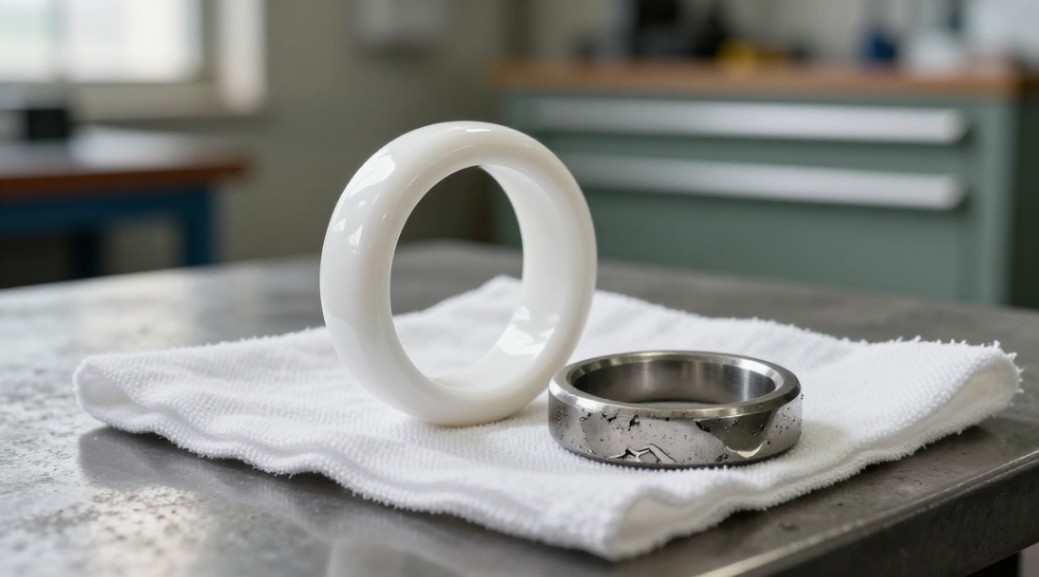
At its core, aluminium oxide ceramic (Al2O3) is a high-performance technical ceramic primarily composed of aluminum and oxygen. Don’t confuse it with the raw material bauxite or the soft alumina used as a polishing compound. Through precise manufacturing, we transform aluminum oxide powder into a dense, polycrystalline structure. This process gifts the material with a unique combination of properties that metals and polymers simply cannot match.
Key Properties: Why Engineers Choose Al2O3
Its value lies in a powerful property suite. First, it’s exceptionally hard, ranking 9 on the Mohs scale, just below diamond. This translates to superb wear resistance. Second, it’s an excellent electrical insulator, even at high temperatures, making it ideal for spark plugs and circuit substrates. It resists attack from most acids and alkalis, and it maintains strength up to about 1600°C (2912°F). It’s also biocompatible, which allows its use in hip joints and dental implants.
Grades and Purities
Not all alumina is equal. The most common commercial grades are 96% and 99.5% (or 99.8%) purity. The 96% alumina offers a great balance of properties and cost, containing silicate glass phases that aid sintering. The 99.5% grade is purer, offering higher hardness, better corrosion resistance, and superior high-temperature performance, but it’s more challenging and expensive to machine.
How is Aluminum Oxide Ceramic Made?
The journey from powder to part is fascinating. It starts with fine, high-purity aluminium oxide powder. Manufacturers mix this powder with binders and lubricants, then form it into a ‘green’ state via pressing, extrusion, or casting. Next, they fire the component in a kiln at temperatures exceeding 1500°C. This sintering process densifies the material, causing the powder particles to fuse into a solid, coherent mass with minimal porosity. The result is a near-net-shape ceramic part with its legendary properties.
Where is Aluminum Oxide Ceramic Used?
You’ll find alumina ceramics in two broad arenas: where things wear out, and where electricity needs controlling.
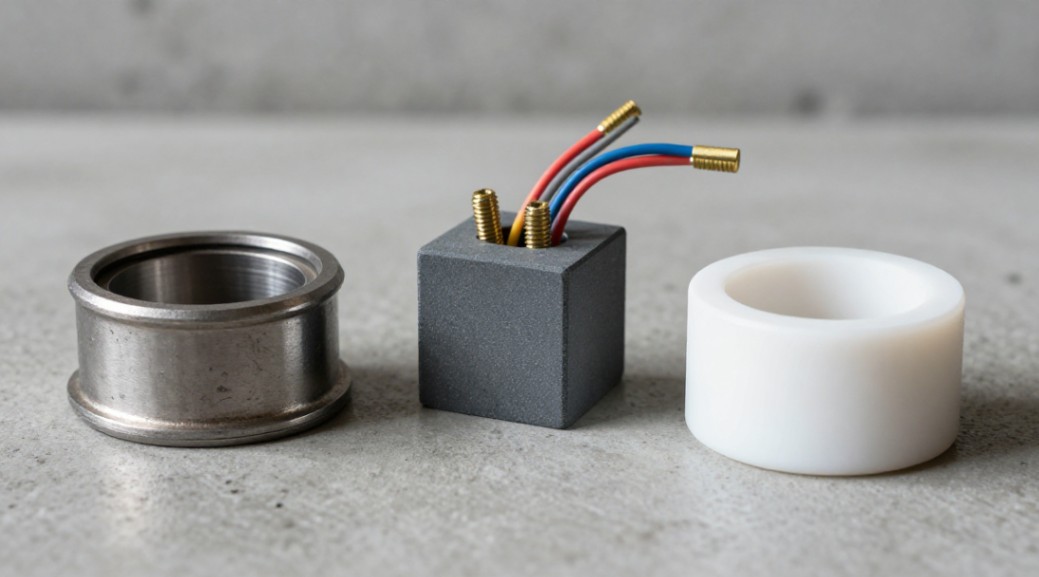
- Wear Parts: Pump seals, liners, cutting tool inserts, wire guides, and ball valve components. It outlasts steel in abrasive environments.
- Electrical & Electronic Components: Substrates for circuits, insulating housings, spark plug insulators, and laser tubes.
- Specialized Applications: Biomedical implants (hip sockets), lightweight armor tiles, and precision guide rollers in high-temperature furnaces.
Benefits and Trade-offs: The Honest Comparison
Versus Other Ceramics
Compared to zirconia, alumina is harder and more wear-resistant but less tough (impact resistant). Against silicon carbide, it has better electrical insulation and is easier to manufacture in complex shapes, but silicon carbide has higher thermal conductivity. Aluminum nitride far surpasses it in thermal conductivity for electronics. The choice is never about the ‘best’ material, but the right one for the job.
Key Limitations to Respect
Every material has its kryptonite. For alumina, it’s brittleness and thermal shock sensitivity. It does not bend or yield; it fractures. Avoid sharp impacts. Also, while it handles sustained high heat beautifully, rapid temperature changes can cause cracking. Its lower thermal conductivity compared to metals or silicon nitride ceramic contributes to this.
Designing With and Machining Alumina Ceramic
You must design for ceramic from the start. Avoid sharp corners; use generous radii. Minimize stress concentrations. Allow for tighter tolerances than with metals, as post-sintering machining is specialized. Speaking of machining, ‘green’ state machining before firing is easiest. Sintered alumina requires diamond-grit grinding, lapping, or ultrasonic drilling. It’s a subtractive process, so complexity adds cost.
Your Selection Criteria: A Simple Checklist
When considering aluminium oxide ceramic for your project, walk through these questions:
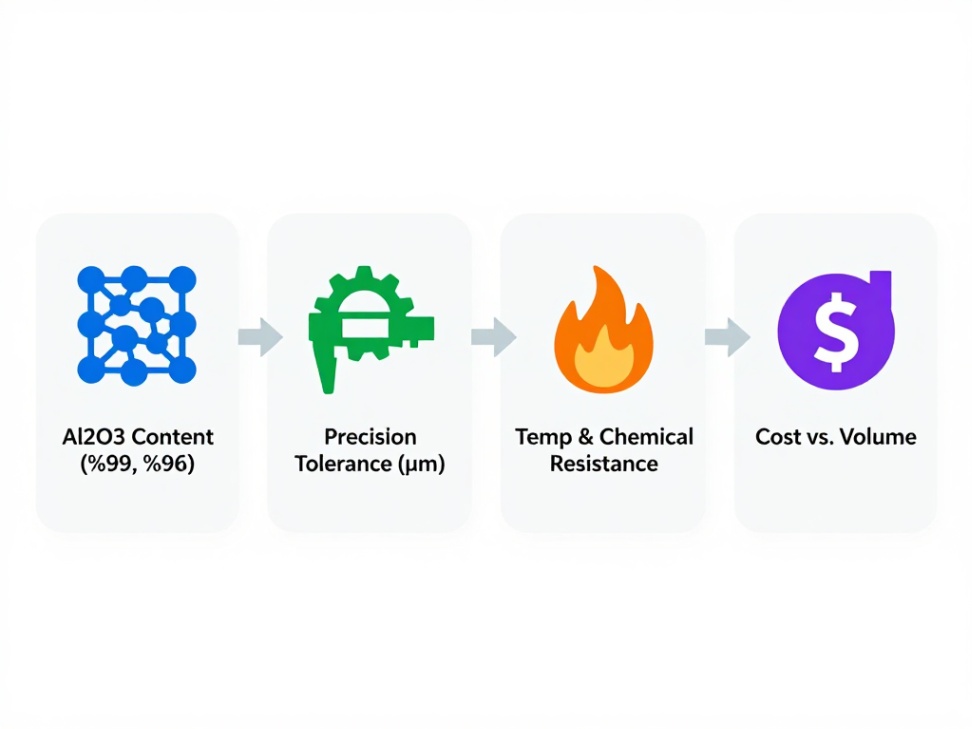
- Primary Failure Mode: Is it wear, corrosion, heat, or electrical breakdown? Alumina excels against wear and as an insulator.
- Operating Environment: What are the exact temperature, chemical, and load conditions? Define the extremes.
- Mechanical Stresses: Will the part face impact, bending, or thermal shock? If yes, proceed with caution or consider toughened composites.
- Precision & Finish: What are the dimensional and surface finish requirements? This dictates machining cost.
- Budget: Does the performance gain justify the cost over a metal, plastic, or a different ceramic like mullite for lower temperatures?
Final Thoughts: A Material of Quiet Strength
Aluminium oxide ceramic won’t solve every engineering challenge. For high-impact or severe thermal shock, look to metals or transformation-toughened zirconia. But for a vast landscape of problems involving abrasion, corrosion, high temperatures, and electrical isolation, it remains a first-choice champion. Its strength is reliable, predictable, and profound. Start with a clear definition of your problem, match it to alumina’s property profile, and you’ll unlock decades of reliable, maintenance-free performance. It’s the unsung hero keeping countless industrial processes running smoothly.
Suppiler
Synthetic-chemical focus on the research and development, production and sales of ceramic products, serving the electronics, ceramics, chemical and other industries. Since its establishment in 2015, the company has been committed to providing customers with the best products and services, and has become a leader in the industry through continuous technological innovation and strict quality management.
Our products includes but not limited to Aluminum Nitride, Aluminum Oxide, Boron Carbide, Boron Nitride, Ceramic Crucible, ect. If you are interested in any type of these, please feel free to contact us.