Next-Generation Ceramics: Unlocking Superior Properties for Industry

From the Workshop: My First Encounter with Alumina
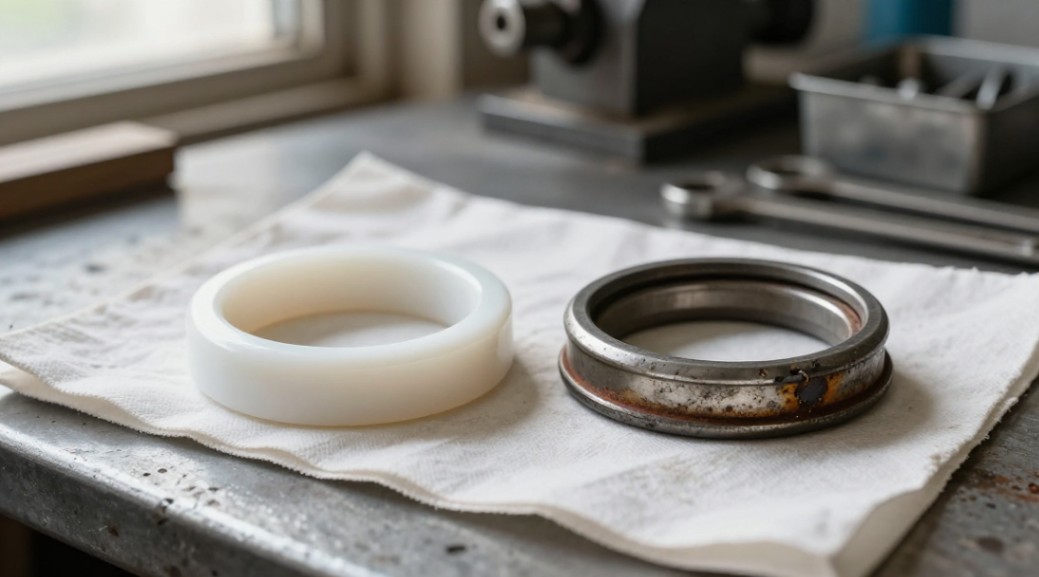
Let me take you back twenty years. I was a young engineer, frustrated. A critical pump seal kept failing every six weeks. The acidic slurry it handled was chewing through stainless steel and exotic alloys like they were butter. We tried everything. Then, an old-timer in the shop tossed me a simple, white ceramic ring. “Try this alumina,” he grunted. That ring ran for over three years. That’s the power of understanding aluminum oxide ceramic. It’s not magic; it’s materials science applied correctly. If you’re facing a problem with wear, heat, or corrosion, this guide will show you exactly how to evaluate and use this remarkable material.
Your Aluminum Oxide Ceramic Questions, Answered
What exactly is aluminum oxide ceramic?
Think of it as engineered sapphire. Its composition is primarily Al2O3 (aluminum oxide), the same mineral found in rubies and sapphires. We process high-purity alumina powder, form it into a shape, and fire it at extreme temperatures. This sintering process creates a dense, polycrystalline ceramic. The result is a material that combines high hardness, excellent wear resistance, and superb thermal stability. It’s the workhorse of the technical ceramics world.
What are the key properties I should care about?
This is where aluminum oxide ceramic shines for specific jobs. First, it’s incredibly hard-second only to diamond and a few others like boron carbide. This gives it outstanding wear resistance. Second, it maintains strength at high temperatures, up to about 1700°C. Third, it’s an excellent electrical insulator, even when hot. Finally, it resists attack from many acids and molten metals. But remember its main limitation: brittleness. It doesn’t bend; it breaks if overloaded.
I see grades like 99.5% and 96%. What’s the difference?
The percentage refers to alumina content. A 99.5% purity aluminum oxide ceramic is the high-performance option. It offers the best mechanical strength, highest temperature capability, and superior corrosion resistance. Use it for demanding applications like semiconductor processing parts or advanced wear plates. The 96% grade includes silica and other oxides. This actually improves its thermal shock resistance slightly and makes it easier and cheaper to machine. It’s perfect for many industrial wear parts, insulators, and thread guides. Choose 99.5% for peak performance; choose 96% for cost-effective reliability.
How is aluminium oxide ceramic made?
The process is straightforward but requires precision. First, fine alumina powder is mixed with binders. Second, we form it. This could be dry pressing, isostatic pressing, or injection molding. Third, and most critical, is sintering. The “green” part is fired in a kiln at temperatures often exceeding 1600°C. The particles fuse together, creating a dense, strong ceramic. Finally, we apply finishing steps. Diamond grinding achieves tight tolerances. Lapping or polishing creates a super-smooth surface.
How does it compare to zirconia or silicon carbide?
Great question. I see confusion here all the time. Let’s clear it up. Versus zirconia: Zirconia is much tougher (less brittle) and has lower thermal conductivity. Use zirconia for parts needing high impact resistance. Versus silicon carbide: Silicon carbide ceramic has higher thermal conductivity and is even harder. It’s the choice for extreme wear and heat sinking. Aluminum oxide ceramic strikes the best balance between performance, cost, and manufacturability. It’s your reliable, versatile first choice.
What are its major industrial applications?
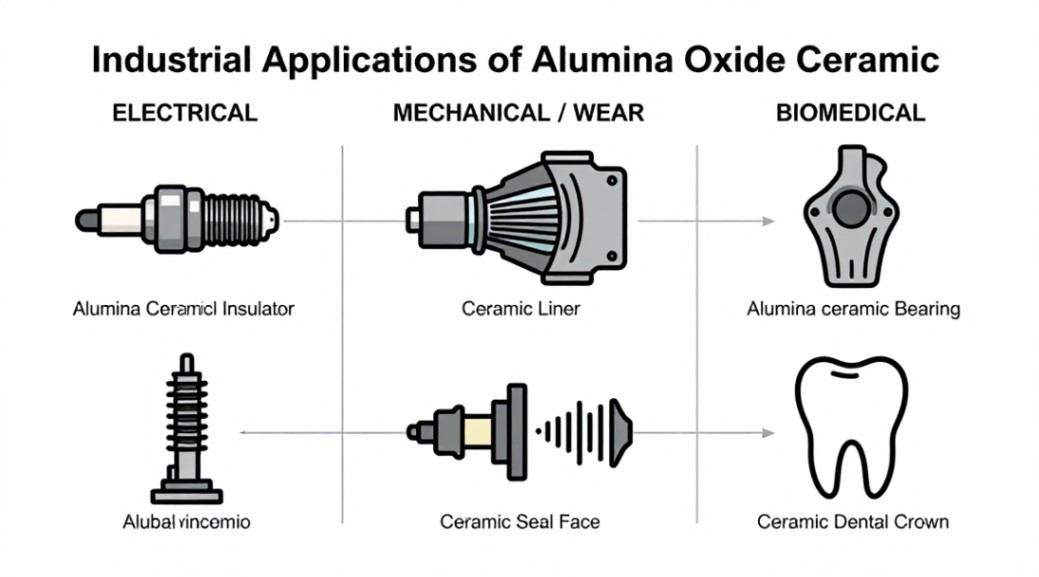
Its applications are vast. For electrical insulators, it’s the gold standard in spark plugs, sensor housings, and high-voltage equipment. As a wear part, it lines pump components, replaces metal in seal faces, and guides abrasive wires or textiles. In biomedical fields, its biocompatibility makes it ideal for hip joint bearings, dental implants, and bone screws. You’ll also find it in lab equipment, as a substrate for electronic circuits, and as a tube or liner in high-temperature furnaces.
Can it be used for armor?
Absolutely. Aluminium oxide ceramic is a key material in lightweight body and vehicle armor systems. Its extreme hardness shatters an incoming projectile. However, for the highest threat levels, composites using boron carbide or silicon carbide ceramic are often preferred due to their lower weight. Alumina provides excellent, cost-effective protection for many ballistic applications.
What are the biggest mistakes people make when designing with it?
I hear about two common pitfalls on engineering forums. First, ignoring thermal shock. Don’t take a red-hot alumina part and quench it in water-it will crack. Design for gradual heating and cooling. Second, forgetting it can’t take tensile stress. Always design to put alumina in compression. Use supportive metal housings. A user on a manufacturing subreddit recently shared, “Switching to a press-fit metal sleeve around our alumina plunger eliminated all our field failures.” Learn from others!
How do I machine or finish aluminum oxide ceramic parts?
You must use diamond tools. Diamond grinding wheels, diamond-coated drills, and diamond saws are non-negotiable. Carbide will be destroyed. The process is slow and requires rigid machine setups to prevent chipping. My advice? Work with an experienced ceramic machinist. For complex geometries, consider net-shape forming during the initial pressing or molding stage to minimize expensive diamond machining later.
How do I select the right ceramic for my project?
Follow this decision path. Step 1: List your non-negotiable needs-temperature, wear, corrosion, electrical insulation. Step 2: If cost is a major driver and requirements are moderate, 96% aluminium oxide ceramic is likely your answer. Step 3: For ultra-high purity, extreme corrosion, or very high temperatures, look at 99.5% alumina or aluminium nitride ceramic for thermal conductivity. Step 4: If you need maximum toughness, evaluate zirconia. For the hardest, most wear-resistant solution, compare silicon carbide ceramic and boron carbide. Start with alumina; it solves more problems than you think.
Ready to Solve Your Toughest Material Problem?
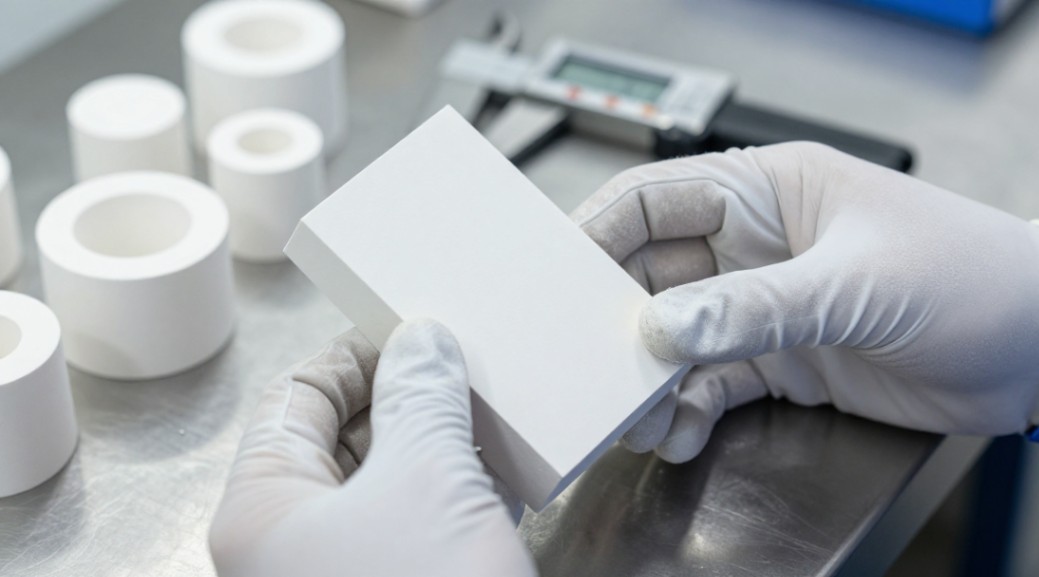
You now have the practical, field-tested knowledge I’ve gathered over two decades. Aluminum oxide ceramic isn’t a lab curiosity; it’s a proven engineering solution for relentless wear, searing heat, and harsh chemicals. The next step is action. Don’t just read about it-test it. I strongly recommend you get a sample. Feel its weight, test its hardness, and see if it fits your design. The best way to start is by speaking with a specialist who can provide the exact grade and shape you need.
Stop compromising with metals that fail. Click the link below to consult with our ceramic engineering team. We’ll provide a free application review and recommend the optimal aluminium oxide ceramic grade for your specific challenge. Let’s build something that lasts.
Suppiler
Synthetic-chemical focus on the research and development, production and sales of ceramic products, serving the electronics, ceramics, chemical and other industries. Since its establishment in 2015, the company has been committed to providing customers with the best products and services, and has become a leader in the industry through continuous technological innovation and strict quality management.
Our products includes but not limited to Aluminum Nitride, Aluminum Oxide, Boron Carbide, Boron Nitride, Ceramic Crucible, ect. If you are interested in any type of these, please feel free to contact us.