Next-Generation Ceramics: Unlocking Superior Properties for Industry

Aluminum Oxide Ceramic Defined
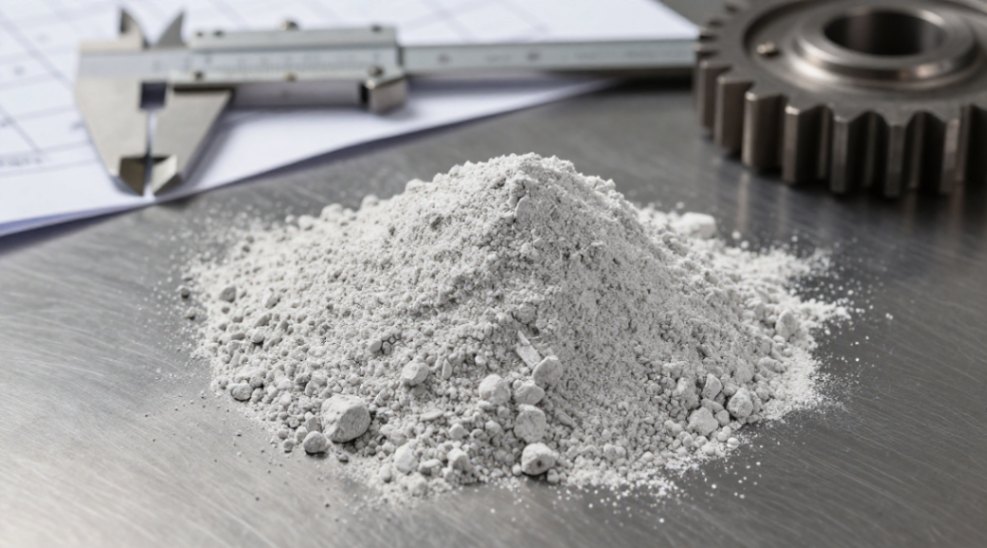
Aluminum oxide ceramic, commonly called alumina, is a high-performance technical ceramic manufactured from purified aluminum oxide powder. This is not pottery. It is a purpose-engineered material where exceptional hardness, wear resistance, and chemical inertness are not added features-they are the fundamental essence of its existence. Engineers select alumina when metals fail, polymers melt, and other materials simply cannot survive.
The Core Properties That Separate It From The Pack
Forget vague comparisons. Aluminum oxide ceramic delivers a specific, uncompromising set of characteristics.
Physical Dominance
Its physical profile is brutally effective. Aluminium oxide ceramic boasts extreme hardness, second only to materials like boron carbide ceramic and diamond. This directly translates into superior wear resistance. Its melting point exceeds 2000°C, allowing it to operate in environments that would liquefy steel. Compare it to silicon nitride ceramic or silicon carbide ceramic for specific thermal shock or lightweight needs, but for pure abrasive wear, alumina often wins on cost and performance.
Chemical Inertness
Aluminium oxide ceramic is chemically stoic. It resists attack from a vast array of acids, alkalis, and molten metals. This stability makes it superior to many metals and polymers in corrosive processes. Where a steel reactor vessel might contaminate a process or fail, an alumina lining or component remains passive and reliable.
Electrical Insulation
It is an outstanding electrical insulator, even at high temperatures. This combination of insulation, thermal conductivity, and mechanical strength makes it the default substrate for electronic circuits and a key material in high-voltage equipment. Its dielectric strength is a critical, non-negotiable property in these applications.
From Powder to Performance: How It’s Made
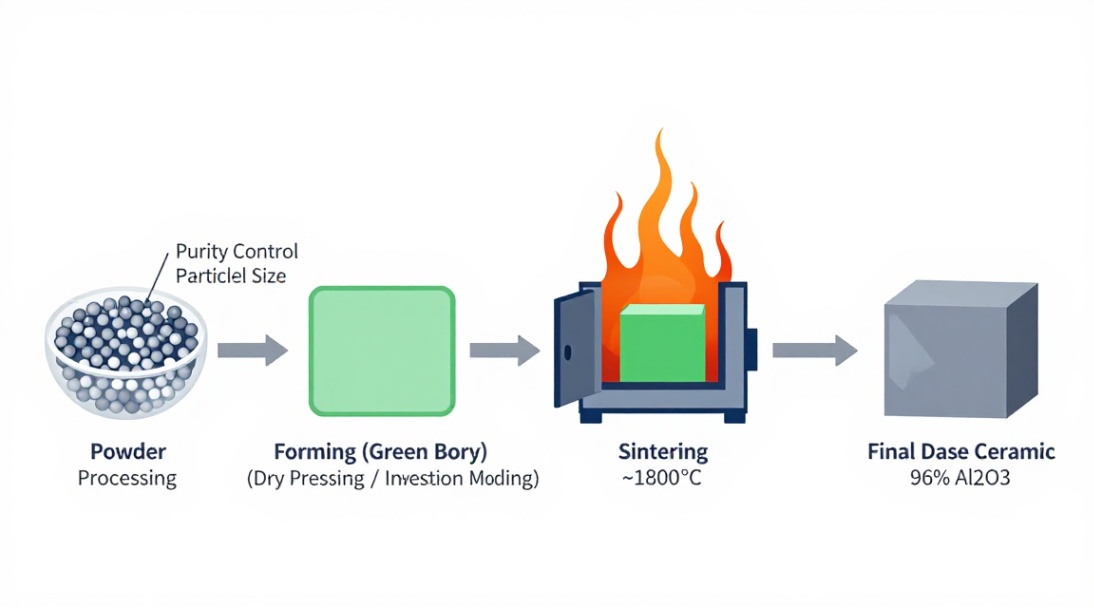
The journey from raw powder to a high-density aluminum oxide ceramic component is a lesson in precision. It starts with powder processing-controlling purity and particle size. Forming techniques like dry pressing or injection molding create a “green” body. Then, sintering at temperatures near 1800°C causes the particles to fuse without melting, eliminating porosity and creating a dense, monolithic structure. This process defines the final grade-common ones are 85%, 96%, and 99.5% alumina-with higher purity offering better properties at increased cost.
Where Aluminium Oxide Ceramic Reigns Supreme
This material is not a generalist. It is a specialist deployed for specific, demanding roles.
- Wear Parts: Pump seals, liner tiles, and guide rollers. It outlasts tool steel by orders of magnitude in abrasive environments.
- Cutting Tools & Abrasives: Inserts for cutting cast iron, abrasive grains for sandpaper, and grinding media. Its hardness is its weapon.
- Electrical & Electronic Components: Substrates for circuits, insulators for spark plugs, and chambers for semiconductor manufacturing. It insulates, supports, and contains.
- Armor and Ballistic Protection: In composite armor systems, aluminium oxide ceramic plates are the first line of defense, shattering incoming projectiles. It trades its structural integrity to save lives.
- Biomedical Implants: Used in hip joint bearings and dental implants for its biocompatibility and wear resistance against polyethylene.
The Pragmatic Choice: Advantages, Disadvantages, and Selection
Aluminum oxide ceramic has no magic. It has trade-offs. Its primary advantage is maintaining functionality where other materials degrade. Its main disadvantage is brittleness and low fracture toughness compared to metals. You cannot bend it. You must design for it.
Selection criteria are straightforward. Choose aluminium oxide ceramic when your application involves severe abrasion, high temperature, electrical insulation, or corrosive chemicals. For higher toughness, consider zirconia. For better thermal shock resistance, look at silicon carbide ceramic or aluminum nitride ceramic. For lower weight and high-temperature strength, evaluate silicon nitride ceramic. The choice is always a calculated response to the problem.
The Final Verdict
Aluminum oxide ceramic is the workhorse of advanced ceramics. It is not the toughest, not the best conductor, not the lightest. It is, however, the most widely used because it delivers an unmatched balance of key engineering properties at a viable cost. It solves problems that end careers for other materials. To call it merely a “ceramic” is to underestimate the rigor it brings to the field.
Your project demands the right material. Stop compromising with metals that wear out or plastics that fail. Specify aluminium oxide ceramic. Consult with a specialist manufacturer today to prototype your component and test its limits. The only thing you have to lose is downtime, maintenance cost, and product failure. Make the uncompromising choice.
Suppiler
Synthetic-chemical focus on the research and development, production and sales of ceramic products, serving the electronics, ceramics, chemical and other industries. Since its establishment in 2015, the company has been committed to providing customers with the best products and services, and has become a leader in the industry through continuous technological innovation and strict quality management.
Our products includes but not limited to Aluminum Nitride, Aluminum Oxide, Boron Carbide, Boron Nitride, Ceramic Crucible, ect. If you are interested in any type of these, please feel free to contact us.