Next-Generation Ceramics: Unlocking Superior Properties for Industry

Aluminum Oxide Ceramic Q&A: The Voice Search Answers
You don’t need fluff. You need answers. Below are direct comparisons and hard facts on aluminum oxide ceramic, often called alumina, to help you make a final material decision.
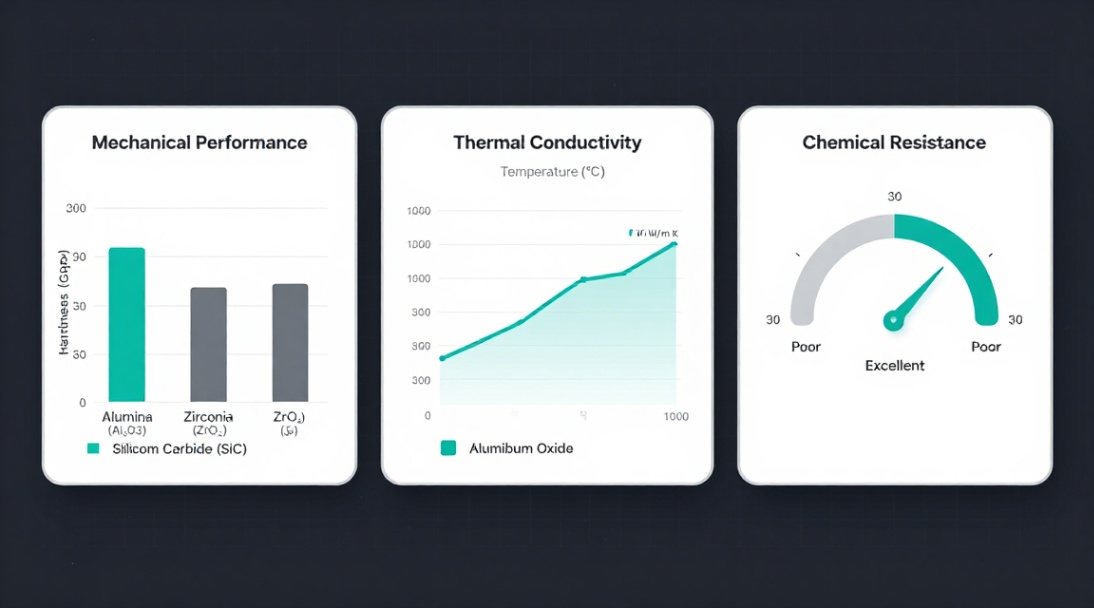
What is aluminium oxide ceramic best for?
Aluminum oxide ceramic excels in high-wear, electrically insulating, and chemically inert applications. Think wear plates, pump seals, electronic substrates, and labware. Its balance of hardness, cost, and stability makes it the default engineering ceramic. For extreme heat or wear, you look at silicon carbide or silicon nitride ceramic.
Alumina vs. Silicon Carbide Ceramic: Which is harder?
Silicon carbide ceramic wins on hardness and thermal conductivity. Use silicon carbide for abrasion resistance that grinds alumina down. Choose alumina for electrical insulation and lower cost. Silicon carbide bonded silicon nitride offers another tier of performance for severe conditions.
Is zirconia tougher than aluminum oxide?
Yes, dramatically. Zirconia boasts superior fracture toughness, resisting chipping and cracking under impact. Alumina is harder and more wear-resistant but brittle. Use zirconia for knives, bearings, or parts needing mechanical shock resistance. Use alumina for straight-line abrasion.
Can you machine aluminum oxide ceramic?
You can, but it’s difficult and expensive. Diamond grinding is standard. Achievable surface finishes and tolerances are excellent, but design for manufacturability is critical. Complex shapes often justify the cost versus a metal part that fails weekly.
What are the grades of alumina ceramic?
Two dominate: 96% and 99.5% Al2O3. 96% is the workhorse, offering the best cost-to-performance ratio for most industrial wear parts. 99.5% (high-purity) provides better electrical insulation, corrosion resistance, and slightly higher mechanical properties, crucial for semiconductor manufacturing equipment.
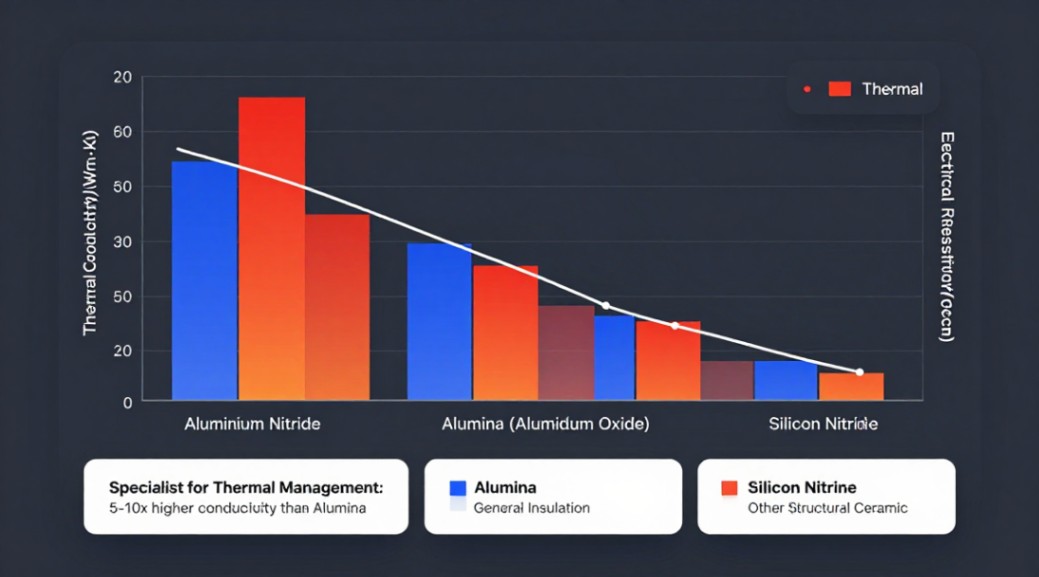
Alumina vs. Aluminium Nitride Ceramic for heat?
Aluminium nitride ceramic is the specialist for thermal management. Its thermal conductivity is 5-10 times higher than alumina’s while maintaining electrical insulation. For high-power LED substrates or RF packages, aluminium nitride is the logical choice. For general insulation, alumina suffices.
The Decision Matrix: Pros, Cons & Final Verdict
Aluminum Oxide Ceramic: The Unvarnished Truth
Advantages:
- Cost King: The most economical high-performance ceramic.
- Hardness & Wear: Excellent for combating abrasion (though not the absolute best).
- Electrical Insulator: A fundamental property for substrates and insulating components.
- Chemical Rock: Inert to most acids, alkalis, and solvents.
- High-Temperature Stable: Operates reliably up to 1700°C.
Disadvantages:
- Brittle: Low fracture toughness means it dislikes impact and thermal shock.
- Thermal Conductor? No. It’s a moderate insulator (30 W/mK). Don’t use it for heat sinking.
- Design Rigidity: Complex shapes drive machining costs sky-high.
When to Choose Aluminum Oxide Ceramic
Choose it when your primary enemy is slow, steady wear in a chemically harsh or electrically sensitive environment. If your budget is tight but you need ceramic performance, start with 96% alumina. It’s the logical baseline. For a sealing surface, a guide rail, or an insulating bushing, it’s often the perfect, cost-effective solution. Many leading ceramic component suppliers stock standard alumina parts for this reason.
When to Look Elsewhere
Immediately rule out alumina if you face severe thermal shock, high-velocity particle impact, or need to conduct significant heat. Here, your logical shortlist shifts. For thermal shock, consider mullite ceramic. For extreme abrasion, evaluate boron carbide ceramic or reaction-sintered silicon carbide ceramics. For heat spreading, look at aluminium nitride or specialized composites. The correct choice saves you from catastrophic field failure.
The Logical Next Step
Your material choice dictates project success. Aluminum oxide ceramic solves specific, common industrial problems elegantly and economically. For general wear and insulation, it’s frequently the optimal answer. For more extreme conditions in temperature, thermal conductivity, or toughness, the advanced ceramic landscape-including silicon nitride ceramic, boron nitride ceramic, and zirconia-offers targeted solutions. Define your primary failure mode first. The correct ceramic, be it alumina or another, then becomes obvious.
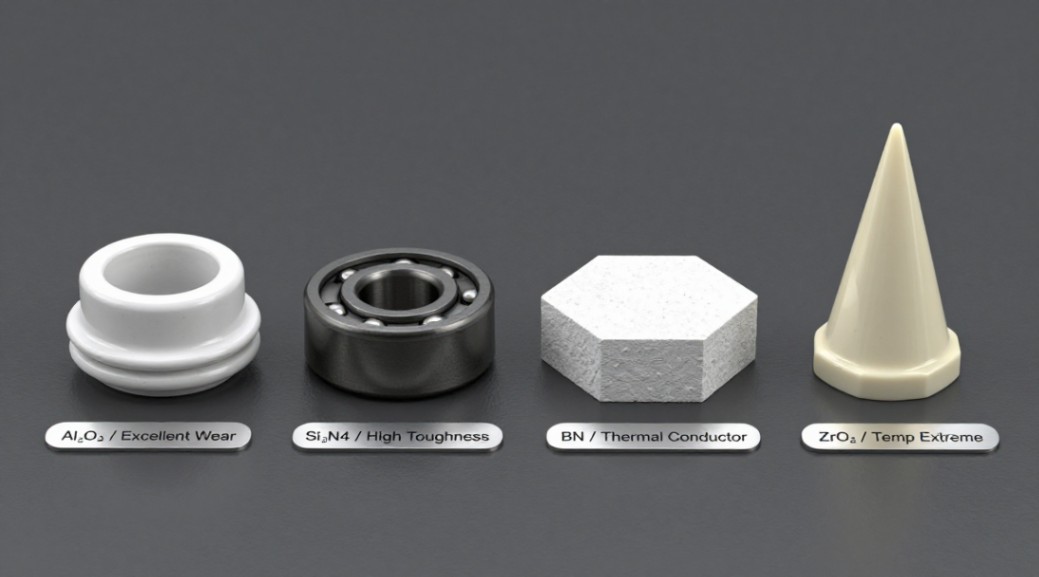
The final step is specification. Partner with a manufacturer who understands the nuances between pressed, cast, and extruded forms of Al2O3. Discuss your application’s true requirements-not just the datasheet numbers. A quality supplier will help you navigate grades, finishes, and design for manufacturability to turn this material’s potential into a reliable, high-performance component.
Suppiler
Synthetic-chemical focus on the research and development, production and sales of ceramic products, serving the electronics, ceramics, chemical and other industries. Since its establishment in 2015, the company has been committed to providing customers with the best products and services, and has become a leader in the industry through continuous technological innovation and strict quality management.
Our products includes but not limited to Aluminum Nitride, Aluminum Oxide, Boron Carbide, Boron Nitride, Ceramic Crucible, ect. If you are interested in any type of these, please feel free to contact us.