Next-Generation Ceramics: Unlocking Superior Properties for Industry

What is Aluminum Oxide Ceramic (Alumina)?
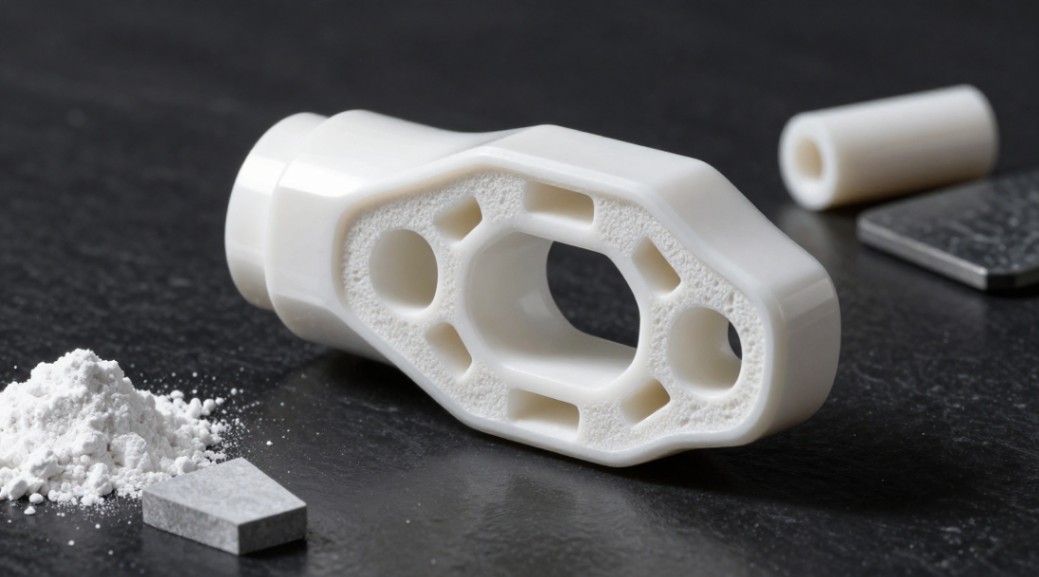
Aluminum oxide ceramic, or alumina, is a high-performance industrial ceramic made from aluminum oxide (Al2O3). It’s not a single material but a family of technical ceramics with varying purity levels, typically from 80% to over 99.9%, which directly controls its performance. We choose it for jobs where metals fail: extreme wear, high temperatures, and where electrical insulation is non-negotiable.
Core Properties and Key Questions
Why is alumina so widely used in industry?
Its combination of properties is hard to beat. Alumina offers excellent hardness (second only to diamonds and a few super-hard materials like boron carbide), good mechanical strength, high temperature resistance, and superb electrical insulation. This makes it a versatile, cost-effective workhorse. Many engineers on forums like Reddit and engineering subreddits call it the ‘default’ or ‘go-to’ advanced ceramic for a first prototype. It’s reliable and predictable.
How does its hardness and strength compare to other materials?
Alumina is significantly harder than most steels and many other ceramics. Its compressive strength is exceptional. However, like most monolithic ceramics, it can be brittle. Its fracture toughness is lower than metals and engineering plastics. That’s why design is critical-you must avoid sharp corners and stress concentrations. For parts needing even higher toughness, we often look at zirconia-toughened alumina (ZTA) or silicon nitride ceramic.
What temperature can alumina ceramic withstand?
Alumina retains its strength and shape at temperatures up to 1600°C (2912°F) for high-purity grades. Its thermal stability is a key advantage. It doesn’t oxidize or degrade in air at these temperatures, unlike many metals that would melt or scale. For ultra-high temperature applications beyond 2000°C, researchers are developing new oxide systems, but for most industrial furnace components and heating elements, high-purity alumina is the standard.
Is alumina a good electrical insulator?
Yes, this is one of its standout features. Aluminium oxide ceramic has very high dielectric strength and volume resistivity, even at elevated temperatures. This is why it’s the material of choice for spark plug insulators, substrate for electronic circuits, and insulators in high-voltage equipment. You won’t get this performance from metals or most polymers.
How is alumina ceramic different from zirconia?
This is a common question. Zirconia (zirconium dioxide) is generally tougher and has higher flexural strength than alumina, making it better for applications like scissors blades or implants where impact resistance is key. Alumina is harder, more wear-resistant, and typically has better high-temperature stability and corrosion resistance. Alumina is also less expensive. We choose zirconia when we need to stop a crack; we choose alumina to resist abrasion.
What about silicon carbide and silicon nitride?
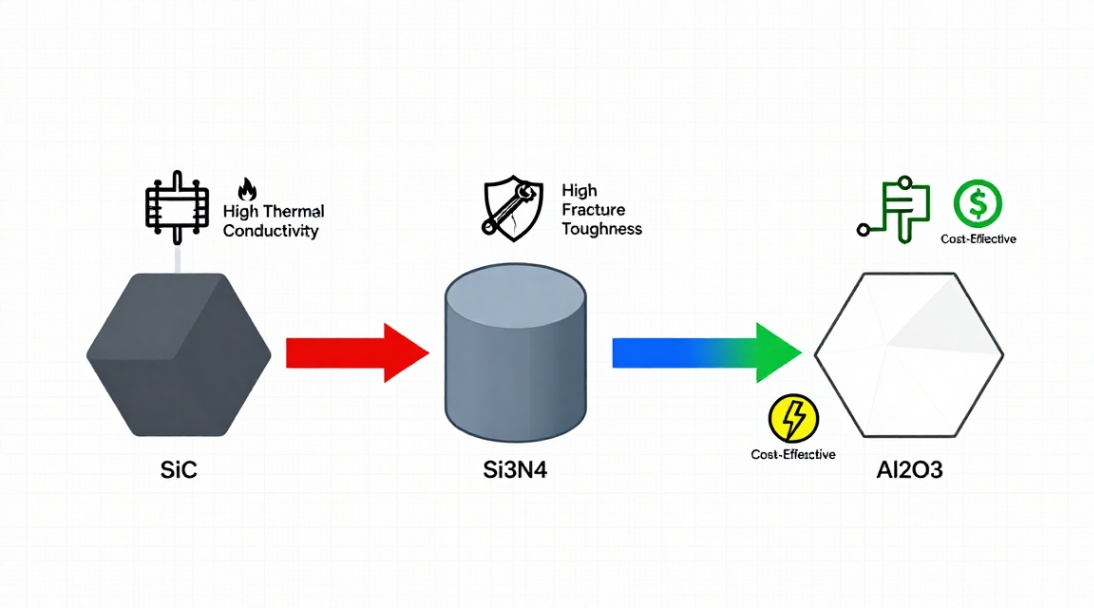
Silicon carbide ceramic and silicon nitride ceramic are in a different league for thermal conductivity and high-temperature strength. Silicon carbide has excellent thermal shock resistance and thermal conductivity, making it ideal for heat exchangers and kiln furniture. Silicon nitride has phenomenal fracture toughness and strength at high temperatures. Alumina is generally a better electrical insulator and is more cost-effective for less severe thermal or mechanical loads.
How do you make and machine alumina components?
The primary manufacturing process is sintering-firing a shaped powder compact at high temperature until it densifies. Machining hardened, sintered alumina is difficult and expensive. It requires diamond-grinding tools. The best practice is to design the part to be ‘net-shape’ or ‘near-net-shape’ as much as possible, minimizing the need for costly post-sinter machining. This is a universal truth for all advanced ceramics, from reaction-sintered silicon carbide to boron nitride.
What are the most common applications?
You’ll find alumina everywhere in heavy industry and precision engineering. Common uses include:
- Wear Parts: Seal rings, pump plungers, liners, thread guides.
- Electronics: Substrates for circuits, insulators, sensor housings.
- Industrial: Thermocouple tubes, furnace linings, labware.
- Medical: Dental implants, prosthetic joints (high-purity, bio-inert grades).
- General: Cutting tools, abrasion-resistant tiles, laser tubes.
Material Selection and Our Recommendation
Choosing the right ceramic is about matching properties to the service environment. Start with alumina for wear, insulation, and moderate-temperature applications. Step up to silicon carbide or silicon nitride for severe thermal shock or higher strength needs. For extreme chemical resistance or specialized high-temperature uses, consider materials like mullite or a special coating for boron nitride ceramic crucibles.
Based on two decades of specifying materials, I recommend alumina as your first candidate for prototyping. Its property profile is well-understood, and it’s widely available. The community feedback is clear: it’s the dependable baseline. For your next project requiring hardness, heat resistance, or insulation, skip the metals that will wear out or fail. Specify aluminium oxide ceramic.
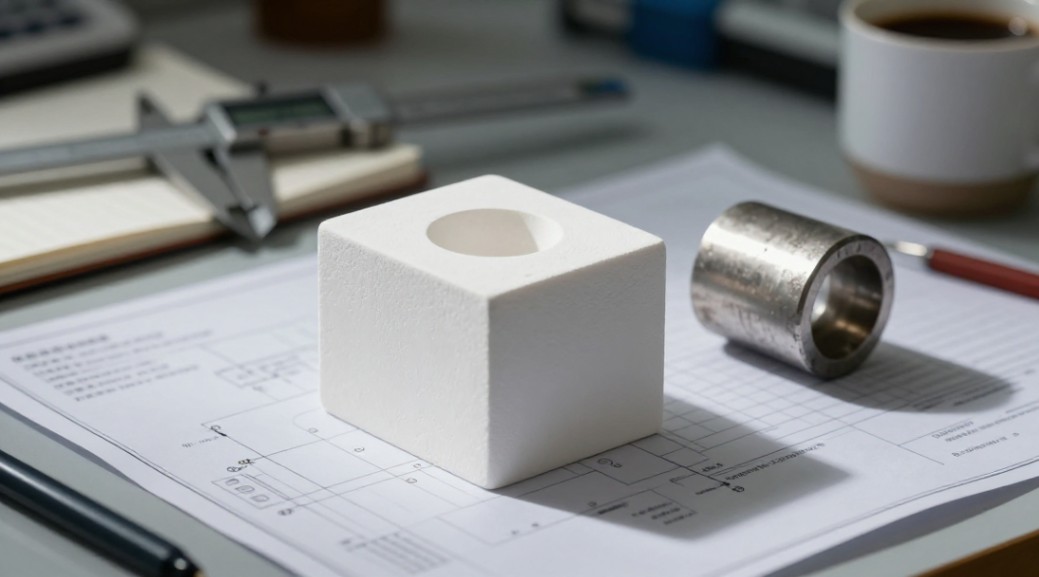
Ready to integrate alumina into your design? Don’t guess on specifications. Consult with a specialist ceramic component manufacturer who can guide you on grade selection, design for manufacturability, and precision machining. Get a quote for a prototype today-it’s the fastest way to validate performance and unlock the reliability of this engineering workhorse.
Suppiler
Synthetic-chemical focus on the research and development, production and sales of ceramic products, serving the electronics, ceramics, chemical and other industries. Since its establishment in 2015, the company has been committed to providing customers with the best products and services, and has become a leader in the industry through continuous technological innovation and strict quality management.
Our products includes but not limited to Aluminum Nitride, Aluminum Oxide, Boron Carbide, Boron Nitride, Ceramic Crucible, ect. If you are interested in any type of these, please feel free to contact us.