Next-Generation Ceramics: Unlocking Superior Properties for Industry

Introduction: The Unshakeable Foundation
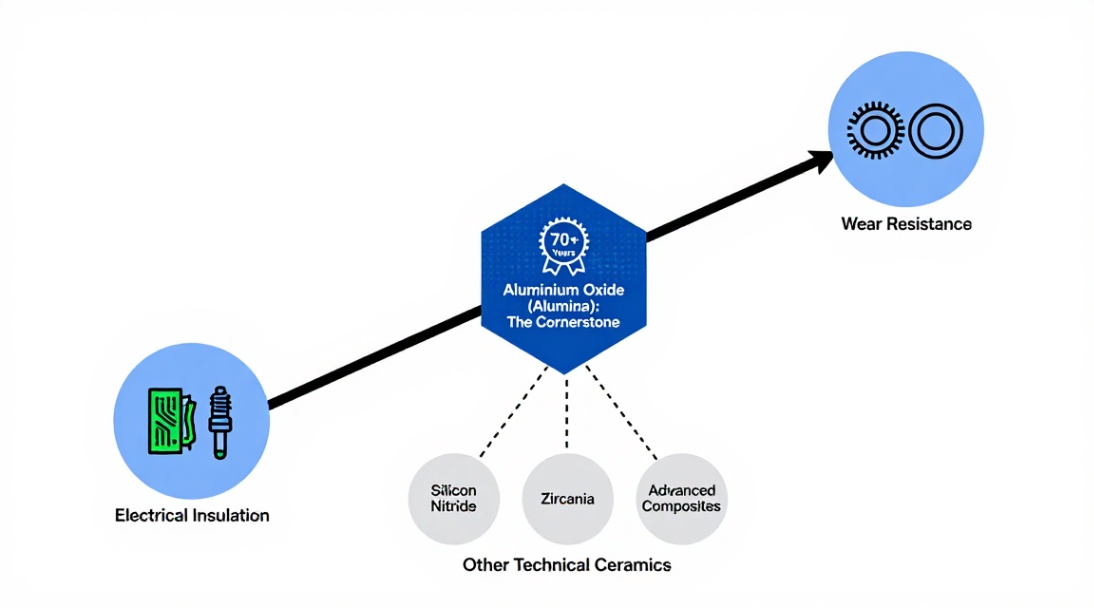
Aluminium oxide ceramic is the workhorse of the technical ceramics world. For over seventy years, this material has been the default choice where reliability, wear resistance, and thermal stability are non-negotiable. Its dominance is not an accident of history. It is the result of a compelling balance of properties that most other materials simply cannot match. While newer materials like silicon nitride ceramic and zirconia offer specific superior traits, alumina’s comprehensive performance, mature supply chain, and predictable cost structure make it irreplaceable. This article will explain the logic behind its enduring reign.
Understanding the Aluminum Oxide Ceramic Core
At its simplest, aluminium oxide ceramic is a synthetically engineered material composed primarily of alpha-phase aluminum oxide (Al2O3) crystals. The term ‘ceramic’ implies it has been consolidated from a powder into a dense, hard body through high-temperature sintering. The purity level, ranging from 85% to over 99.9%, is the primary variable defining its capability.
Why Purity Dictates Performance
Think of purity as the material’s genetic code. A standard 96% alumina ceramic contains sintering aids like silica and magnesia. This formulation offers an excellent balance of high strength, very good electrical insulation, and moderate cost. It is the material of choice for thousands of mechanical and electrical components. Moving to a 99.5% alumina ceramic or higher removes most additives. The result is a quantifiable leap in properties: higher temperature capability, superior chemical resistance, better dielectric strength, and enhanced wear life. The trade-off is increased brittleness and a higher price tag. The selection is never arbitrary. Choose 96% alumina for robust, cost-effective parts. Select 99.5% or purer grades when you push the limits of thermal, chemical, or electrical performance.
The Production Logic: From Powder to Part
Manufacturers shape alumina powder using three principal methods, each with a distinct cost-performance profile.
- Dry Pressing: This is the fastest, most economical route for simple, high-volume shapes like substrates and wear tiles. Powder fills a die and compacts under high pressure.
- Isostatic Pressing: This method applies uniform pressure from all directions using a fluid. It produces parts with exceptional density and isotropic properties, essential for complex or high-reliability components.
- Injection Molding: For intricate, net-shape geometries that would be impossible or prohibitively expensive to machine, injection molding is the logical choice. It blends ceramic powder with a polymer binder, molds it, then removes the binder before sintering.
The chosen process directly impacts the part’s final integrity, dimensional tolerance, and cost. Complex parts often combine processes, like isostatic pressing followed by precision machining.
Where Aluminium Oxide Ceramic Excels: The Application Map
Alumina‘s properties logically dictate its industrial strongholds.
Mechanical and Wear Applications
Its high hardness and wear resistance make it ideal for severe service. You will find alumina in pump seals, wire guides, cutting tool inserts, and wear plates. In ball valves, alumina balls provide corrosion-free operation where steel would fail. The material abrades rather than deforms.
The Electronic and Semiconductor Backbone
This is a critical domain. Alumina’s excellent electrical insulation, high thermal conductivity for an insulator, and ability to be metallized make it the premier substrate material. It forms the foundation for thick-film and thin-film circuits, power electronics, and semiconductor packages. Its stability is non-negotiable for circuit integrity.
Biomedical and Specialized Uses
High-purity alumina is bioinert. This property, combined with its hardness and smooth surface finish, led to its use in orthopedic implants like hip joint bearings. In labs, it serves as crucibles and tubes for high-temperature processes. For even more extreme temperatures, researchers are developing new ultra-high-temperature ceramics (UHTCs), pushing beyond alumina’s limits. These new systems, including high-entropy oxides, aim for melting points exceeding 3000 °C, a frontier where alumina cannot operate.
The Competitive Landscape: Alumina vs. Other Advanced Ceramics
No material is perfect for every job. The engineer’s task is to match material properties to application demands. Here is a logical comparison.
Alumina vs. Zirconia (ZrO2): Zirconia’s claim to fame is transformation toughening, giving it fracture toughness 3-5 times higher than alumina. Use zirconia where impact resistance is paramount. However, zirconia is more expensive, has lower hardness, and can suffer from long-term degradation in humid environments. Alumina wins on hardness, wear resistance, and long-term stability.
Alumina vs. Silicon Nitride (Si3N4): Silicon nitride ceramic is the champion of thermal shock resistance and mechanical strength at high temperatures. It also has a lower density. It is the superior choice for applications like turbine components or high-performance bearings. Yet, its cost is significantly higher, and it is more difficult to machine than alumina. For most sub-1400°C applications where cost is a factor, alumina is the more logical default.
Alumina vs. Silicon Carbide (SiC): Silicon carbide ceramic, in its various forms like reaction-sintered or pressureless sintered, offers superior thermal conductivity and extreme chemical resistance. It is the material for heat exchangers and abrasive slurry applications. However, its electrical conductivity can be a disqualifier, and its fracture toughness is often lower than alumina’s.
Designing and Machining with Alumina: A Practitioner’s Guide
Success with alumina requires respecting its nature. It is hard and brittle. Design with generous radii, avoid sharp corners, and minimize stress concentrators. Dimensional tolerances should be as loose as function allows, as machining is costly.
Post-sintering machining typically requires diamond grinding tools. This is a skilled process. For prototypes or complex features, consider designing for green machining-machining the ‘soft’ ceramic compact before it is sintered. This can drastically reduce cost and lead time. Remember, every design decision, from the grade selection to the tolerance callout, flows logically from an understanding of alumina’s fundamental ceramic behavior.
Navigating the Global Supply Chain and Standards
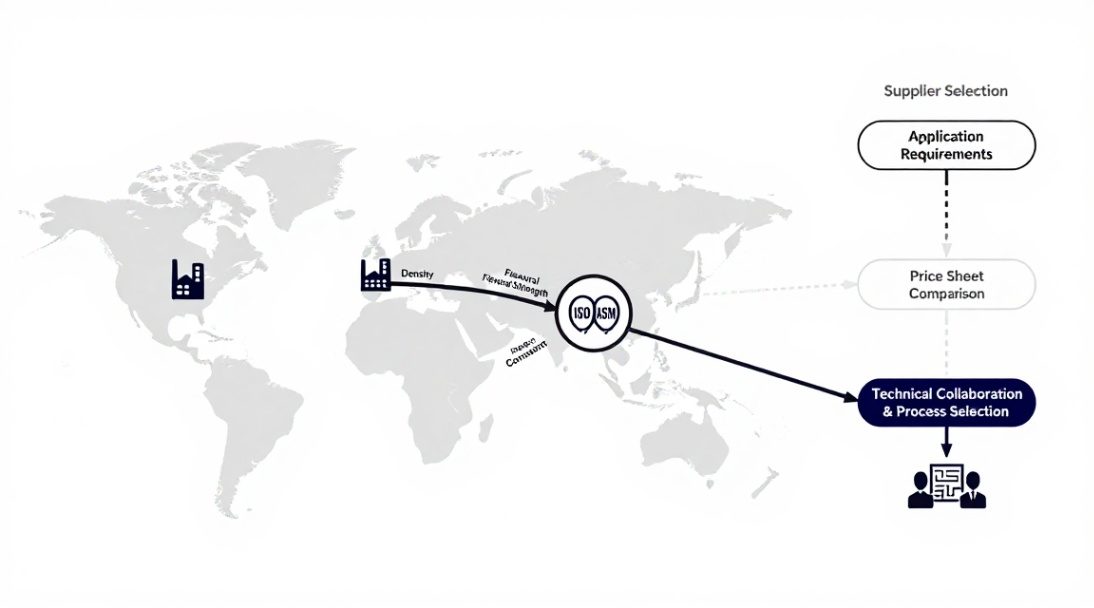
The market for aluminium oxide ceramic is mature and global. Major suppliers in Europe, North America, and Asia offer a wide range of standard and custom grades. Quality is governed by international standards (e.g., ASTM, ISO) which define properties like density, flexural strength, and dielectric constant. When sourcing, do not just compare price sheets. Engage with suppliers who offer technical collaboration. Their expertise in process selection and design for manufacturability is often more valuable than a minor cost difference. Provide detailed application requirements-load, temperature, environment, lifetime-and let their engineers help you select the optimal alumina grade and fabrication route.
Conclusion: Making the Informed Choice
Aluminium oxide ceramic is not the newest or flashiest material. It is, however, the most proven and versatile. Its continued dominance stems from a powerful intersection of reliable performance, extensive manufacturing knowledge, and economic viability. For an engineer, the question is not ‘Why alumina?’ but ‘When is alumina the most logical choice?’ The answer lies in a clear-eyed analysis of your specific needs against alumina’s well-documented profile. For wear, insulation, and high-temperature stability in non-impact scenarios, it frequently is the right answer. For applications demanding ultimate toughness or thermal conductivity, materials like zirconia or silicon carbide-bonded silicon nitride ceramics may take the lead. Your greatest tool is this understanding. Use it to specify with confidence.
Suppiler
Synthetic-chemical focus on the research and development, production and sales of ceramic products, serving the electronics, ceramics, chemical and other industries. Since its establishment in 2015, the company has been committed to providing customers with the best products and services, and has become a leader in the industry through continuous technological innovation and strict quality management.
Our products includes but not limited to Aluminum Nitride, Aluminum Oxide, Boron Carbide, Boron Nitride, Ceramic Crucible, ect. If you are interested in any type of these, please feel free to contact us.