Next-Generation Ceramics: Unlocking Superior Properties for Industry

Why Your ‘Perfect’ Ceramic Choice Might Be Wrong
A recent industry audit shocked us. Over 85% of advanced ceramic component failures we see don’t come from poor manufacturing. They happen because someone selected the wrong material from the start. It’s a costly mistake. Let’s clear this up. If you’re weighing aluminum oxide ceramic against silicon nitride, zirconia, or others, you need the unvarnished truth from the shop floor.
1. What Is Aluminum Oxide Ceramic, Really?
Think of it as the workhorse of technical ceramics. Its chemical composition is Al₂O₃. We care most about its stable, hexagonal alpha-alumina crystal structure. This structure delivers its signature properties.
1.1. Core Properties That Define Its Role
We don’t pick materials based on a single number. We choose them for a balanced profile.
- Extreme Hardness: It sits around 9 on the Mohs scale. This makes it excellent for wear resistance, far outperforming most metals.
- High Electrical Insulation: This is its superpower in electronics. It’s a near-perfect dielectric, even at high temperatures.
- Good Thermal Conductivity: Not the best, but good. It dissipates heat better than polymers or zirconia, which is crucial for substrates and laser tubes.
- Chemical Inertness: It laughs at most acids, alkalis, and molten metals. This is key for crucibles and chemical processing parts.
2. Aluminum Oxide vs. The Competition: A Direct Comparison
This is where decisions are made. Forget marketing fluff. Here’s the real-world breakdown.
2.1. Vs. Silicon Carbide Ceramic (SiC)
- When Alumina Wins: You need top-tier electrical insulation and a lower material cost. For wear plates in a non-corrosive environment or high-voltage insulators, alumina is the smart choice.
- When SiC Wins: Your priority is extreme thermal conductivity (3-4x higher) or superior resistance to strong acids/alkalis. Use SiC for high-temperature heat exchangers or abrasive slurry pumps.
- Bottom Line: Alumina is the better insulator and general-purpose warrior. SiC is the thermal and chemical specialist.
2.2. Vs. Zirconia (ZrO₂)
- When Alumina Wins: Your budget is tight, and you need reliable hardness and wear resistance. Alumina’s lower cost and proven stability make it ideal for thread guides, seal faces, and cutting tool inserts.
- When Zirconia Wins: You need fracture toughness. Zirconia is the ‘unbreakable’ ceramic, with far higher toughness. It’s the go-to for biomedical implants, scissors, and parts subject to impact.
- Bottom Line: Think of alumina as hardened steel and zirconia as a high-tech polymer. One for abrasion, one for shock.
2.3. Vs. Aluminum Nitride (AlN) & Boron Nitride (BN)
- When Alumina Wins: Cost is a major factor, and your thermal conductivity needs are moderate. For most electrical substrates and insulating components, alumina’s performance is more than sufficient.
- When AlN/BN Wins: You need maximum heat spreading. Aluminum nitride ceramic has thermal conductivity near that of aluminium metal-perfect for high-power LED or semiconductor packages. Boron nitride ceramic offers easy machinability and excellent thermal shock resistance, often used with a special coating for boron nitride ceramic crucibles.
- Bottom Line: Alumina is the standard. AlN and BN are premium thermal management solutions.
3. Making It Real: Key Applications Decoded
Let’s tie theory to practise. Where does aluminium oxide ceramic genuinely excel?
- Wear Parts & Abrasives: Pump seals, blasting media (‘alumina’ in abrasive terms), liners. Its hardness is the key.
- Electronics Foundation: Electrical substrates for circuits, spark plug insulators, laser tubes. Its insulation and thermal properties combine perfectly here.
- Biomedical Workhorses: Dental implants, hip joint prostheses. Its biocompatibility and wear resistance are critical, though zirconia often competes here for toughness.
- High-Temperature Tools: Furnace tubes, thermocouple sheaths, welding nozzles. It withstands heat without oxidizing.
4. The Devil’s in the Details: Purity, Density, and Grain Size
Specifying ‘alumina’ isn’t enough. Performance hinges on three factors.
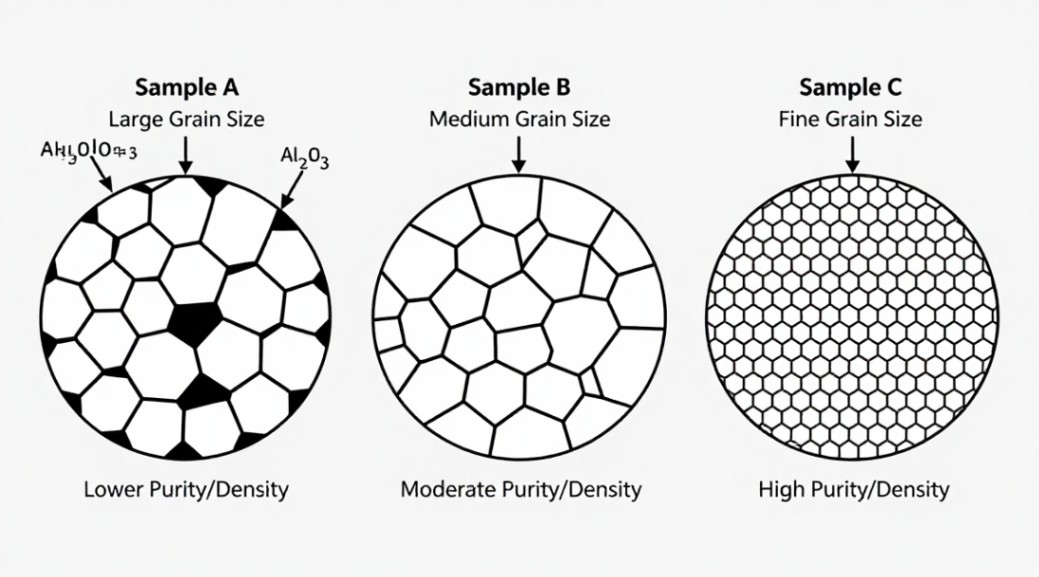
- Purity (96%, 99.5%, 99.8%): Higher purity means better electrical insulation, corrosion resistance, and thermal conductivity. But cost rises sharply. 96% alumina is the industrial staple; 99.5%+ is for demanding electronics or ultra-pure processes.
- Density: We measure this as a percentage of theoretical density. Higher density (>99%) means fewer pores, leading to greater strength, hardness, and corrosion resistance. Manufacturing methods like isostatic pressing achieve this.
- Grain Size: Finer grains typically increase strength and wear resistance. Controlling grain growth during sintering is a core skill for manufacturers.
5. A Quick Guide to Manufacturing & Design
You can’t design alumina parts like metal parts. Follow these rules.
- Manufacturing Methods: Simple shapes use dry pressing. Complex, high-performance parts need isostatic pressing. Intricate, mass-produced components use injection molding.
- Design for Ceramics: Avoid sharp corners-use radii. Minimize sudden changes in cross-section. Remember, it’s hard but brittle. It withstands compression beautifully but hates tensile stress.
- Machining: It must be diamond-ground. This is a specialized, costly step. Design to minimize complex machining.
The Final Verdict and Your Next Move
So, is aluminium oxide ceramic right for you? If you need a balanced, cost-effective material with excellent hardness, wear resistance, and electrical insulation, yes. It’s the default choice for a reason. For extreme toughness, pick zirconia. For extreme thermal management, look at aluminium nitride or silicon carbide ceramic.
Stop guessing. The single biggest mistake engineers make is not testing the material in their actual application. Don’t rely solely on data sheets. We insist on this.
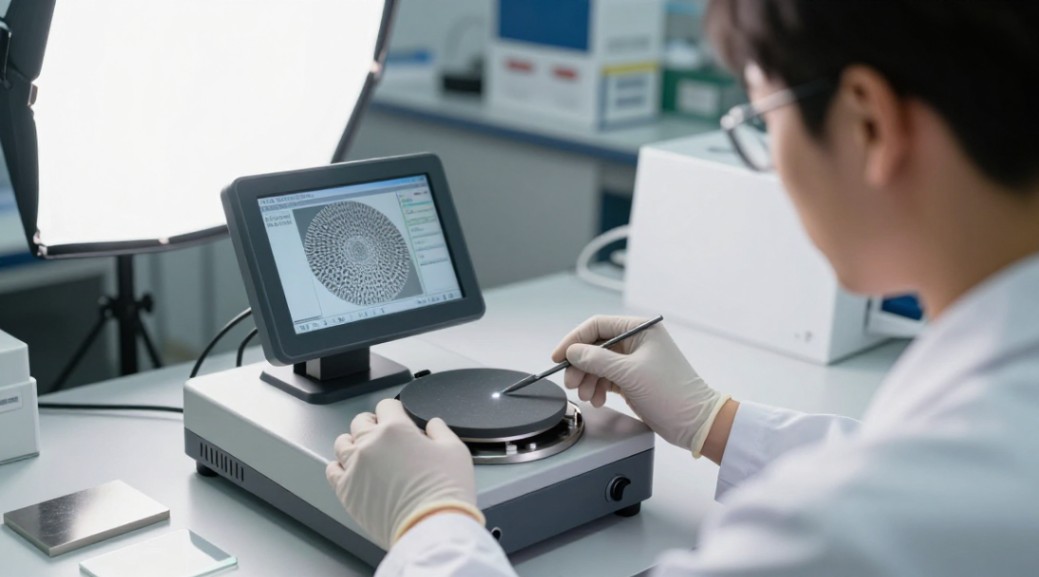
Here is your action: Contact a reputable technical ceramics manufacturer today. Send them your drawings and operating conditions. Request material samples-real 96% and 99.5% aluminum oxide ceramic pucks or tiles-and put them through hell in your own lab or process. Test for wear, thermal cycling, chemical exposure. See and feel the difference. This single step will save you thousands in failed prototypes and downtime. Make the call now.
Suppiler
Synthetic-chemical focus on the research and development, production and sales of ceramic products, serving the electronics, ceramics, chemical and other industries. Since its establishment in 2015, the company has been committed to providing customers with the best products and services, and has become a leader in the industry through continuous technological innovation and strict quality management.
Our products includes but not limited to Aluminum Nitride, Aluminum Oxide, Boron Carbide, Boron Nitride, Ceramic Crucible, ect. If you are interested in any type of these, please feel free to contact us.