Next-Generation Ceramics: Unlocking Superior Properties for Industry

Surprisingly, aluminum oxide ceramic is found in over 80% of all ceramic-lined industrial wear components. The reason isn’t just cost. It outperforms steel in specific abrasion scenarios by a factor of ten or more. Engineers rely on it not because it’s new, but because it’s proven. This guide explains why.
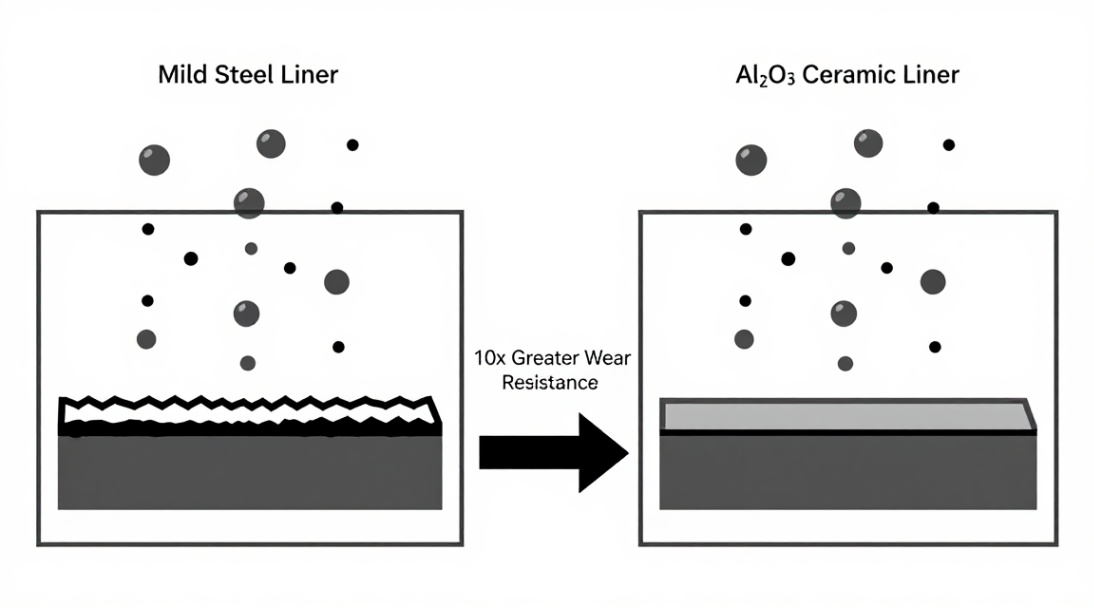
What is Aluminum Oxide Ceramic? Defining Al2O3
Aluminum oxide ceramic, often called alumina ceramic, is a high-performance material made from aluminum oxide (Al2O3). Its atomic structure creates a dense, crystalline lattice. This structure delivers an unmatched combination of hardness, stability, and electrical resistance. You won’t find this exact property profile in metals or polymers.
How is Aluminum Oxide Ceramic Different from Other Advanced Ceramics?
Engineers choose materials based on a property trade-off. Alumina ceramic excels in wear resistance and electrical insulation. Consider these comparisons:
- vs. Silicon Carbide Ceramic: Silicon carbide offers superior thermal conductivity and higher temperature limits. Alumina provides better electrical insulation at a lower cost.
- vs. Silicon Nitride Ceramic: Silicon nitride ceramics boast exceptional fracture toughness and thermal shock resistance. Alumina delivers higher hardness and is more chemically inert in strong acids.
- vs. Aluminium Nitride Ceramic: Aluminium nitride ceramic is the choice for thermal management substrates. Its thermal conductivity is vastly higher. Alumina is the standard for electrical insulating substrates where heat dissipation is less critical.
Your Top Questions on Aluminum Oxide Ceramic, Answered
Q: What are the main properties of aluminium oxide ceramic?
A: Its core strengths are extreme hardness (second only to diamond and boron carbide ceramic on the Mohs scale), excellent wear resistance, high electrical resistivity, and superb chemical inertness. It maintains these properties up to 1700°C.
Q: What’s the difference between 96% and 99.5% Al2O3?
A: The percentage refers to alumina purity. 96% Al2O3 contains silicate glass phases that aid sintering. It’s tougher and easier to machine post-fire. 99.5% Al2O3 is purer, offering higher electrical insulation, better chemical resistance, and superior hardness for severe wear. The choice is application-driven.
Q: How is aluminium oxide ceramic made?
A>Manufacturers use several processes. Dry pressing forms simple, high-volume shapes like tiles and tubes. Isostatic pressing applies uniform pressure from all sides, creating complex, high-density parts like pump seals. Injection molding produces intricate, net-shape components for sectors like medical technology.
Where Does Aluminum Oxide Ceramic Shine? Real-World Applications
On Reddit and engineering forums, users consistently highlight a few key use cases where alumina outperforms everything else.
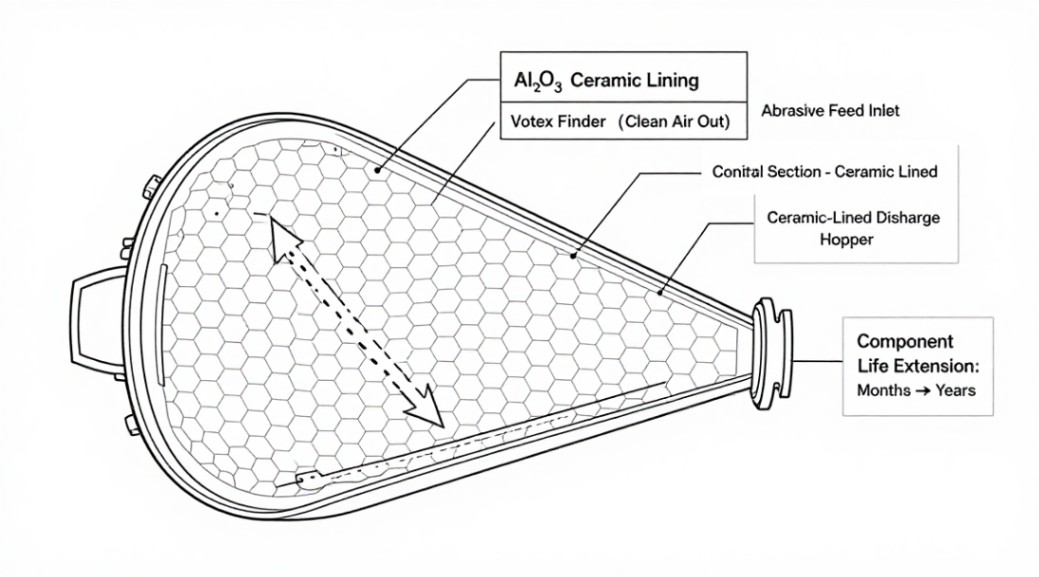
Industrial Wear Armor: It lines cyclone separators, pipe bends, and hoppers. It fights abrasive coal, ore, and cement dust. Plant managers report component life extension from months to years, slashing downtime.
The Invisible Enabler in Electronics: Your smartphone and laptop rely on it. High-purity alumina substrates provide the perfect, stable platform for microelectronic circuits. Its electrical insulation is non-negotiable.
Trust in the Human Body: Its biocompatibility makes it a material for orthopedic implants like hip joint balls and dental roots. The body tolerates it well, and its wear debris is inert.
Cutting and Abrading: As a cutting tool insert, it machines cast iron and hardened steel. As a grit or sandpaper coating, it cuts and finishes metals and wood.
Understanding the Limits: Brittleness and Thermal Shock
No material is perfect. The main trade-off for alumina’s hardness is brittleness. It does not bend or yield. It fractures under impact or excessive point loading. Its thermal shock resistance is also moderate compared to materials like mullite ceramic. Rapid temperature changes can cause cracking. Designers must account for this by avoiding sharp corners and ensuring proper mechanical support.
The Future: Smarter Composites and Finishes
Material science doesn’t stand still. To overcome brittleness, engineers create composites. Zirconia Toughened Alumina (ZTA) embeds zirconia particles within the alumina matrix. This dramatically increases fracture toughness while retaining most of the hardness. It’s the next evolution for demanding mechanical applications.
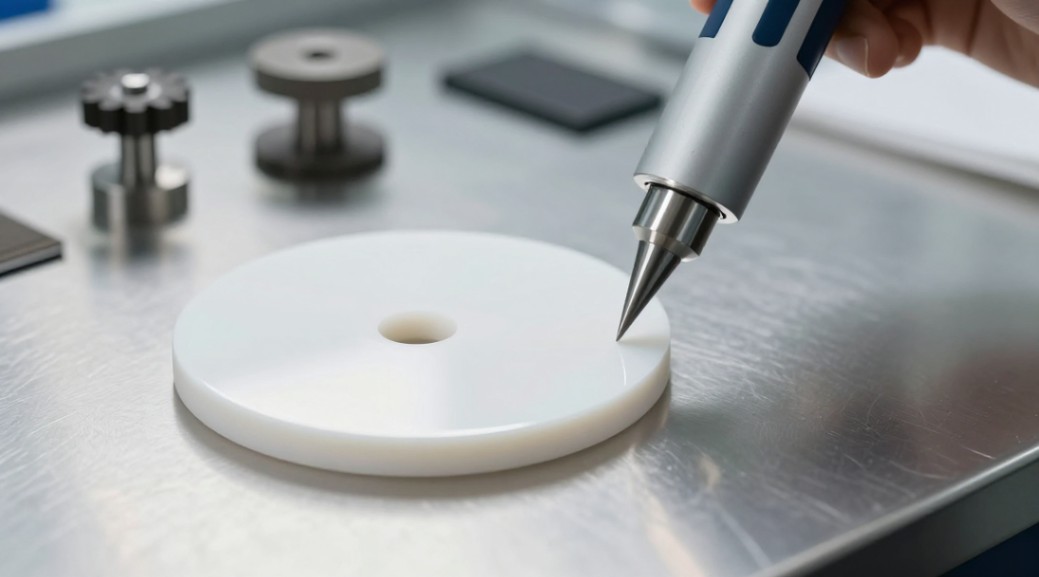
Surface finish is also critical. For sealing surfaces or low-friction applications, alumina components can be precision ground and lapped to a mirror-like Ra < 0.1 μm finish. Achieving this requires diamond tooling and expertise, a common step for high-end silicon carbide-bonded silicon nitride ceramics and other advanced technical ceramics.
If you’re facing a wear, corrosion, or insulation problem, aluminium oxide ceramic deserves a spot on your shortlist. Start by defining your specific operating environment: temperature, chemicals, abrasion type, and electrical needs. Then, consult with a specialist who can guide you on grade selection, from standard 96% alumina to advanced ZTA composites, to find the optimal balance of performance and cost for your project.
Suppiler
Synthetic-chemical focus on the research and development, production and sales of ceramic products, serving the electronics, ceramics, chemical and other industries. Since its establishment in 2015, the company has been committed to providing customers with the best products and services, and has become a leader in the industry through continuous technological innovation and strict quality management.
Our products includes but not limited to Aluminum Nitride, Aluminum Oxide, Boron Carbide, Boron Nitride, Ceramic Crucible, ect. If you are interested in any type of these, please feel free to contact us.