Next-Generation Ceramics: Unlocking Superior Properties for Industry

The Alumina Anomaly: A Material That Refuses to Be Replaced
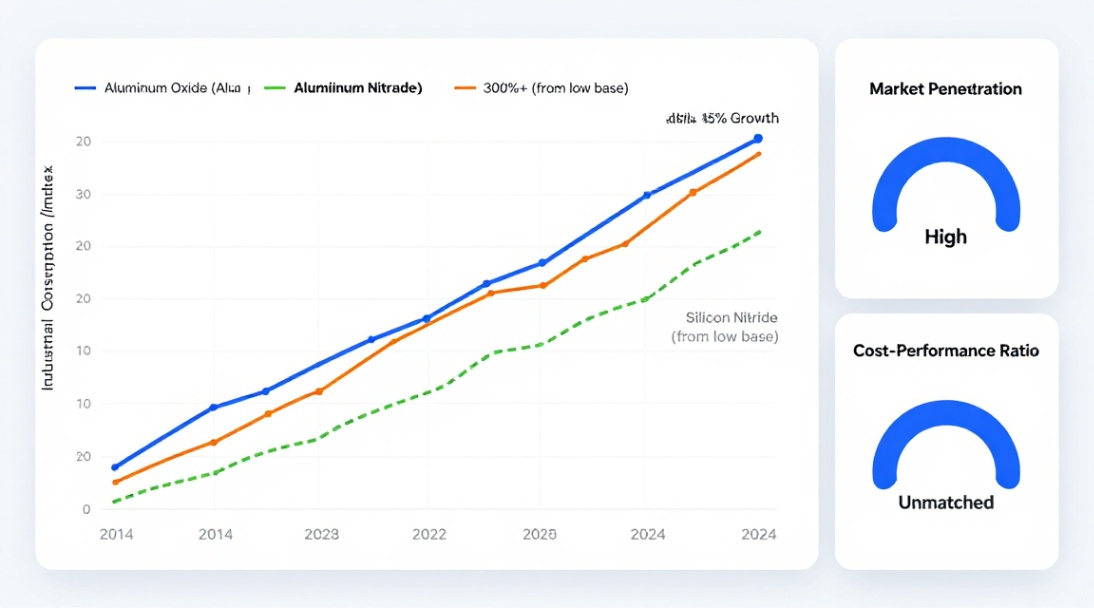
Consider this: while research publications on exotic ceramics like aluminum nitride ceramic and silicon nitride ceramic have surged over 300% in the last decade, global industrial consumption of aluminum oxide ceramic has quietly grown by 45%. Why does a material first synthesized in the 19th century continue to outpace its high-tech rivals? The answer lies not in a single property, but in a masterful balance of performance, processability, and cost that remains unmatched. Let’s move beyond the spec sheet to understand its enduring role.
Deconstructing Alumina: More Than Just a Hard White Ceramic
At its core, aluminum oxide ceramic is predominantly crystalline Al₂O₃. But its identity is shaped by purity. Commercial grades range from 85% to over 99.9% alumina content. Each percentage point shift dramatically alters its destiny. High-purity (99.5%+) alumina offers exceptional corrosion resistance and electrical insulation, while lower-purity, engineered grades can prioritize mechanical strength or thermal shock resistance. This tunability is a core strength. Unlike monolithic boron carbide ceramic or silicon carbide ceramic, alumina offers a spectrum of solutions.
The Industrial Workhorse: Where Alumina Truly Shines
Metals fail from fatigue and corrosion. Plastics melt and creep. Alumina excels where others falter. Its primary advantages are foundational:
- Unrivaled Electrical Insulation: High-purity alumina substrates form the literal backbone of the electronics industry. They provide a stable, inert platform for microcircuits, offering far greater thermal conductivity and stability than polymers.
- Wear Resistance That Outlasts Steel: In pump seals, cutting tool inserts, and thread guides, alumina’s hardness (9 on the Mohs scale) provides legendary abrasion resistance. It doesn’t gall or cold-weld like metals.
- A Bastion in Hostile Environments: Alumina is virtually inert to strong acids and alkalis at high temperatures. It withstands oxidizing atmospheres where silicon carbide-bonded silicon nitride ceramics might degrade. This makes it ideal for crucibles, thermocouple tubes, and chemical processing liners.
From Powder to Precision Component: The Art of Shaping Alumina
The journey from powder to a functional part is critical. Dry pressing forms simple, high-volume shapes like tiles or insulators. Isostatic pressing applies uniform pressure from all sides, creating more complex, denser components with superior mechanical properties. For intricate geometries-think a multichannel medical nozzle-ceramic injection molding is the method of choice, though it requires careful binder removal. After firing (sintering) at temperatures often exceeding 1600°C, components rarely meet final tolerances. This is where diamond grinding, lapping, and polishing come in. A special coating for boron nitride ceramic crucibles might be applied for non-wetting, but for alumina itself, these finishing steps are where precision is born.
The Human Touch: Alumina in Medical Implants
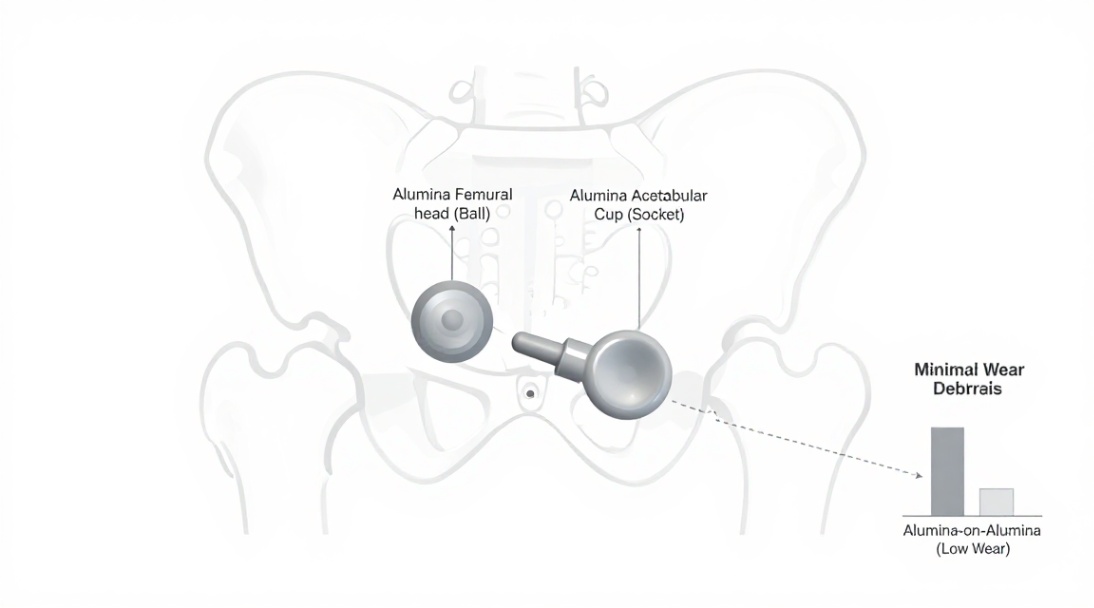
This is where the material‘s biocompatibility takes center stage. High-purity, highly polished alumina exhibits excellent bio-inertness. It generates minimal immune response. In orthopedics, alumina-alumina bearing couples in hip replacements dramatically reduce wear debris compared to metal-on-plastic, leading to longer implant life. Its hardness and smoothness are directly responsible for preserving bone stock and patient mobility.
Designing with Alumina: A Guide to Success
Success with alumina requires respecting its nature. Think of it as a very hard, brittle glass. Avoid sharp internal corners; use generous radii to distribute stress. Wall thickness should be as uniform as possible to prevent cracking during sintering. While it can be diamond-machined to tight tolerances, this is expensive. Design for net-shape sintering where you can. And remember: while strong in compression, its tensile strength is a fraction of that. Always design to put the material into compression.
The Strategic Choice: Alumina vs. The Alternatives
Choosing alumina isn’t about finding the ‘best’ ceramic. It’s about finding the right tool. For ultimate fracture toughness and strength in a ballistics application, you’d select boron carbide ceramic. For the highest thermal conductivity in a semiconductor heatsink, aluminum nitride ceramic reigns. For extreme thermal shock resistance in molten metal handling, silicon carbide ceramic or zirconia may be superior. You choose alumina when you need the optimal combination of electrical insulation, wear resistance, chemical stability, biocompatibility, and cost across a wide temperature range. It’s the multi-role specialist.
Future Frontiers: The Next Evolution of Oxide Ceramics
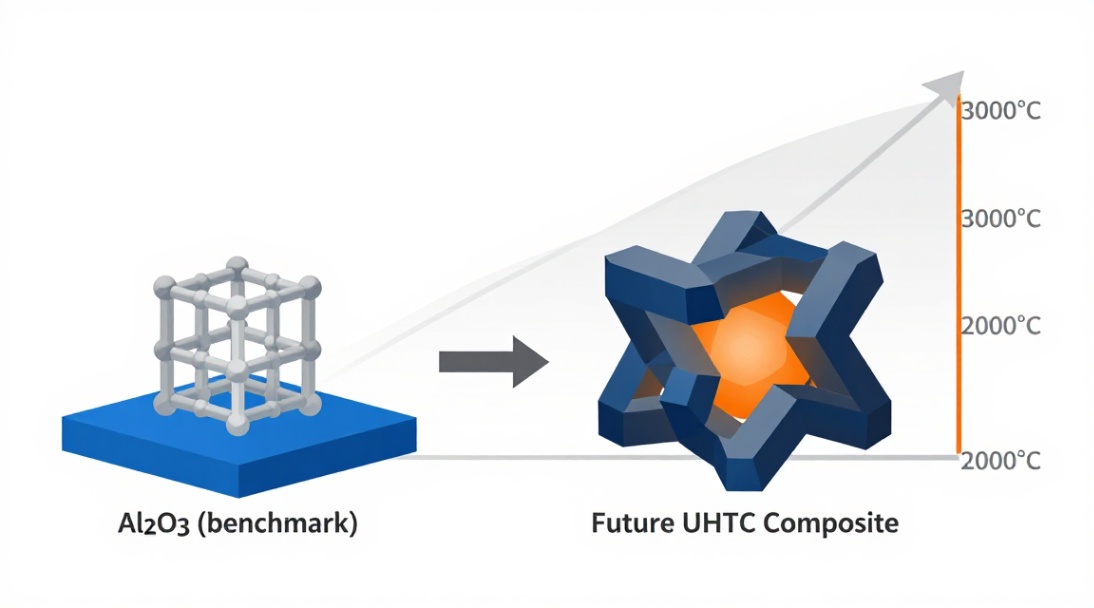
The story isn’t static. Research pushes boundaries. While mullite ceramic and quartz ceramic offer unique benefits, the frontier for ultra-high-temperature oxides lies beyond alumina. Emerging systems aim for melting points above 3000°C, seeking to create new classes of Ultra-High Temperature Ceramics (UHTCs) for hypersonics and advanced propulsion. Yet, even here, alumina often serves as a benchmark or a component within composite systems. Its well-understood behavior provides a stable platform for innovation.
The takeaway is powerful. In a world chasing the next breakthrough material, never underestimate the profound utility of a mastered material. Aluminium oxide ceramic offers a lesson in engineering elegance: maximum reliable performance, delivered consistently, at a viable cost. That’s a combination modern industry can’t afford to overlook.
Suppiler
Synthetic-chemical focus on the research and development, production and sales of ceramic products, serving the electronics, ceramics, chemical and other industries. Since its establishment in 2015, the company has been committed to providing customers with the best products and services, and has become a leader in the industry through continuous technological innovation and strict quality management.
Our products includes but not limited to Aluminum Nitride, Aluminum Oxide, Boron Carbide, Boron Nitride, Ceramic Crucible, ect. If you are interested in any type of these, please feel free to contact us.