Next-Generation Ceramics: Unlocking Superior Properties for Industry

The $30,000 Mistake on the Production Floor
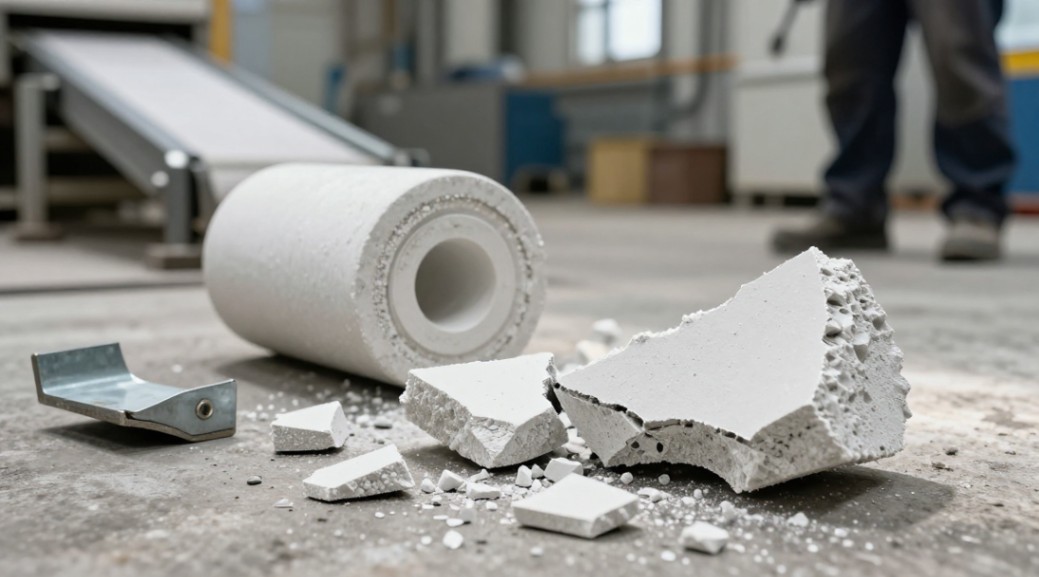
I still remember the frantic call. A client’s new high-temperature conveyor line was down. The culprit? Custom aluminum oxide ceramic rollers, shattered like glass after just a week. The design looked perfect on paper. But they had chosen the wrong purity grade for the thermal shock, used a metal mounting method that crushed the ceramic, and machined it with the wrong tools. The result was catastrophic downtime and a costly redesign. After two decades in this field, I’ve seen this story too many times. Let’s make sure it’s not your story.
What is Aluminum Oxide Ceramic? (And What It Is NOT)
First, let’s get our foundation right. Aluminum oxide ceramic, or alumina (Al₂O₃), is a high-performance technical ceramic prized for its exceptional hardness, wear resistance, and electrical insulation. It’s not a commodity. It’s a precision-engineered material. The common misconception? Treating all alumina as the same. A 96% alumina part behaves differently than a 99.5% or 99.9% part. Their microstructure, and therefore their properties, are distinct.
- Chemical Composition: Primarily Al₂O₃. The “purity” percentage refers to the alumina content, with the balance being sintering aids like silica or magnesia.
- Key Properties: Extreme hardness (near sapphire), excellent wear resistance, high compressive strength, good temperature resistance (up to 1700°C), and superb electrical insulation.
- What It’s Not: It is not a direct substitute for silicon nitride ceramic (tougher) or zirconia (higher fracture toughness). Confusing them is mistake number one.
The 7 Costly Aluminium Oxide Ceramic Mistakes You Must Avoid
1. Ignoring Purity Grade Specifications
This is the most frequent and damaging error. Choosing 96% alumina when you need 99.5% is like specifying sheet metal for a spring.
- 96% Alumina: Excellent for general wear parts, thread guides, insulator bodies. It’s cost-effective and robust. But its lower purity means slightly lower hardness and thermal conductivity.
- 99.5%+ Alumina: This is for critical service. Semiconductor wafer handling, high-performance seals, medical implants, laser tubes. It offers superior corrosion resistance, higher operating temperature, and better dielectric strength. If your data sheet calls for 99.5%, never substitute with 96%.
- The Warning: A purchasing manager might see the cost savings. An engineer will see the impending failure. Be the engineer.
2. Designing for Metal, Not Ceramic
Alumina is brutally strong in compression but has limited tensile strength and toughness. Design mistakes here are unforgiving.
- Never Use Interference Fits: Press-fitting an alumina sleeve onto a metal shaft will almost certainly crack it. Ceramics do not deform plastically like metal. Use slip fits with adhesives or clamping collars.
- Avoid Sharp Corners and Notches: These act as stress concentrators. Always specify generous radii. A simple 0.5mm radius can double the part’s effective strength.
- Account for Thermal Expansion: Alumina’s coefficient of thermal expansion is lower than steel’s. In a heated assembly, the metal expands more and can squeeze the ceramic to failure. Always design with expansion gaps or use compliant layers.
3. Machining and Handling Like It’s Steel
Sintered alumina is incredibly hard. You cannot machine it with standard HSS or carbide tools. Attempting to do so ruins the tool and often damages the component subsurface, creating micro-cracks.
- Correct Machining: Diamond grinding is the standard. Diamond-plated or resin-bonded wheels are mandatory. Use copious coolant to prevent thermal stress.
- Handling: Never let alumina parts clang together. Their hardness means they will chip, not dent. Use foam or cardboard separators. One expert from a leading lab puts it bluntly: “Treat a finished alumina component with the same care you’d give a precision optical lens.”
4. Overlooking the Competition in Extreme Environments
Alumina is a fantastic all-rounder, but it’s not the king in every category. Blindly choosing it can lead to premature failure.
- For Extreme Thermal Conductivity: Aluminium nitride ceramic conducts heat 8-10 times better. Essential for high-power electronics substrates.
- For Severe Thermal Shock: Silicon nitride ceramic or certain silicon carbide ceramics offer far superior resistance.
- For Ultra-High Temperature & Wear: Boron carbide ceramic is harder, but more brittle. Reaction-sintered silicon carbide ceramics offer exceptional wear and temperature performance.
- The Takeaway: Know the family. Compare alumina’s properties against zirconia (toughness), silicon nitride (strength & thermal shock), and silicon carbide (thermal conductivity & wear).
5. Assuming All Surface Finishes Are Equal
The as-fired surface of alumina is rough. For sealing surfaces, bearing races, or optical applications, you need a specified finish. A common mistake is not calling out the required Ra (roughness average).
- Standard As-Fired: Ra ~ 1-2 micron. Fine for many insulator bodies.
- Ground Finish: Ra 0.4-0.8 micron. For good sealing and sliding surfaces.
- Lapped/Polished Finish: Ra < 0.2 micron. For high-vacuum seals, precision guides, or where minimal particle generation is critical. This adds cost but is non-negotiable for performance.
6. Neglecting the Importance of Proper Mounting & Assembly
This is where good parts go to die. You cannot simply bolt alumina down with metal fasteners and crank them to 50 ft-lbs.
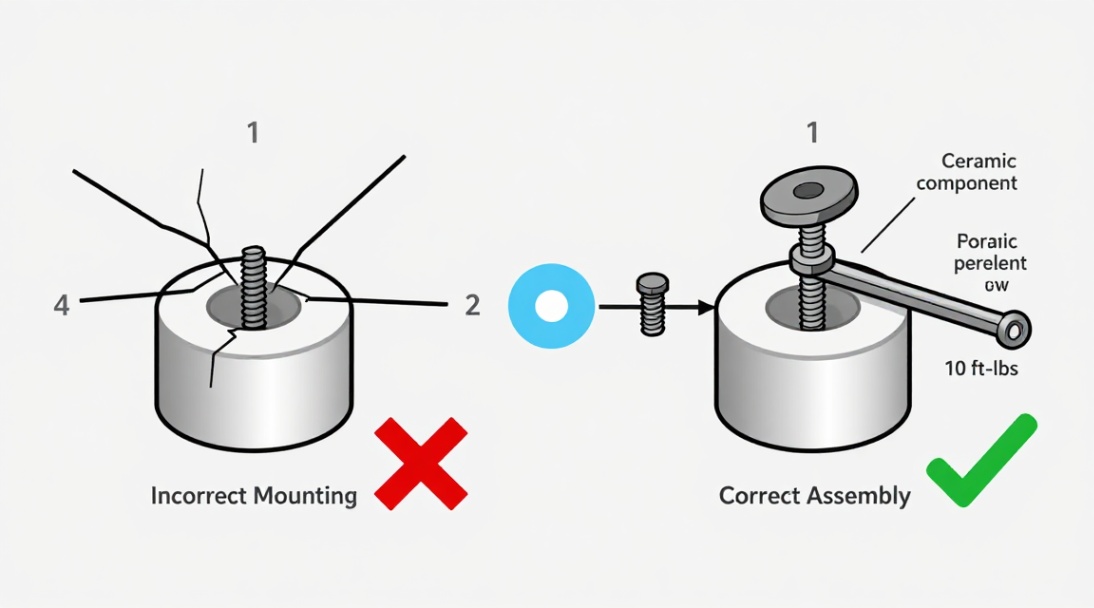
- Use Compliant Layers: Always incorporate soft metal (e.g., aluminum), rubber, or fiber gaskets between ceramic and metal. This distributes point loads and accommodates minor mismatches.
- Control Torque: Over-torquing creates hidden tensile stresses. Use a calibrated torque wrench and follow the manufacturer’s specifications religiously. Use shoulder washers to prevent the fastener head from contacting the ceramic directly.
7. Skipping Prototyping and Expert Consultation
The final, and perhaps biggest, mistake is going it alone. The data sheet gives you baseline properties, but application success depends on nuance.
- Prototype Early: Build a few sample parts. Test them in the actual environment-thermal cycles, load cycles, chemical exposure. Fail fast and cheaply in the prototype phase.
- Talk to a Specialist: A true ceramic application engineer can spot the flaw in your drawing in minutes. They know that a certain corner radius is standard, or that a particular coating can enhance performance. As one veteran I respect always says, “The cost of a consultation is trivial compared to the cost of a production line failure.”
Your Path to Success with Aluminum Oxide Ceramic
Alumina is a remarkably forgiving material if you respect its nature. Its versatility in electronics substrates, medical implant components, industrial wear plates, and high-temperature insulators is unmatched. By avoiding these seven critical errors, you leverage its strengths-hardness, electrical insulation, and chemical stability-while designing around its brittleness.
The future of aluminum oxide ceramic lies in advanced composites and nano-structured grades, pushing the boundaries of strength and toughness. But the foundational rules of proper selection, design, and handling will always apply.
Stop Guessing. Start Succeeding.
Don’t let material selection guesswork risk your project. You need a partner who speaks both engineering and ceramics fluently. You need a source that provides not just raw material, but application-critical components backed by real expertise.
I strongly recommend you consult with a specialist manufacturer like [Your Company Name]. We don’t just sell alumina; we solve problems. Our engineers will review your design for manufacturability and performance pitfalls at no cost. We offer a full range of purity grades, from standard 96% alumina to ultra-high-purity 99.9%, with precision machining and finishing to your exact specifications.

Take the next step with confidence. Visit our website to download our free Alumina Ceramic Design Guide or, better yet, submit your drawing for a rapid engineering review. Let’s build something reliable together.
Suppiler
Synthetic-chemical focus on the research and development, production and sales of ceramic products, serving the electronics, ceramics, chemical and other industries. Since its establishment in 2015, the company has been committed to providing customers with the best products and services, and has become a leader in the industry through continuous technological innovation and strict quality management.
Our products includes but not limited to Aluminum Nitride, Aluminum Oxide, Boron Carbide, Boron Nitride, Ceramic Crucible, ect. If you are interested in any type of these, please feel free to contact us.