Next-Generation Ceramics: Unlocking Superior Properties for Industry

How a Cracked Seal Almost Sank a $2M Reactor
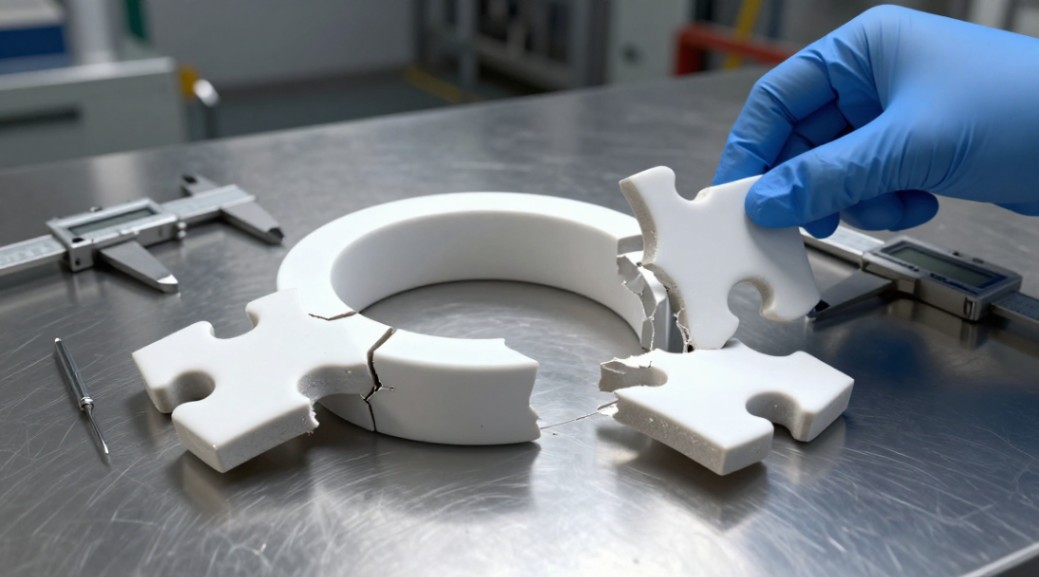
A colleague once called me in a panic. Their new chemical reactor was leaking. Pressure was dropping. The culprit? A custom aluminum oxide ceramic seal ring, now fractured into three neat pieces. It looked perfect on paper-high purity, excellent corrosion resistance. Yet it failed in weeks. The problem wasn’t the material. It was a basic misunderstanding of its limits. This story isn’t unique. I see it all the time. Today, I’m sharing the warnings most suppliers won’t give you.
Mistake #1: Treating All “Alumina” as Equal
This is the biggest trap. You specify “alumina” and assume you’re done. It’s a fatal error. Aluminum oxide ceramic performance hinges on purity and microstructure. Choose wrong, and your component will fail.
The 96% vs. 99.5%+ Trap
96% alumina is a workhorse. It’s cost-effective for general wear plates or insulator beads. But push it into high-purity acid environments or ultra-high voltage applications, and it will degrade. The ~4% glassy silicate grain boundary phase becomes a highway for corrosion and electrical leakage. For critical seals, semiconductor processing parts, or advanced medical implants, you need 99.5% or even 99.8% purity. The cost is higher. The performance is non-negotiable. I’ve seen engineers try to save 20% on material cost, only to incur 500% in downtime and replacement.
Mistake #2: Ignoring the Brittleness Factor
Aluminium oxide ceramic is hard. It is not tough. Its fracture toughness is low. You cannot design it like metal. Sharp corners, sudden changes in cross-section, and point loads are your enemy. They create stress concentrators. Failure is sudden and catastrophic. If your design has a thin flange or an unsupported ledge, stop. Redesign it. Use generous fillets. Support loads across broad, flat surfaces. This is why silicon nitride ceramic or silicon carbide ceramic often wins in high-impact bearing applications-they handle the stress better.
Many users on engineering forums share stories of alumina components “shattering for no reason.” The reason is always poor design for its mechanical nature.
Mistake #3: Overlooking Thermal Shock Limitations
Yes, alumina has good high-temperature capability. No, it does not like rapid temperature changes. Its thermal conductivity is decent, but its coefficient of thermal expansion can cause issues. Quenching a hot alumina part is asking for trouble. In applications with cyclic heating and cooling, consider alternatives like silicon carbide ceramic or aluminium nitride ceramic for better thermal shock resistance. For furnace linings, the gradual heating and cooling schedules aren’t just suggestions-they are mandates to prevent thermal stress cracks.
Mistake #4: Machining as an Afterthought
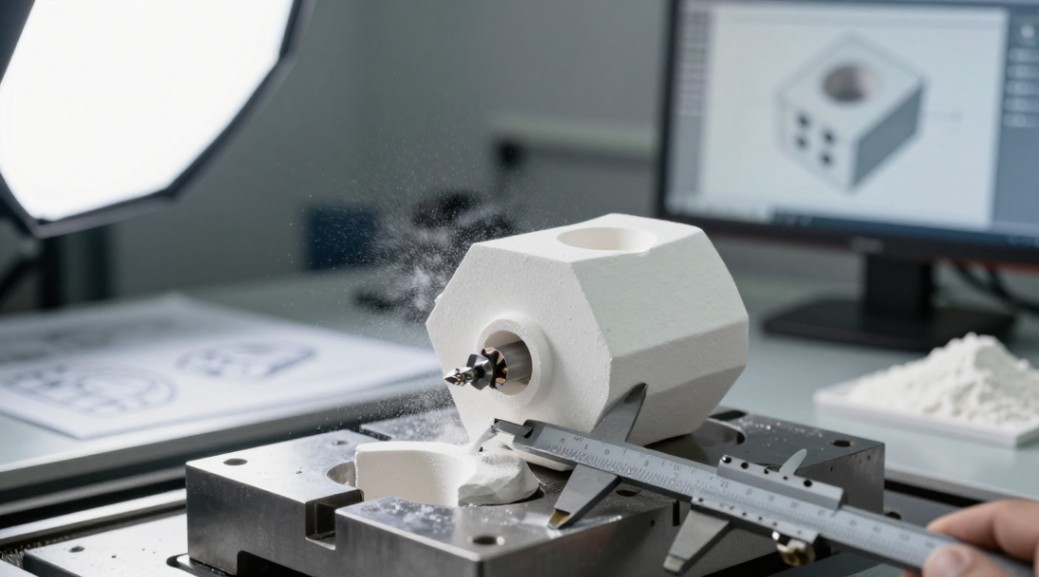
“We’ll just machine it to spec.” This phrase has killed budgets. Sintered aluminium oxide ceramic is extremely hard. You can only grind it with diamond tools. Drilling holes? They must be designed-in before sintering, or you’ll need expensive ultrasonic drilling. Tight tolerances are possible, but they skyrocket the price. Every edge, every hole, every thread needs forethought. If you need a complex shape, is net-shape pressing or injection molding feasible? Plan the fabrication path first. Don’t assume post-sinter machining is cheap or easy.
Mistake #5: Misapplying It in the Wrong Fight
Alumina is a champion in many areas. It is not a universal soldier. Know where it loses.
- Against Extreme Abrasion: For sheer wear resistance, boron carbide ceramic is harder. For sliding wear in seals, silicon carbide ceramic often has a lower friction coefficient.
- For Ultimate Thermal Conductivity: Aluminium nitride ceramic is far superior for heat sinks and electronic substrates.
- In Severe Mechanical Impact: Zirconia or silicon nitride ceramic offer higher toughness.
- For Extreme Temperature >1600°C: You’re looking at specialized materials like boron nitride ceramic or advanced composites.
I once reviewed a project where alumina was specified for a sand blasting nozzle. It wore out in days. We switched to a boron carbide ceramic liner. It lasted months. Use the right tool for the job.
The Path to Success: A Material Selection Checklist
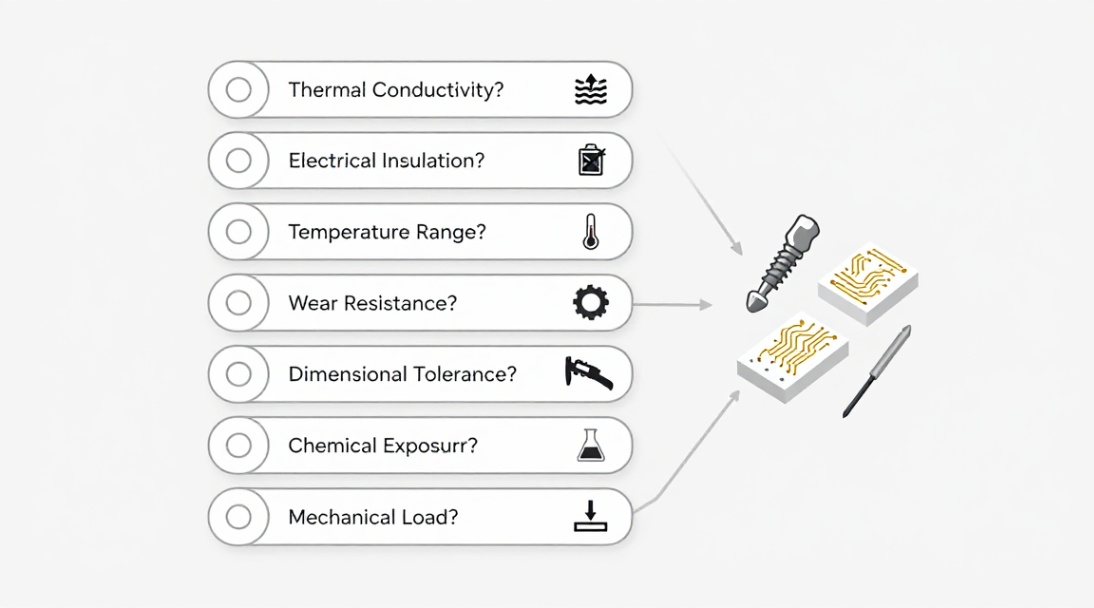
Before you finalize aluminium oxide ceramic, ask these questions:
- What is the primary failure mode? (Wear, corrosion, fracture, electrical breakdown?)
- What are the exact thermal cycles? (Maximum temperature, rate of change?)
- What is the required surface finish and tolerance? (Can it be achieved cost-effectively?)
- What is the chemical environment? (pH, specific ions, solvents?)
- Have you discussed your design in detail with your ceramic manufacturer? (Their feedback is gold.)
Aluminum oxide ceramic is a remarkable material. It enables everything from bio-inert hip joints to substrates that power your phone. Respect its strengths. Understand its warnings. Design with its true character in mind, and it will perform brilliantly for decades. Avoid these common pitfalls, and you’ll move from fixing failures to celebrating reliable, high-performance designs.
Your next step? Audit your current designs against this list. Then, have a detailed conversation with a trusted technical ceramics engineer. Bring your drawings, your environmental data, and your failure history. That collaboration is where great engineering happens.
Suppiler
Synthetic-chemical focus on the research and development, production and sales of ceramic products, serving the electronics, ceramics, chemical and other industries. Since its establishment in 2015, the company has been committed to providing customers with the best products and services, and has become a leader in the industry through continuous technological innovation and strict quality management.
Our products includes but not limited to Aluminum Nitride, Aluminum Oxide, Boron Carbide, Boron Nitride, Ceramic Crucible, ect. If you are interested in any type of these, please feel free to contact us.