Next-Generation Ceramics: Unlocking Superior Properties for Industry

Aluminum Oxide Ceramic: A First-Person Reality Check from the Front Lines
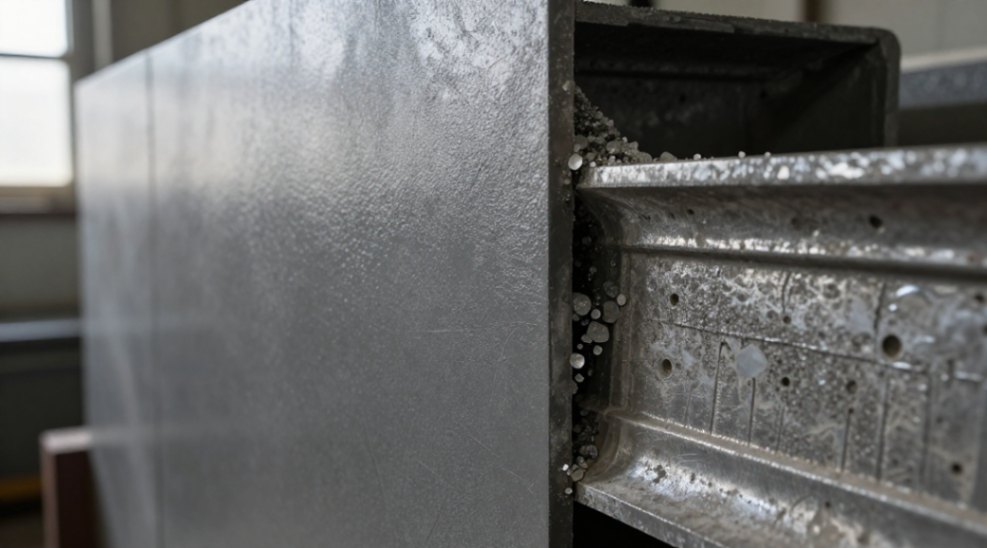
Early in my career, I saw a plant manager replace a hardened steel guide chute every six weeks. Abrasive minerals chewed through it like paper. We switched the lining to 99.5% purity aluminium oxide ceramic. That component lasted over five years. It wasn’t magic. It was a straightforward materials science decision that saved thousands in downtime and parts. This experience is not unique. On engineering forums, you’ll find similar stories of aluminum oxide ceramic solving persistent wear and insulation problems where metals fail. Let’s move beyond the spec sheet and examine why this material remains a cornerstone of industrial design.
Deep Dive Questions on Aluminum Oxide Ceramic (Al2O3)
1. What fundamentally defines aluminum oxide ceramic, and what are its core properties?
Aluminium oxide ceramic, or Al2O3, is a polycrystalline material formed by fusing aluminum oxide powders at high temperatures. Its atomic structure creates a unique combination of properties. First is extreme hardness. It ranks 9 on the Mohs scale, just below diamond. This directly translates to superior wear resistance. Its electrical insulation properties are exceptional, with high dielectric strength and volume resistivity even at elevated temperatures. Chemically, it is highly inert, offering excellent corrosion resistance against most acids, alkalis, and molten salts. While its thermal conductivity is moderate compared to aluminum nitride ceramic or silicon carbide ceramic, its high temperature stability allows sustained operation up to 1700°C in certain forms.
2. Why does purity (like 96% vs. 99.5%) matter so much in alumina ceramics?
Purity dictates performance. The remaining percentage consists of sintering aids like silica and magnesia. A 96% Al2O3 grade offers a strong balance of mechanical strength, wear resistance, and cost-effectiveness for most industrial wear parts. It’s the workhorse. Stepping up to 99.5% or 99.7% purity reduces the glassy grain boundary phase. This increases hardness, elevates maximum use temperature, and dramatically improves corrosion resistance. Electrical properties also benefit; higher purity means lower dielectric loss and higher insulation resistance. For a critical semiconductor wafer-handling arm or a high-voltage insulator, the premium for 99.5%+ alumina is non-negotiable.
3. How does aluminium oxide ceramic compare to zirconia for structural applications?
This is a frequent engineering dilemma. Alumina excels in hardness, wear, and cost-per-volume. Zirconia, particularly yttria-stabilized zirconia (YSZ), possesses much higher fracture toughness-it’s harder to crack. However, zirconia’s hardness is lower, making it less ideal for pure abrasion. Zirconia also exhibits a undesirable property called low-temperature degradation in humid environments over long periods. For a seal face facing constant slurry abrasion, choose high-purity alumina. For a ball valve component needing impact resistance, zirconia may be better. It’s a trade-off between wear resistance and mechanical robustness.
4. When should an engineer consider advanced ceramics like silicon nitride or aluminum nitride over alumina?
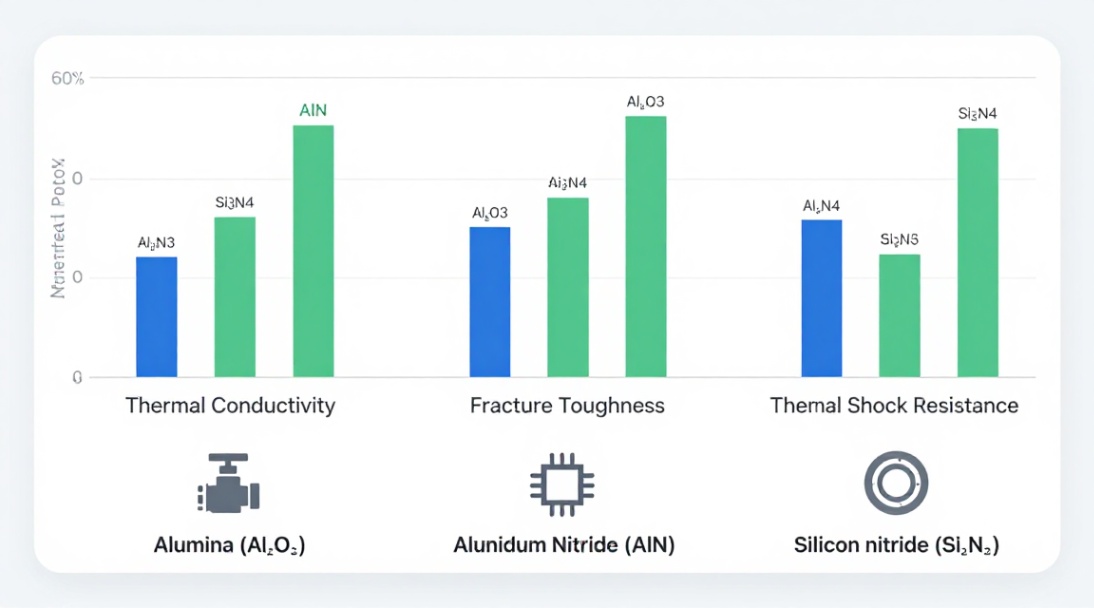
Select the ceramic based on the primary failure mode. For thermal management, aluminium nitride ceramic has a thermal conductivity nearly ten times that of alumina, making it the substrate of choice for high-power LED and microwave packages. Silicon nitride ceramic combines high strength, good fracture toughness, and excellent thermal shock resistance, outperforming alumina in high-stress dynamic applications like bearing balls and turbocharger rotors. Silicon carbide ceramic, especially reaction-sintered silicon carbide ceramics or pressureless sintered silicon carbide ceramics, offers superior thermal conductivity and extreme hardness for wear parts in even more aggressive environments than alumina typically handles. Alumina remains the default due to its proven reliability and broad performance envelope.
5. What are the key design considerations when implementing alumina ceramic components?
Respect its brittleness. Avoid tensile stress concentrations. Use generous fillets. Design for compressive loading whenever possible. Understand that its thermal expansion coefficient is lower than most metals. In metal-ceramic assemblies, use compliant layers or engineered interference fits to manage differential expansion. Surface finish is critical. A polished surface can reduce friction and adhesive wear. The manufacturing process also matters. Complex geometries often require machining in the ‘green’ or pre-sintered state. Tight tolerances on sintered parts require diamond grinding, which adds cost. Communicate early with your ceramic component supplier.
6. What emerging trends or research directions impact the future of alumina and related ceramics?
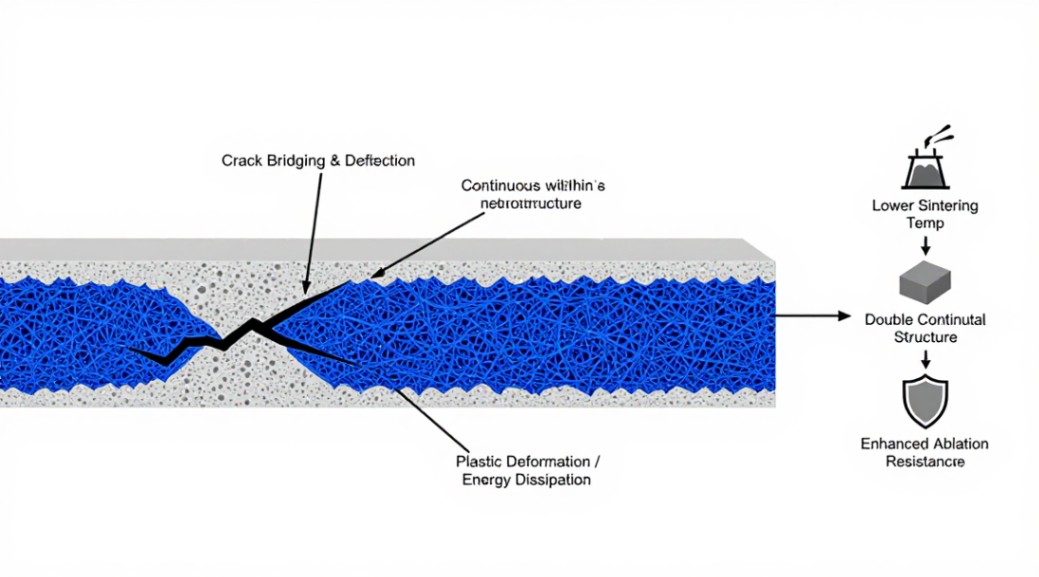
The frontier is in ultra-high temperature ceramics (UHTCs) and composite structures. Research into new oxide systems with melting points exceeding 3000°C aims to push operational limits. For alumina-based systems, the trend is toward toughening. Concepts like the ‘double continuous structure’ for ceramic matrix composites, which can lower sintering temperatures while radically improving fracture toughness, point to a future where ceramic components are less prone to brittle failure. The goal is a dense, continuous microstructure that enhances properties like ablation resistance. While pure alumina may not be the matrix in these cutting-edge composites, the processing science developed feeds back into producing more reliable, high-performance monolithic alumina components.
Final Thoughts for the Practicing Engineer
Aluminium oxide ceramic is not the newest material. It is often the most reliable. Its dominance in wear components, electrical substrates, and biomedical implants stems from a predictable, well-understood property profile. The data shows that for hardness, electrical insulation, and chemical stability per unit cost, it is exceptionally difficult to beat. Before chasing exotic solutions, verify that your design fully leverages alumina’s capabilities. Examine the failure mode of your current component. If it’s abrasion, corrosion, or electrical breakdown, a properly specified grade of aluminum oxide ceramic is likely the most rational engineering solution available.
Suppiler
Synthetic-chemical focus on the research and development, production and sales of ceramic products, serving the electronics, ceramics, chemical and other industries. Since its establishment in 2015, the company has been committed to providing customers with the best products and services, and has become a leader in the industry through continuous technological innovation and strict quality management.
Our products includes but not limited to Aluminum Nitride, Aluminum Oxide, Boron Carbide, Boron Nitride, Ceramic Crucible, ect. If you are interested in any type of these, please feel free to contact us.