Next-Generation Ceramics: Unlocking Superior Properties for Industry

A Hot Plate, a Cold Draft, and a $10,000 Lesson
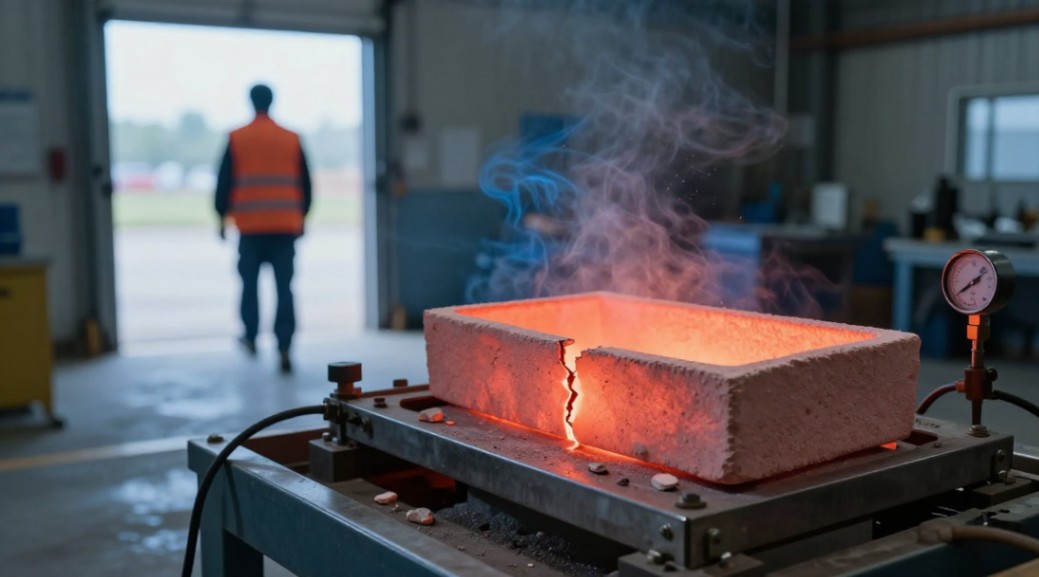
I remember the first time I really messed up with aluminum oxide ceramic. We had just finished a production run of high-purity alumina components for a furnace liner. The parts looked flawless. Specs were perfect. We placed one on a test stand, turned the heat up to operating temperature, and a maintenance guy opened a bay door. A cold draft hit the part. Crack. Instantly. The sound was like a gunshot. That was my introduction to thermal shock. It was brutal. We lost a batch that cost more than my first car. We don’t make that mistake anymore. And you don’t have to either.
What Everyone Gets Wrong About Aluminum Oxide Ceramic
Aluminum oxide ceramic, or alumina, is everywhere. It’s in your phone’s electronics, in the hip joint of an active sixty-year-old, and in grinding wheels that shape steel. It’s a workhorse. But it has a dark side. Most engineers pick it because it’s cheap and hard. Then they wonder why it fails. The problem isn’t the material. The problem is a lack of respect for its limitations. Let’s talk about those limitations. No fluff. Just what we’ve learned the hard way.
1. Can I Use Aluminum Oxide Ceramic for a Part That Sees Rapid Temperature Changes?
No. Do not do it. This is the number one killer. Aluminum oxide ceramic has low thermal conductivity and a high coefficient of thermal expansion relative to its strength. When one face of the part heats up fast, it expands while the cool side doesn’t. That internal stress exceeds the tensile strength. The part shatters. If you need thermal shock resistance, look at reaction-sintered silicon carbide ceramics or recrystallized silicon carbide ceramics. They handle the heat better. If you must use alumina, preheat it slowly. Or design the part to be thin. But honestly, pick a different material for that job.
2. Is Aluminum Oxide the Hardest Ceramic I Can Buy?
No, but it’s hard enough for most things. We often see people over-specifying boron carbide ceramic or silicon carbide ceramic when alumina would work perfectly. Aluminum oxide ceramic sits around 9 on the Mohs scale (just under diamond). For abrasive media, cutting tool inserts, and wear liners, it’s excellent. But if you need to stop an armor-piercing bullet or grind down a diamond, you need boron carbide. The mistake here is paying for exotic materials when a simple 96% alumina would do. Use logic: if the part needs to survive a sandstorm, alumina is fine. If it needs to survive a rock crusher with impact, consider silicon nitride ceramic for its toughness.
3. Can I Machine It Like a Piece of Steel?
Absolutely not. This is a tragedy we see over and over. Someone takes a green (unfired) alumina part and tries to drill it on a Bridgeport. It breaks. Then they take a sintered (hard) part and try to cut threads with a tap. The tap snaps. Aluminum oxide ceramic is extremely hard and brittle. After sintering, you cannot machine it with conventional tools. You need diamond grinding, ultrasonic machining, or laser cutting. If you need complex shapes, machine the part in the green state (before firing) using standard tooling. It’s like carving chalk. Then sinter it. Or specify special coating for boron nitride ceramic crucibles or similar if you just need a thin layer for release. But for structural shapes: design for net shape, or prepare to spend a lot on diamond wheels.
4. Which Grade of Alumina Should I Pick? 85% or 99.9%?
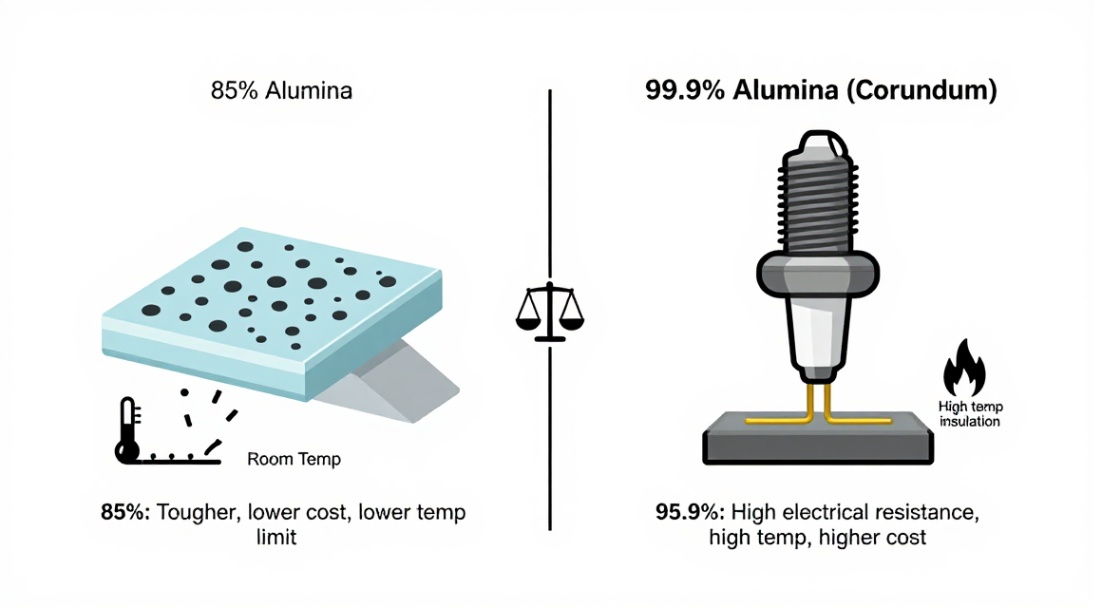
It depends on the job, but most people over-buy purity. Here’s the logic. High purity alumina ceramic (99.9% alpha-alumina/corundum) has excellent electrical insulation, even at high temperatures. That’s why we use it for spark plugs and substrates. But it costs more. The 85-96% grades have a glassy phase (mullite or silica) that makes them easier to sinter and slightly tougher, but with lower electrical resistance and lower maximum operating temperature. If the part is a simple wear tile in a chute at room temperature, 85% alumina is your friend. If you’re making a special coating for boron nitride ceramic crucibles for molten metal, you need high purity. Don’t spend for 99.9% if 96% does the job. Test the electrical and thermal requirements first.
5. Is Aluminium Oxide Ceramic Safe to Use in Food or Biomedical Implants?
Yes, but only if you have the right purity and surface finish. We see people trying to use industrial-grade alumina for implants. Bad idea. Industrial alumina can contain silica, calcia, or other sintering aids that leach out. For biomedical implants (like hip joints), we use high-purity, fully dense alumina with a fine grain size. It’s bioinert. It’s also extremely wear-resistant, which is why it works so well for artificial joints. But the surface finish must be mirror-smooth. Rough alumina will wear down the opposing cartilage or metal component. Use medical-grade alumina that meets ISO 6474 standards. Never substitute a wear plate grade for an implant.
6. How Do I Improve the Toughness of Aluminium Oxide Ceramic?
You can’t. Not inherently. Brittleness is the Achilles’ heel of aluminium oxide ceramic. It has low tensile strength. But you can engineer around it. Use compressive loading. Design parts so they are always in compression, not tension. Or apply a coating. Some people use special coating for boron nitride ceramic crucibles as a release layer on an alumina shell, but that doesn’t fix the bulk. Another trick: add zirconia particles to the alumina matrix. This creates zirconia-toughened alumina (ZTA). It’s tougher. But it’s not standard alumina. If you need impact resistance, consider silicon nitride ceramic or boron nitride ceramic (which is softer but more machinable). Know the material’s limits. The ceramic doesn’t stretch. It snaps. Design accordingly.
7. Can Aluminum Oxide Ceramic Handle Strong Acids or Alkalis?
Generally, yes. That’s why we use it for chemical pump seals and valve seats. But there is a trap. High-temperature caustic environments will eat alumina over time. Concentrated hydrofluoric acid will attack it. The logic: aluminium oxide is amphoteric (it reacts with both strong acids and strong bases). At room temperature, it’s very inert. At 100°C in concentrated sodium hydroxide, it dissolves slowly. For very harsh chemical environments, silicon carbide ceramic or reaction-sintered silicon carbide ceramics perform better. For electrical insulation in chemical environments, mullite ceramic or quartz ceramic might be a better fit. Always test a sample in your actual process fluid at the operating temperature. Don’t trust a generic chemical resistance chart.
The Bottom Line: Aluminium Oxide Ceramic is a Tool, Not a Magic Bullet
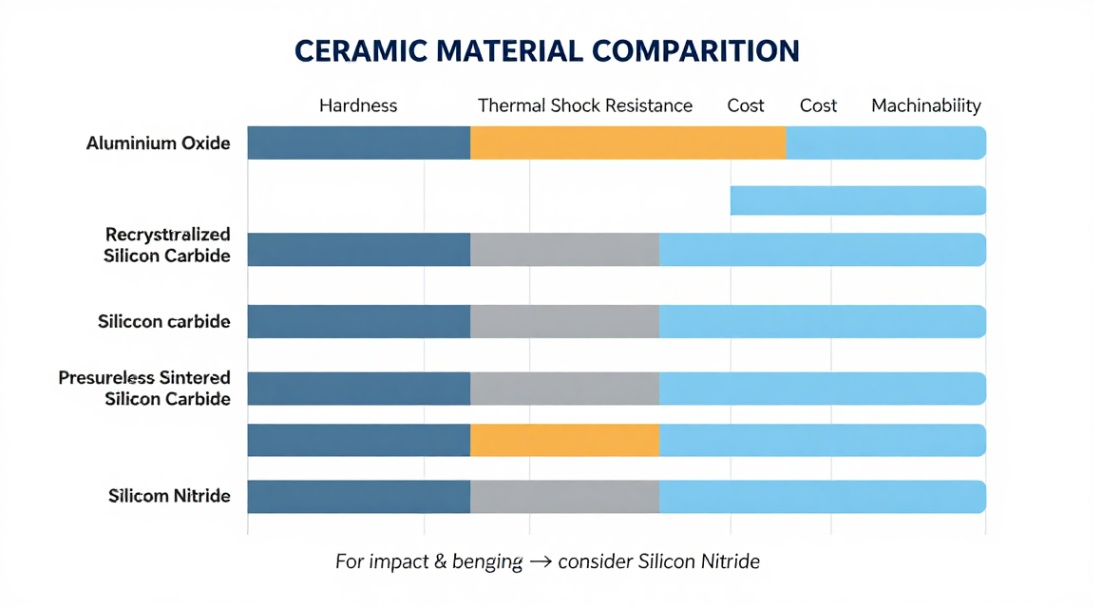
We love this stuff. It’s cheap, hard, insulates electricity, and resists chemicals. But it’s not for everything. Here is our unsolicited advice, from one engineer to another. First, avoid thermal shock by controlling heat-up rates or choosing recrystallized silicon carbide ceramics or pressureless sintered silicon carbide ceramics. Second, never machine it hard. Third, match the purity to the need; don’t overspend. Fourth, trust your gut: if the part needs to bend or take a hit, consider silicon nitride ceramic or boron nitride ceramic. Fifth, always test in your specific conditions.
The biggest mistake? Assuming a ceramic is ‘just like metal but harder.’ It’s not. Respect the brittleness, respect the thermal behavior, and aluminium oxide ceramic will serve you well for decades. We’ve learned this the hard way so you don’t have to. Now go design something great. And keep that bay door closed.
Suppiler
Synthetic-chemical focus on the research and development, production and sales of ceramic products, serving the electronics, ceramics, chemical and other industries. Since its establishment in 2015, the company has been committed to providing customers with the best products and services, and has become a leader in the industry through continuous technological innovation and strict quality management.
Our products includes but not limited to Aluminum Nitride, Aluminum Oxide, Boron Carbide, Boron Nitride, Ceramic Crucible, ect. If you are interested in any type of these, please feel free to contact us.