Next-Generation Ceramics: Unlocking Superior Properties for Industry

PRODUCT PARAMETERS
Description
Overview of Alumina Ceramic Insulation Substrate Plate
Alumina Ceramic, or Aluminum Oxide (Al₂O₃), is the most widely used and versatile advanced ceramic material. Known for its excellent balance of mechanical, thermal, and electrical properties, it is a cost-effective solution for a vast array of demanding industrial applications. Alumina components are produced in purity levels ranging from 85% to 99.9%, with properties enhancing as purity increases.
Features of Alumina Ceramic Insulation Substrate Plate
- High Hardness & Wear Resistance: Offers exceptional resistance to abrasion and mechanical wear.
- Excellent Electrical Insulation: Maintains high electrical resistivity even at elevated temperatures.
- Good Thermal Conductivity: (For a ceramic) effectively dissipates heat, especially in higher purity grades.
- High Compressive Strength: Capable of withstanding significant mechanical loads.
- Chemical Inertness: Highly resistant to corrosion from acids, alkalis, and molten metals.
- Cost-Effectiveness: Provides superior performance at a lower cost compared to many other technical ceramics.
Specifications of Alumina Ceramic Insulation Substrate Plate
Alumina Ceramic Insulation Substrate Plate– Trick Specifications
Product Composition
96% to 99.8% pure alumina (Al two O THREE) forms the base of this substrate plate. High purity ensures solid electric insulation and excellent thermal security. The staying little percentage consists of additives that aid with sintering and mechanical strength.
Electrical Characteristics
This plate uses high dielectric stamina, generally above 10 kV/mm. Its quantity resistivity surpasses 10 ¹⁴ Ω · cm at room temperature. These attributes make it excellent for use in high-voltage and high-frequency applications where dependable insulation is vital.
Thermal Performance
The substrate handles temperatures as much as 1600 ° C in air. It has a thermal conductivity between 20– 30 W/m · K, depending upon alumina material. This allows efficient heat dissipation while preserving structural stability under thermal stress and anxiety.
Mechanical Stamina
With a flexural toughness ranging from 300 to 400 MPa, the plate stands up to breaking and deformation throughout handling and operation. Its hardness (around 1500– 1700 HV) offers good wear resistance popular settings.
Dimensional Tolerance
Standard thickness options consist of 0.25 mm, 0.5 mm, 0.8 mm, 1.0 mm, and 2.0 mm. Custom-made dimensions are offered. Density resistance stays within ± 0.02 mm for accuracy applications. Surface area flatness is managed to meet tight assembly requirements.
Surface End up
Both sides of the plate can be brightened to a smooth surface, with surface roughness (Ra) as reduced as 0.2 µm. This decreases get in touch with resistance and sustains reputable bonding with metal layers or components.
Chemical Resistance
The plate withstands rust from a lot of acids, antacid, and solvents. It remains secure in harsh chemical environments, making it ideal for sensing units, semiconductor tools, and commercial electronics.
Applications of Alumina Ceramic Insulation Substrate Plate
Applications of Alumina Ceramic Insulation Substrate Plate
Power Electronic Devices and High-Voltage Equipments
Alumina ceramic insulation substrate plates are commonly used in power electronic devices. They manage high voltages safely since they resist electric transmission well. These plates support parts like IGBT modules, power transistors, and thyristors. Their solid dielectric toughness keeps circuits secure also under hefty electrical lots.
LED Lights Industry
In LED illumination, warm accumulates quickly. Alumina substratums help manage this heat while maintaining electrical power from dripping. They work as bases for high-power LED chips. The product’s thermal conductivity pulls heat away from sensitive parts. At the same time, its electrical insulation avoids short circuits.
Sensors and Automotive Electronics
Modern vehicles rely on lots of electronic sensors. Alumina ceramic plates offer a secure system for these devices. They work well in extreme problems– high temperatures, vibrations, and wetness. Oxygen sensing units, pressure sensors, and ignition systems often make use of alumina substrates for integrity and lengthy life.
Medical Tools
Medical equipment demands clean, risk-free, and reliable materials. Alumina ceramic meets these needs. It is made use of in imaging systems, medical tools, and analysis devices. The substratum withstands deterioration from cleansing agents and body liquids. Its biocompatibility makes it ideal for instruments that contact human tissue.
Industrial Home Heating and Vacuum Cleaner Settings
Factories make use of alumina ceramic plates in heating elements and vacuum chambers. The material stays solid at really high temperatures. It does not outgas or degrade in vacuum cleaner setups. This makes it ideal for semiconductor manufacturing and various other precision commercial procedures.
Alumina ceramic insulation substratum plates incorporate excellent electric insulation with great warmth administration. They are tough, chemically secure, and trusted across lots of areas. Engineers select them when efficiency and security issue many.

Company Profile
Synthetic-chemical focus on the research and development, production and sales of ceramic products, serving the electronics, ceramics, chemical and other industries. Since its establishment in 2015, the company has been committed to providing customers with the best products and services, and has become a leader in the industry through continuous technological innovation and strict quality management.
Our products includes but not limited to Aluminum Nitride, Aluminum Oxide, Boron Carbide, Boron Nitride, Ceramic Crucible, ect. If you are interested in any type of these, please feel free to contact us.

Payment Methods
T/T, Western Union, Paypal, Credit Card etc.
Shipment Methods
By air, by sea, by express, as customers request.
5 FAQs of Alumina Ceramic Insulation Substrate Plate
What is an Alumina Ceramic Insulation Substrate Plate?
It’s a flat piece made from high-purity aluminum oxide.
This material offers strong electrical insulation and handles high temperatures well. Engineers use it as a base for electronic parts that need to stay cool and safe from short circuits.
Why choose alumina over other ceramic materials?
Alumina gives the best mix of cost, strength, and performance.
It resists heat better than most plastics. It also conducts heat away faster than many other ceramics. This helps protect sensitive components. Plus, it’s harder and more durable than standard glass or resin boards.
Can it work in very hot environments?
Yes—it stays stable even above 1500°C.
Alumina ceramic keeps its shape and insulating power at extreme temperatures. That makes it ideal for industrial heaters, sensors, and power electronics used in tough conditions.
Is it safe for high-voltage applications?
Absolutely—it blocks electricity very effectively.
Its high dielectric strength means it won’t let current leak through, even under strong electric fields. This reliability is why it’s common in transformers, spark plugs, and medical devices.
How long does it last?
It lasts a very long time with almost no wear.
Alumina resists corrosion, moisture, and physical damage. It doesn’t age like organic materials. Once installed, it often works without maintenance for years—even in harsh settings.
REQUEST A QUOTE
RELATED PRODUCTS
High Purity Alumina Powder (Al2O3) 99.99%
Non-Deformable, Low Elastic Force Alumina Ceramic Shaft/Plunger/Spindle for Sensors
Alumina-Gravel Infused Zirconia Ceramic Basket Gemstone
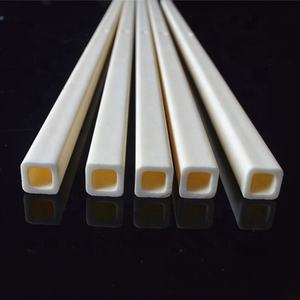
Alumina Ceramic Lined Equipment for Mining & Mineral Processing
Alumina Polishing Powder – China Factory