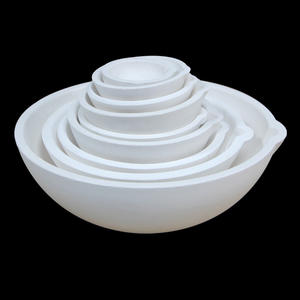
Next-Generation Ceramics: Unlocking Superior Properties for Industry

PRODUCT PARAMETERS
Description
Overview of High Electrical Insulation 96% Alumina Ceramic Substrate
Alumina Ceramic, or Aluminum Oxide (Al₂O₃), is the most widely used and versatile advanced ceramic material. Known for its excellent balance of mechanical, thermal, and electrical properties, it is a cost-effective solution for a vast array of demanding industrial applications. Alumina components are produced in purity levels ranging from 85% to 99.9%, with properties enhancing as purity increases.
Features of High Electrical Insulation 96% Alumina Ceramic Substrate
- High Hardness & Wear Resistance: Offers exceptional resistance to abrasion and mechanical wear.
- Excellent Electrical Insulation: Maintains high electrical resistivity even at elevated temperatures.
- Good Thermal Conductivity: (For a ceramic) effectively dissipates heat, especially in higher purity grades.
- High Compressive Strength: Capable of withstanding significant mechanical loads.
- Chemical Inertness: Highly resistant to corrosion from acids, alkalis, and molten metals.
- Cost-Effectiveness: Provides superior performance at a lower cost compared to many other technical ceramics.
Specifications of High Electrical Insulation 96% Alumina Ceramic Substrate
High Electrical Insulation 96% Alumina Porcelain Substratum– Key Specs
Product Make-up
This substratum is made from 96% pure alumina (Al two O FIVE). The remaining 4% contains additives that aid with sintering and architectural integrity. This high alumina web content provides the material excellent mechanical stamina and thermal security.
Electrical Features
The product provides outstanding electrical insulation , also at high voltages and elevated temperature levels. Its quantity resistivity goes beyond 10 ¹⁴ Ω · cm at room temperature level. The dielectric toughness is generally ≥ 15 kV/mm , making it ideal for demanding power electronics applications. The loved one permittivity (dielectric consistent) remains around 9.8 ± 0.2 at 1 MHz, making sure steady signal efficiency.
Thermal Features
It has a thermal conductivity of regarding 24– 28 W/m · K , which allows efficient heat dissipation. The coefficient of thermal development is 6.5– 7.5 × 10 ⁻⁶/ ° C (from 25 ° C to 300 ° C), carefully matching many semiconductor materials. This lowers anxiety during thermal biking. The maximum continual operating temperature level reaches 1600 ° C in air.
Mechanical Strength
The flexural stamina is ≥ 300 MPa , and solidity (Vickers) is ≥ 1200 HV . These homes guarantee toughness during handling, setting up, and long-term usage in extreme environments.
Measurements and Resistances
Standard densities range from 0.25 mm to 1.5 mm , with personalized dimensions readily available. Thickness resistance is commonly ± 0.03 mm . Surface area flatness is regulated within ± 5 µm , and surface area roughness (Ra) is ≤ 0.4 µm after polishing– excellent for thin-film or thick-film circuit fabrication.
Applications
This substratum is extensively made use of in power modules, LED bundles, sensors, hybrid circuits, and high-frequency devices where dependability, insulation, and thermal administration are vital.
Applications of High Electrical Insulation 96% Alumina Ceramic Substrate
Applications of High Electric Insulation 96% Alumina Porcelain Substrate
Power Electronic Devices and High-Voltage Systems
96% alumina ceramic substratums are widely made use of in power electronic devices due to the fact that they supply strong electrical insulation also under high voltage. These substratums sustain elements like IGBT modules, thyristors, and power resistors. Their capacity to block present leakage makes sure safe and secure operation in demanding environments such as electrical automobile battery chargers, commercial motor drives, and renewable energy inverters.
Sensors and Measurement Instruments
In accuracy sensors and dimension devices, electrical seclusion is vital. The high insulation resistance of 96% alumina prevents signal interference and preserves precision. This makes the product ideal for pressure sensors, temperature level probes, and clinical diagnostic tools where dependability can not be compromised.
Aerospace and Protection Electronics
Aerospace and protection systems need materials that do accurately under severe conditions. 96% alumina ceramic substrates meet this requirement by incorporating excellent dielectric toughness with thermal security. They are found in radar systems, avionics, and satellite interaction equipment, where failure is not a choice.
LED and Lights Modules
Modern high-power LED lights depends upon efficient warm dissipation and electrical separation. The alumina substrate function as both an insulator and a thermal conductor, securing wiring while aiding manage warm. This dual feature expands the life of LED selections used in auto fronts lights, streetlights, and display backlights.
Industrial Control and Automation
Manufacturing facility automation systems utilize control boards that must operate continually without short circuits or sound. The durable insulation buildings of 96% alumina ceramic make certain clean signal transmission across relays, PLCs, and motor controllers. Its mechanical stamina additionally stands up to resonance and thermal biking common in commercial settings.

Company Profile
Synthetic-chemical focus on the research and development, production and sales of ceramic products, serving the electronics, ceramics, chemical and other industries. Since its establishment in 2015, the company has been committed to providing customers with the best products and services, and has become a leader in the industry through continuous technological innovation and strict quality management.
Our products includes but not limited to Aluminum Nitride, Aluminum Oxide, Boron Carbide, Boron Nitride, Ceramic Crucible, ect. If you are interested in any type of these, please feel free to contact us.

Payment Methods
T/T, Western Union, Paypal, Credit Card etc.
Shipment Methods
By air, by sea, by express, as customers request.
5 FAQs of High Electrical Insulation 96% Alumina Ceramic Substrate
Frequently Asked Questions About High Electrical Insulation 96% Alumina Ceramic Substrate
What is 96% alumina ceramic substrate?
This material is made mostly of aluminum oxide (96% pure). It has strong mechanical strength and excellent electrical insulation. Engineers use it in electronics where heat and electricity must be carefully managed.
Why choose 96% alumina over other ceramics?
It offers a good balance of cost, performance, and reliability. Its thermal conductivity is high enough for many applications. At the same time, it blocks electricity very well. This makes it ideal for power modules, sensors, and circuit boards.
How does it handle high temperatures?
This ceramic stays stable even above 1500°C. It does not melt or deform easily. That’s why it works well in harsh environments like automotive electronics or industrial heaters.
Is it safe for high-voltage applications?
Yes. The material has very high dielectric strength. It can resist electrical breakdown under strong electric fields. This keeps devices safe and prevents short circuits in high-voltage systems.
Can it be customized for specific designs?
Absolutely. Manufacturers can shape it into different sizes and thicknesses. They can also add metal layers through thick-film or thin-film processes. This allows engineers to build custom circuits directly on the substrate.
REQUEST A QUOTE
RELATED PRODUCTS
Low Sodium Microcrystalline Alumina Powder for Refractory Materials
Custom High Purity Metalized Alumina Ceramic Insulators
Custom 2″/3″ (50/75mm) TR/TS Alumina/Zirconia/SiC Quick Change Discs
4N/5N High Purity Alumina for Optical Materials
Gravel-Detailed Zirconia & Alumina Ceramic Basket Gemstone