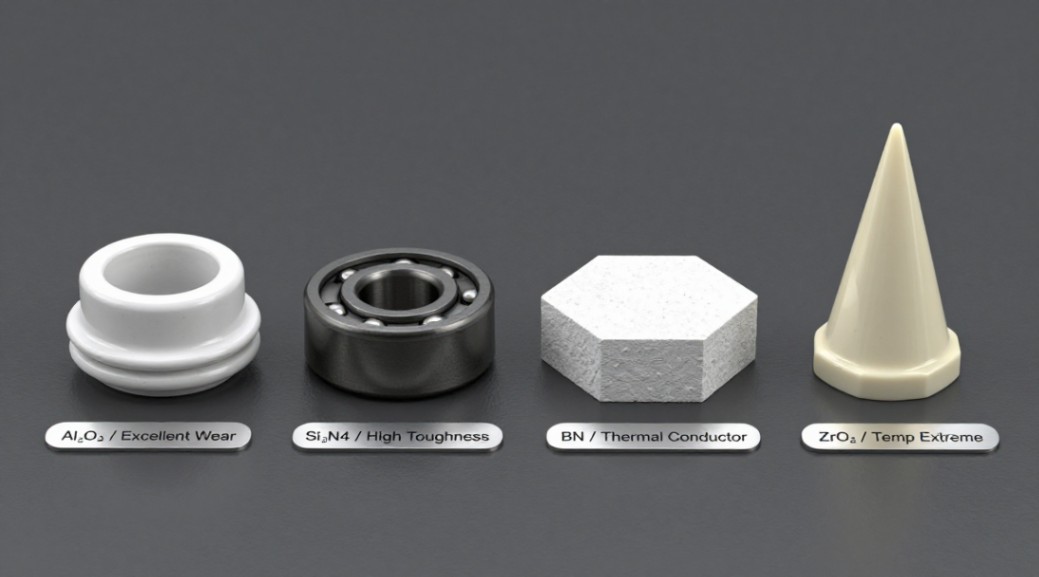
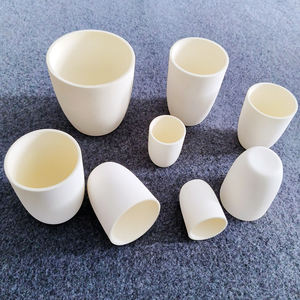
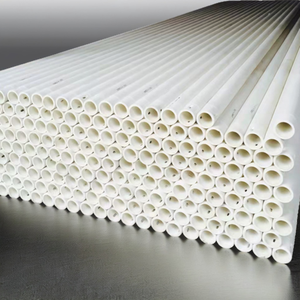
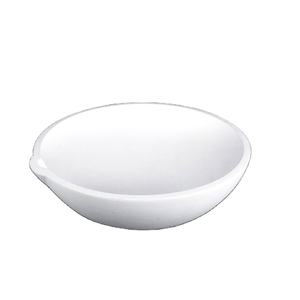
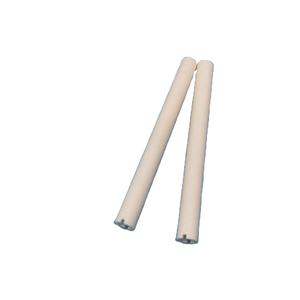
Boron Nitride (BN) exists in multiple polymorphs, with Hexagonal Boron Nitride (h-BN) being the most common ceramic form. Often called “white graphite” due to its similar layered, lubricious structure, it is distinguished by its exceptional thermal stability, electrical insulation, and chemical inertness, even at extreme temperatures.
Features of Boron Nitride Ceramic Tube Insulation
High Thermal Conductivity & Excellent Electrical Insulation: Unique combination that allows it to conduct heat like a metal but insulate like a ceramic.
Outstanding Thermal Shock Resistance: Can be heated and cooled rapidly without cracking.
Natural Lubricity: Exhibits low friction and anti-stick properties, even at high temperatures.
Chemically Inert: Resists wetting by and reaction with most molten metals, slags, and glasses.
Machinable: Unlike most advanced ceramics, h-BN in its solid form can be machined to precision tolerances using conventional carbide tooling.
Boron Nitride Ceramic Tube Insulation
Specifications of Boron Nitride Ceramic Tube Insulation
Specifications of Boron Nitride Ceramic Tube Insulation
Product Structure
Boron nitride ceramic tubes are made from high-purity hexagonal boron nitride (h-BN). This material provides superb electrical insulation and thermal security. The structure is generally over 99% pure, with minimal impurities that can impact efficiency.
Thermal Qualities
These tubes manage very heats. They continue to be steady up to 1000 ° C in air and also greater– approximately 2700 ° C in inert environments. Their reduced thermal development means they resist fracturing under fast temperature modifications. Thermal conductivity is moderate, which aids control warmth circulation without producing locations. Electrical Attributes Boron nitride is
a solid electric insulator.
It preserves high dielectric strength even at elevated temperatures. Volume resistivity remains over 10 14 ohm · cm, making it perfect for high-voltage or delicate electronic applications. Mechanical Attributes The tubes are lightweight yet inflexible. They have actually excellent machinability contrasted to other porcelains. Nevertheless, they are not as difficult as metals, so treatment is needed throughout handling. Common densities range from 1.9 to 2.1 g/cm six. Chemical Resistance Boron nitride resists most liquified steels, consisting of aluminum, copper, and zinc. It also holds up against lots of acids, alkalis, and slags.
It does not respond quickly with oxygen below 800 ° C, which adds to its reliability in severe atmospheres. Measurements and Resistances Typical tubes been available in numerous outer diameters– from 3 mm to 100 mm– with wall surface densities in between 0.5 mm and 5 mm. Lengths can be tailored.
Dimensional resistances are usually within ± 0.1 mm for accuracy usages. Usual Applications These protecting tubes are used in semiconductor production, high-temperature heating systems, plasma tools, and lab arrangements. Their combination of thermal security, electrical insulation, and chemical inertness makes them a
relied on option throughout
requiring industries.
Boron Nitride Ceramic Tube Insulation
Applications of Boron Nitride Ceramic Tube Insulation
Applications of Boron Nitride Porcelain Tube Insulation
High-Temperature Heating systems
Boron nitride ceramic tubes work well in high-temperature heaters. They take care of warm up to 2,000 ° C without breaking down. These tubes keep electric components secure from extreme warm. Their thermal stability makes them optimal for constant heater performance.
Semiconductor Manufacturing
In semiconductor production, cleanliness and pureness matter a lot. Boron nitride tubes do not release pollutants when warmed. This maintains wafers tidy during crucial actions like diffusion or annealing. The material also resists responses with liquified steels and gases made use of while doing so.
Vacuum and Inert Environment Solutions
These tubes execute accurately in vacuum cleaner chambers or under inert gases like argon or nitrogen. They stay strong and electrically protecting even when stress drops. Engineers utilize them as supports or insulators for heating elements in such environments.
Plasma and Ion Equipment
Boron nitride handles plasma direct exposure much better than lots of other porcelains. It does not erode quickly and maintains its shape. That’s why it’s picked for components in ion implanters and plasma etching devices.
Thermal Administration in Electronic Devices
Some electronics require fast warmth elimination but must remain electrically isolated. Boron nitride tubes aid below. They move warmth away while obstructing existing circulation. This protects delicate components from overheating and short circuits.
Research Laboratory and Study Use
Researchers depend on boron nitride tubes for experiments including high warmth or responsive chemicals. Televisions are simple to device into customized shapes. They likewise show little wear after repeated heating and cooling cycles. This conserves time and price in lab setups.
Company Profile
Synthetic-chemical focus on the research and development, production and sales of ceramic products, serving the electronics, ceramics, chemical and other industries. Since its establishment in 2015, the company has been committed to providing customers with the best products and services, and has become a leader in the industry through continuous technological innovation and strict quality management.
Our products includes but not limited to Aluminum Nitride, Aluminum Oxide, Boron Carbide, Boron Nitride, Ceramic Crucible, ect. If you are interested in any type of these, please feel free to contact us.
Payment Methods
T/T, Western Union, Paypal, Credit Card etc.
Shipment Methods
By air, by sea, by express, as customers request.
Boron Nitride Ceramic Tube Insulation
5 FAQs of Boron Nitride Ceramic Tube Insulation
Frequently Asked Questions About Boron Nitride Ceramic Tube Insulation
What is boron nitride ceramic tube insulation?
Boron nitride ceramic tube insulation is a high-performance material made from boron and nitrogen. It looks like white ceramic and works well in very hot or electrically sensitive places. People use it to protect parts from heat, electricity, or chemical damage.
Why choose boron nitride over other insulators?
Boron nitride handles extreme heat without melting or breaking down. It also does not conduct electricity, which makes it safe around wires and circuits. Unlike many ceramics, it resists thermal shock—meaning sudden temperature changes won’t crack it. Plus, it stays stable when exposed to harsh chemicals.
Where is this insulation commonly used?
You’ll find boron nitride tubes in labs, semiconductor factories, and aerospace systems. They support heating elements, shield sensors, and act as sleeves for thermocouples. Any place needing clean, reliable insulation at high temperatures often uses this material.
Is boron nitride safe to handle?
Yes. The material is non-toxic and does not release harmful fumes under normal use. Still, avoid creating or breathing fine dust during cutting or grinding. Wear basic safety gear like gloves and a mask if you shape or install the tubes yourself.
How long does boron nitride insulation last?
It lasts a very long time if used within its rated temperature and environment. Because it resists wear, corrosion, and electrical stress, it often outlasts metal or polymer alternatives. Regular inspection helps catch any rare physical damage early.