Next-Generation Ceramics: Unlocking Superior Properties for Industry

PRODUCT PARAMETERS
Description
Overview of Boron Nitride Hot Press Ceramic Insulate
Boron Nitride (BN) exists in multiple polymorphs, with Hexagonal Boron Nitride (h-BN) being the most common ceramic form. Often called “white graphite” due to its similar layered, lubricious structure, it is distinguished by its exceptional thermal stability, electrical insulation, and chemical inertness, even at extreme temperatures.
Features of Boron Nitride Hot Press Ceramic Insulate
- High Thermal Conductivity & Excellent Electrical Insulation: Unique combination that allows it to conduct heat like a metal but insulate like a ceramic.
- Outstanding Thermal Shock Resistance: Can be heated and cooled rapidly without cracking.
- Natural Lubricity: Exhibits low friction and anti-stick properties, even at high temperatures.
- Chemically Inert: Resists wetting by and reaction with most molten metals, slags, and glasses.
- Machinable: Unlike most advanced ceramics, h-BN in its solid form can be machined to precision tolerances using conventional carbide tooling.
Specifications of Boron Nitride Hot Press Ceramic Insulate
Specifications of Boron Nitride Hot Press Porcelain Insulator
Material Structure
This insulator is made from high-purity hexagonal boron nitride (h-BN). The hot press technique makes certain a dense, uniform framework with marginal porosity. Pureness levels reach 99% or higher, which supports consistent electrical and thermal performance.
Thermal Features
Optimum operating temperature: as much as 1000 ° C in air and over 2000 ° C in inert ambiences.
Thermal conductivity: ranges from 30 to 60 W/m · K, relying on alignment and density.
Thermal development coefficient: really reduced– about 2– 6 × 10 ⁻⁶/ ° C– making it extremely resistant to thermal shock.
Electric Features
Dielectric stamina: commonly goes beyond 30 kV/mm.
Quantity resistivity: above 10 ¹⁴ Ω · centimeters at room temperature.
Dissipation element: continues to be below 0.0002 at 1 MHz, guaranteeing very little power loss in high-frequency applications.
Mechanical Functions
The material is machinable yet keeps excellent mechanical stamina for a ceramic.
Firmness: around 2 on the Mohs range– softer than many porcelains yet very easy to form without breaking.
Flexural strength: approximately 80– 120 MPa, ideal for architectural assistance in demanding atmospheres.
Chemical Resistance
Boron nitride shows superb resistance to thaw metals, slags, and several acids and alkalis. It does not react with aluminum, iron, or copper also at heats. Nonetheless, it may degrade in solid oxidizing conditions above 800 ° C.
Physical Dimensions and Tolerances
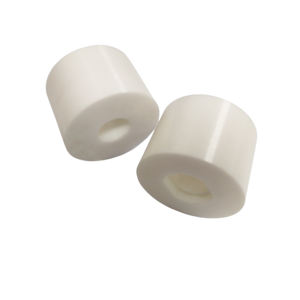
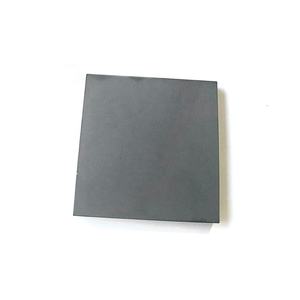
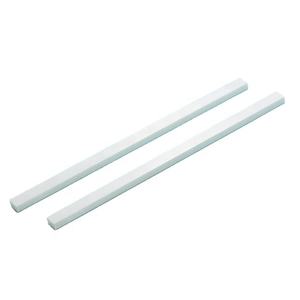
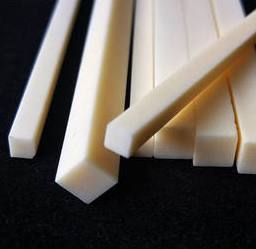
Requirement forms consist of plates, poles, tubes, and custom-machined components.
Regular dimensional tolerances: ± 0.05 mm for critical surfaces, ± 0.1 mm for basic functions. Surface area surfaces can be as smooth as 0.4 µm Ra when called for.
Secret Benefits
Non-wetting: prevents adhesion of liquified materials.
Electrically shielding: steady throughout vast temperature and frequency arrays.
Lightweight: density around 2.1 g/cm THREE– less than many technical ceramics.
Applications of Boron Nitride Hot Press Ceramic Insulate
Applications of Boron Nitride Hot Press Porcelain Insulators
High-Temperature Electric Insulation
Boron nitride warm press ceramics handle extreme warm without shedding toughness. They stay steady also over 1,000 ° C. This makes them optimal for protecting electrical parts in heating systems, heating elements, and high-temperature sensors. Their low electric conductivity maintains systems safe and reputable under harsh problems.
Thermal Monitoring in Electronics
These ceramics spread heat swiftly however obstruct electricity. That’s why engineers utilize them in power components, LED bases, and semiconductor carriers. They draw warm away from delicate components while avoiding brief circuits. The result is better efficiency and longer life for electronic devices.
Molten Steel Handling
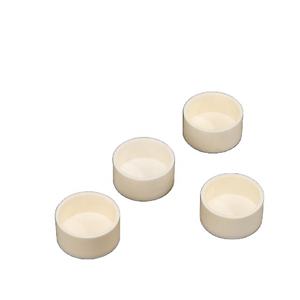
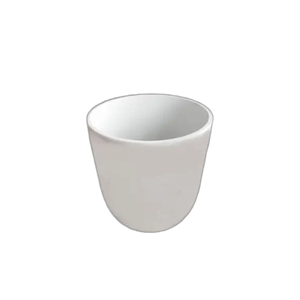
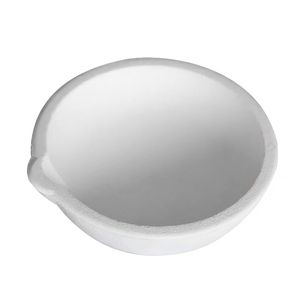
Boron nitride does not respond with many molten metals like light weight aluminum, zinc, or copper. It additionally stands up to thermal shock. Manufacturing facilities use it to make crucibles, nozzles, and pouring tubes. These parts last longer and maintain metal purity high throughout spreading and handling.
Vacuum and Inert Ambience Devices
In vacuum cleaner chambers or gas-filled systems, boron nitride remains tidy and steady. It launches almost no gas when heated. This quality is important for aerospace components, lab equipment, and crystal growth arrangements. Customers trust it to keep purity and avoid contamination.
Wear-Resistant Elements
The material is smooth and tough. It resists sticking and abrasion. That serves for overviews, seals, and sliding parts in high-heat machinery. Even after lengthy usage, surfaces remain undamaged and useful.
Why Select Boron Nitride Hot Press Ceramics?
They integrate warm resistance, electrical insulation, and chemical stability in one product. Nothing else ceramic deals the exact same equilibrium for requiring commercial tasks. Engineers select them when failing is not a choice.

Company Profile
Synthetic-chemical focus on the research and development, production and sales of ceramic products, serving the electronics, ceramics, chemical and other industries. Since its establishment in 2015, the company has been committed to providing customers with the best products and services, and has become a leader in the industry through continuous technological innovation and strict quality management.
Our products includes but not limited to Aluminum Nitride, Aluminum Oxide, Boron Carbide, Boron Nitride, Ceramic Crucible, ect. If you are interested in any type of these, please feel free to contact us.

Payment Methods
T/T, Western Union, Paypal, Credit Card etc.
Shipment Methods
By air, by sea, by express, as customers request.
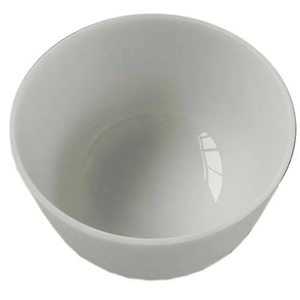
5 FAQs of Boron Nitride Hot Press Ceramic Insulate
Frequently Asked Questions About Boron Nitride Hot Press Ceramic Insulators
What is a boron nitride hot press ceramic insulator?
It is a high-performance ceramic part made from boron nitride powder. The material is shaped under heat and pressure. This process gives it strong insulation properties and excellent thermal stability.
Why choose boron nitride over other ceramics?
Boron nitride stays stable at very high temperatures. It does not conduct electricity, even when hot. It also resists thermal shock better than many other ceramics. These traits make it ideal for demanding industrial uses.
Where are these insulators used?
They are common in semiconductor manufacturing, vacuum furnaces, and high-temperature lab equipment. You will also find them in aerospace components and plasma systems. Their reliability in extreme conditions makes them a top choice.
Can this material handle rapid temperature changes?
Yes. Boron nitride has low thermal expansion. That means it expands very little when heated. Because of this, it can go from cold to hot quickly without cracking or breaking.
Is boron nitride safe to use?
It is chemically inert and non-toxic. It does not react with most acids, molten metals, or gases. This makes it safe for use in sensitive environments like cleanrooms or medical device production. Always follow handling guidelines to keep performance consistent.