Next-Generation Ceramics: Unlocking Superior Properties for Industry

PRODUCT PARAMETERS
Description
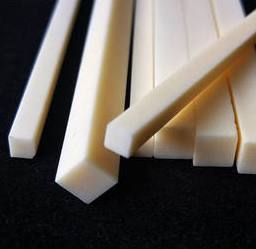
Overview of Industrial Boron Nitride Ceramic Rod Cylinder
Boron Nitride (BN) exists in multiple polymorphs, with Hexagonal Boron Nitride (h-BN) being the most common ceramic form. Often called “white graphite” due to its similar layered, lubricious structure, it is distinguished by its exceptional thermal stability, electrical insulation, and chemical inertness, even at extreme temperatures.
Features of Industrial Boron Nitride Ceramic Rod Cylinder
- High Thermal Conductivity & Excellent Electrical Insulation: Unique combination that allows it to conduct heat like a metal but insulate like a ceramic.
- Outstanding Thermal Shock Resistance: Can be heated and cooled rapidly without cracking.
- Natural Lubricity: Exhibits low friction and anti-stick properties, even at high temperatures.
- Chemically Inert: Resists wetting by and reaction with most molten metals, slags, and glasses.
- Machinable: Unlike most advanced ceramics, h-BN in its solid form can be machined to precision tolerances using conventional carbide tooling.
Specifications of Industrial Boron Nitride Ceramic Rod Cylinder
Industrial Boron Nitride Porcelain Rod Cyndrical Tube– Secret Specifications
Product Composition
Boron nitride (BN) is the major product utilized. This ceramic is made in its hexagonal type, which gives it excellent thermal and electric residential or commercial properties. It contains over 99% pure BN with marginal ingredients to maintain performance regular.
Physical Dimensions
These poles are available in typical diameters from 3 mm to 100 mm. Lengths range between 50 mm and 600 mm, but personalized sizes are also offered. Resistances remain tight– usually within ± 0.05 mm for diameter and ± 0.1 mm for size– to meet accuracy industrial demands.
Thermal Performance
The material handles heat extremely well. It works securely at temperatures as much as 1000 ° C in air and even higher– as much as 2000 ° C– in inert ambiences. Thermal conductivity reaches concerning 30– 60 W/m · K along the pressing instructions. Its low thermal expansion helps avoid breaking under quick temperature level adjustments.
Electric & Chemical Features
Boron nitride is an outstanding electric insulator, even at heats. Its dielectric stamina exceeds 30 kV/mm. The surface stands up to most liquified steels, salts, and acids. It does not react with aluminum, iron, or glass thaws, making it optimal for crucibles and dealing with devices.
Mechanical Characteristics
Though not as difficult as alumina, it supplies good machinability. Flexural stamina relaxes 60– 100 MPa. The product is lightweight, with a thickness of about 2.1 g/cm ³. It can be cut, pierced, or formed making use of basic carbide tools without unique devices.
Surface Area End Up & Color
Ended up rods have a smooth, uniform surface area. Requirement surface is 1.6 µm Ra or far better. The shade is typically white or off-white, revealing no visible cracks, pores, or discoloration.
Applications of Industrial Boron Nitride Ceramic Rod Cylinder
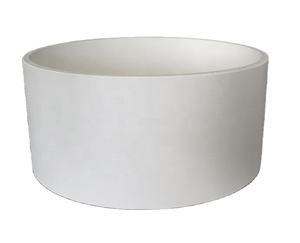
Applications of Industrial Boron Nitride Ceramic Pole and Cyndrical Tube
High-Temperature Performance in Demanding Settings
Boron nitride ceramic rods and cyndrical tubes handle extreme warmth without damaging down. They stay stable at temperature levels above 2,000 ° C in inert ambiences. This makes them suitable for use inside high-temperature furnaces, where metal or conventional porcelains would fail. Engineers count on them as assistance frameworks, insulators, and spacers in thermal processing devices.
Electrical Insulation with Thermal Conductivity
These parts use strong electric insulation while still moving warm away efficiently. That combination is unusual. Many insulators trap heat, however boron nitride relocate. Because of this, the product functions well in semiconductor manufacturing devices, plasma etching systems, and high-power electronic devices. It secures delicate components from brief circuits and overheating at the exact same time.
Non-Wetting and Chemically Inert Features
Molten steels and slags do not stick to boron nitride surfaces. The product also stands up to attack from acids, antacid, and numerous reactive gases. This non-wetting actions works in steel casting and glass handling. Rods and cylinders made from boron nitride work as stirrers, thermocouple sheaths, and crucible supports. They last much longer and maintain procedures cleaner than choices.
Precision Elements for Advanced Production
Makers shape boron nitride right into tight-tolerance rods and cyndrical tubes for specialized machinery. These components maintain their dimensions also under thermal biking. Their smooth surface finish minimizes friction and wear. Industries like aerospace, optics, and additive manufacturing utilize them in fixtures, guides, and nozzles where dependability matters more than price.
Vacuum and Semiconductor Compatibility
Boron nitride launches nearly no gas in vacuum cleaner problems. That purity is critical in semiconductor manufacture and room simulation chambers. Poles and cylinders work as feedthroughs, wafer managing arms, and chamber linings. They assist keep contamination degrees reduced throughout delicate manufacturing steps.

Company Profile
Synthetic-chemical focus on the research and development, production and sales of ceramic products, serving the electronics, ceramics, chemical and other industries. Since its establishment in 2015, the company has been committed to providing customers with the best products and services, and has become a leader in the industry through continuous technological innovation and strict quality management.
Our products includes but not limited to Aluminum Nitride, Aluminum Oxide, Boron Carbide, Boron Nitride, Ceramic Crucible, ect. If you are interested in any type of these, please feel free to contact us.

Payment Methods
T/T, Western Union, Paypal, Credit Card etc.
Shipment Methods
By air, by sea, by express, as customers request.
5 FAQs of Industrial Boron Nitride Ceramic Rod Cylinder
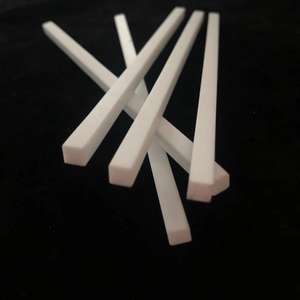
Frequently Asked Questions: Industrial Boron Nitride Ceramic Rod Cylinder
What is a boron nitride ceramic rod cylinder used for?
This part works well in high-heat and electrically sensitive settings. People use it as an insulator in furnaces, semiconductor tools, and aerospace parts. It also handles molten metals without reacting.
Why choose boron nitride over other ceramics?
Boron nitride stands out because it resists heat up to 2,000°C in non-oxidizing air. It does not conduct electricity but spreads heat fast. It stays stable and does not stick to most materials, even when hot.
Is this material strong enough for industrial use?
Yes. Though it is not as hard as alumina or zirconia, it offers good mechanical strength at high temperatures. Its real value comes from thermal shock resistance and chemical inertness, which many tough ceramics lack.
Can you machine boron nitride rods after sintering?
Yes. One big advantage of hexagonal boron nitride is that you can cut, drill, or shape it with standard tools like carbide bits. This makes custom sizes and holes easy to produce without special equipment.
How do I store and handle these parts?
Keep them dry and away from dust. Even though boron nitride is stable, rough handling can chip edges or surfaces. Use clean gloves during installation to avoid surface contamination, especially in cleanroom or vacuum environments.
REQUEST A QUOTE
RELATED PRODUCTS
Boron Nitride Ceramic Round Sheet Thermal Shock Resistant
High Temperature Insulating Boron Nitride Ceramic Plate
Boron Nitride Ceramic for Semiconductor Material
Boron Nitride Ceramic Crucible Composite High Hardness Coating
Boron Nitride Ceramic Rod High Temperature Resistance Insulated