Next-Generation Ceramics: Unlocking Superior Properties for Industry

PRODUCT PARAMETERS
Description
Overview of High Temperature Insulating Boron Nitride Ceramic Plate
Boron Nitride (BN) exists in multiple polymorphs, with Hexagonal Boron Nitride (h-BN) being the most common ceramic form. Often called “white graphite” due to its similar layered, lubricious structure, it is distinguished by its exceptional thermal stability, electrical insulation, and chemical inertness, even at extreme temperatures.
Features of High Temperature Insulating Boron Nitride Ceramic Plate
- High Thermal Conductivity & Excellent Electrical Insulation: Unique combination that allows it to conduct heat like a metal but insulate like a ceramic.
- Outstanding Thermal Shock Resistance: Can be heated and cooled rapidly without cracking.
- Natural Lubricity: Exhibits low friction and anti-stick properties, even at high temperatures.
- Chemically Inert: Resists wetting by and reaction with most molten metals, slags, and glasses.
- Machinable: Unlike most advanced ceramics, h-BN in its solid form can be machined to precision tolerances using conventional carbide tooling.
Specifications of High Temperature Insulating Boron Nitride Ceramic Plate
High-Temperature Insulating Boron Nitride Porcelain Plate
Trick Specs
Material: Hot-pressed hexagonal boron nitride (h-BN).
Color: White or off-white.
Density: 2.0– 2.1 g/cm FOUR.
Solidity: 2– 3 on the Mohs range.
Thermal Conductivity: 30– 60 W/m · K (alongside pressing instructions).
Electrical Resistivity: > 10 ¹⁴ Ω · cm at area temperature.
Dielectric Strength: ≥ 30 kV/mm.
Maximum Service Temperature Level: Approximately 1000 ° C in air, approximately 2000 ° C in inert ambience.
Thermal Expansion Coefficient: ~ 2– 3 × 10 ⁻⁶/ ° C (alongside pressing direction).
Machinability: Can be cut, drilled, or formed with basic carbide tools.
Performance Features
This boron nitride ceramic plate supplies excellent electrical insulation even at very heats. It remains stable and does not weaken in oxidizing or inert settings. The product stands up to thermal shock well and maintains its shape under duplicated home heating and cooling cycles.
Its reduced thermal growth aids preserve tight tolerances during usage. Home plate also has good lubricity and does not adhere to thaw steels or glass. This makes it suitable for handling or supporting reactive products in high-heat applications.
Home plate is non-toxic and chemically inert. It will not react with a lot of acids, alkalis, or liquified salts. Customers can count on consistent efficiency sought after commercial setups like semiconductor manufacturing, vacuum furnaces, and high-temperature lab tools.
Because of its split crystal framework, thermal conductivity is higher along the pressing plane than with the thickness. Designers should take into consideration positioning when mounting the plate for ideal warmth administration.
These plates can be found in standard sizes yet can additionally be personalized to satisfy details dimensional demands. Surface finishes include as-sintered, ground, or brightened, relying on application needs.
Applications of High Temperature Insulating Boron Nitride Ceramic Plate
Applications of High-Temperature Insulating Boron Nitride Ceramic Plate
Extreme Heat Resistance for Demanding Settings
Boron nitride ceramic plates handle extremely heats without damaging down. They stay steady even over 1,000 ° C in air and much higher in inert environments. This makes them excellent for usage in heating systems, kilns, and various other high-heat industrial configurations where routine materials would certainly fail.
Electrical Insulation That Lasts
These plates do not conduct electrical power. Even when warm, they keep their shielding homes. Engineers use them as spacers, supports, or barriers in high-voltage equipment and semiconductor production tools. Their dependability aids stop short circuits and equipment damage.
Non-Wetting Surface for Clean Processing
Molten metals and glass do not stay with boron nitride surfaces. This non-wetting quality serves in metal casting and glass forming. The plates act as launch layers or mold and mildews that allow items appear cleanly without residue. Much less cleaning methods much faster production cycles and reduced expenses.
Thermal Shock Resistance for Long Life
Abrupt temperature changes frequently break conventional ceramics. Boron nitride plates stand up to thermal shock well. They can go from cold to hot promptly without breaking. This sturdiness minimizes downtime and substitute requirements in hectic commercial operations.
Chemical Stability in Severe Conditions
The product does not respond with many acids, molten salts, or responsive gases. It stays undamaged in corrosive settings where various other ceramics weaken. This security ensures regular efficiency in chemical handling, aerospace screening, and lab atmospheres.
Accuracy Elements for Advanced Manufacturing
Due to the fact that boron nitride can be machined right into tight-tolerance parts, it works well in semiconductor wafer handling, plasma engraving chambers, and laser systems. Its smooth surface area and dimensional accuracy help preserve procedure control and product high quality.

Company Profile
Synthetic-chemical focus on the research and development, production and sales of ceramic products, serving the electronics, ceramics, chemical and other industries. Since its establishment in 2015, the company has been committed to providing customers with the best products and services, and has become a leader in the industry through continuous technological innovation and strict quality management.
Our products includes but not limited to Aluminum Nitride, Aluminum Oxide, Boron Carbide, Boron Nitride, Ceramic Crucible, ect. If you are interested in any type of these, please feel free to contact us.

Payment Methods
T/T, Western Union, Paypal, Credit Card etc.
Shipment Methods
By air, by sea, by express, as customers request.
5 FAQs of High Temperature Insulating Boron Nitride Ceramic Plate
Frequently Asked Questions About High-Temperature Insulating Boron Nitride Ceramic Plates
What is a boron nitride ceramic plate used for?
This plate works well in high-heat environments. People use it as an insulator in furnaces, semiconductor tools, and lab equipment. It keeps heat in place and protects nearby parts from getting too hot.
Why choose boron nitride over other ceramics?
Boron nitride stays stable at very high temperatures—up to 1000°C in air and even higher in inert atmospheres. It does not react with most molten metals or chemicals. Also, it conducts heat sideways but blocks electricity, which many other ceramics cannot do.
Is this material easy to machine or shape?
Yes. Unlike many hard ceramics, boron nitride is soft enough to be cut, drilled, or shaped using standard tools. This makes it simple to fit into custom setups without special equipment.
How long does the plate last under constant heat?
It lasts a long time if used within its temperature limits. In clean, dry conditions, it shows little wear even after months of continuous use. Avoid sudden temperature changes, though—they can cause cracks.
Does it release any harmful fumes when heated?
No. Boron nitride is chemically inert. It does not give off toxic gases or odors when heated in normal operating conditions. This makes it safe for use in labs and production areas where air quality matters.
REQUEST A QUOTE
RELATED PRODUCTS
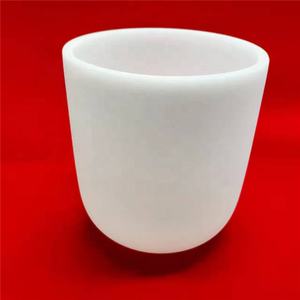
Hot Pressing Boron Nitride Ceramic Cylindrical Block Drilled

Boron Nitride Ceramic Tube High Temperature Corrosion Resistant
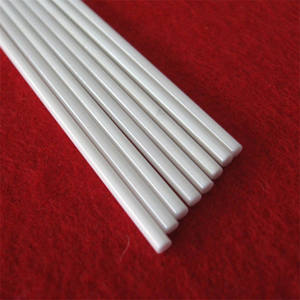
Boron Nitride Ceramic Assembled Parts for Sintering Phosphor

Boron Nitride Ceramic Precision Parts Composite Customization
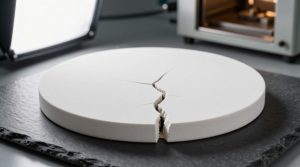
Aluminum Nitride Composite Ceramics Boron Nitride Hot Press