Next-Generation Ceramics: Unlocking Superior Properties for Industry

PRODUCT PARAMETERS
Description
Overview of Pyrolytic Boron Nitride Ceramic Crucible
Boron Nitride (BN) exists in multiple polymorphs, with Hexagonal Boron Nitride (h-BN) being the most common ceramic form. Often called “white graphite” due to its similar layered, lubricious structure, it is distinguished by its exceptional thermal stability, electrical insulation, and chemical inertness, even at extreme temperatures.
Features of Pyrolytic Boron Nitride Ceramic Crucible
- High Thermal Conductivity & Excellent Electrical Insulation: Unique combination that allows it to conduct heat like a metal but insulate like a ceramic.
- Outstanding Thermal Shock Resistance: Can be heated and cooled rapidly without cracking.
- Natural Lubricity: Exhibits low friction and anti-stick properties, even at high temperatures.
- Chemically Inert: Resists wetting by and reaction with most molten metals, slags, and glasses.
- Machinable: Unlike most advanced ceramics, h-BN in its solid form can be machined to precision tolerances using conventional carbide tooling.
Specifications of Pyrolytic Boron Nitride Ceramic Crucible
Pyrolytic Boron Nitride Porcelain Crucible– Secret Specs
Material Structure
This crucible is made from high-purity pyrolytic boron nitride (PBN). The material consists of over 99.99% boron nitride. It has a layered hexagonal crystal framework. This offers the crucible superb thermal security and chemical inertness.
Temperature level Resistance
The crucible functions well in severe heat. It can deal with continual use up to 2000 ° C in vacuum or inert ambiences. Short-term exposure can go even higher. It does not thaw, warp, or split under normal high-temperature conditions.
Thermal Qualities
It conducts heat uniformly across its surface. Thermal conductivity arrays from 30 to 60 W/m · K along the deposition aircraft. The coefficient of thermal development is very low. This indicates the crucible remains dimensionally steady throughout fast heating or cooling down cycles.
Chemical Resistance
Solid resistance to most liquified metals and salts. It does not react with gallium, indium, light weight aluminum, or many rare-earth aspects. It also withstands assault from acids and antacids at area temperature level. Nevertheless, it must not be made use of with solid oxidizing representatives or halogens over 800 ° C.
Electric and Dielectric Efficiency
The crucible acts as an electrical insulator. It has high dielectric stamina and reduced dielectric loss. These qualities make it optimal for usage in semiconductor and crystal development applications where electrical purity issues.
Machining and Surface Finish
PBN crucibles are precision-machined to limited resistances. The internal surface is smooth to minimize material sticking. Wall thickness and shape can be customized based on customer needs. Usual kinds include cylindrical, boat-shaped, and personalized geometries.
Purity and Outgassing
Very low degrees of metallic impurities. Complete metallic contamination is usually listed below 10 ppm. Outgassing prices are minimal under high vacuum cleaner. This makes certain clean processing settings for delicate products.
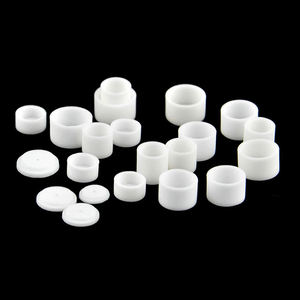
Applications of Pyrolytic Boron Nitride Ceramic Crucible
Applications of Pyrolytic Boron Nitride Ceramic Crucible
High-Temperature Handling
Pyrolytic boron nitride (PBN) ceramic crucibles deal with severe warm without breaking down. They remain stable at temperatures above 2000 ° C in vacuum or inert environments. This makes them perfect for melting and growing high-purity crystals like gallium arsenide or sapphire. Their thermal stability ensures no unwanted reactions happen during sensitive procedures.
Semiconductor Manufacturing
In semiconductor manufacturing, also little contaminations destroy device efficiency. PBN crucibles offer ultra-low contamination because they release almost no particles or gases. Designers utilize them in metal-organic chemical vapor deposition (MOCVD) systems and various other thin-film procedures where pureness matters most. Their smooth surface area additionally protects against product sticking, which assists preserve consistent movie top quality.
Specialty Product Synthesis
Scientists count on PBN crucibles when working with reactive steels such as titanium, zirconium, or rare planet elements. These products quickly respond with typical ceramics, but boron nitride remains chemically inert. That indicates the end product keeps its designated make-up. The crucibles additionally withstand thermal shock, so they survive fast home heating and cooling down cycles without breaking.
Vacuum Cleaner and Inert Atmospheres
PBN carries out best where oxygen and moisture are missing. It is widely utilized inside vacuum heaters and gloveboxes full of argon or nitrogen. Its split structure provides it superb lubricity and electrical insulation, which adds security and control during operation. Users appreciate just how it preserves shape and function over lots of high-temperature runs.
Optical and Laser Parts
Making optical-grade materials needs containers that won’t discolor or degrade under extreme heat. PBN crucibles satisfy this demand. They support the production of laser crystals and infrared-transparent porcelains without introducing flaws. Their regular efficiency assists suppliers achieve limited tolerances and high returns.

Company Profile
Synthetic-chemical focus on the research and development, production and sales of ceramic products, serving the electronics, ceramics, chemical and other industries. Since its establishment in 2015, the company has been committed to providing customers with the best products and services, and has become a leader in the industry through continuous technological innovation and strict quality management.
Our products includes but not limited to Aluminum Nitride, Aluminum Oxide, Boron Carbide, Boron Nitride, Ceramic Crucible, ect. If you are interested in any type of these, please feel free to contact us.

Payment Methods
T/T, Western Union, Paypal, Credit Card etc.
Shipment Methods
By air, by sea, by express, as customers request.
5 FAQs of Pyrolytic Boron Nitride Ceramic Crucible
Frequently Asked Questions About Pyrolytic Boron Nitride Ceramic Crucibles
What is a pyrolytic boron nitride (PBN) crucible?
A PBN crucible is made from high-purity boron nitride. It forms through a special chemical vapor deposition process. This gives it a layered structure that resists heat and chemicals very well. People use it in labs and industries where extreme purity and stability are needed.
Why choose PBN over other ceramic crucibles?
PBN handles very high temperatures—up to 2000°C in vacuum or inert gas. It does not react with most molten metals, salts, or semiconductors. Its surface is smooth and non-wetting, so materials do not stick. Other ceramics may crack, contaminate samples, or break down faster under similar conditions.
Can I use a PBN crucible in air?
No. PBN oxidizes above 800°C when exposed to air. Always use it in a vacuum or in an inert atmosphere like argon or nitrogen. If you need to work in air at high heat, consider another material.
How should I handle and clean a PBN crucible?
Handle it gently—it’s strong but brittle. Avoid sudden temperature changes. For cleaning, rinse with high-purity solvents like acetone or alcohol. Do not use abrasive tools. Never expose it to water at high temperatures, as this can cause damage.
What applications suit PBN crucibles best?
They work well in crystal growth, semiconductor processing, and high-purity metal melting. Common uses include growing sapphire crystals, handling gallium arsenide, and evaporating rare-earth metals. Their purity prevents contamination, which is critical in these sensitive processes.
REQUEST A QUOTE
RELATED PRODUCTS
Advanced Boron Nitride Ceramic Plate for High Performance Engineering
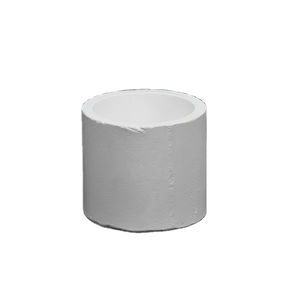
Boron Nitride Ceramics for Semiconductor
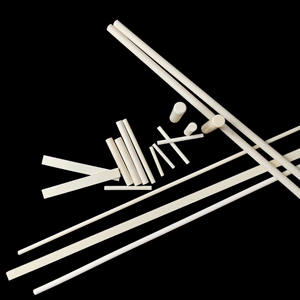
Boron Nitride Ceramics High Thermal Conductivity Insulator
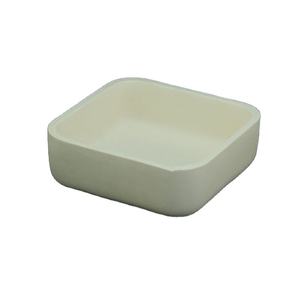
High Density Boron Nitride Ceramic Plate for Stable Firing
Boron Nitride Ceramics for Steel Mill Parts