Next-Generation Ceramics: Unlocking Superior Properties for Industry

PRODUCT PARAMETERS
Description
Overview of Piezo Ceramic Element Quartz Crystal
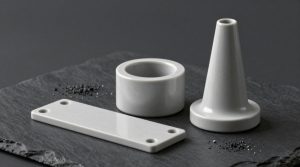
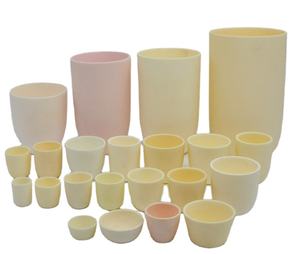
Quartz ceramics, also known as fused silica ceramics or re-bonded quartz products, are a high-performance advanced ceramic material. Unlike traditional clay-based ceramics, they are not made by sintering clay, but rather from high-purity fused silica (silicon dioxide, SiO₂) that is crushed, shaped, and then sintered at high temperatures.
Their core appeal lies in their unique combination of the excellent properties of fused silica glass (such as extremely low thermal expansion coefficient and excellent thermal shock stability) and the structural strength and versatility of ceramics (they can be made into crucibles, rollers, and irregularly shaped parts), overcoming the limitations of fused silica glass in terms of difficulty in manufacturing large sizes and complex shapes, and its high cost.
Quartz ceramics perform exceptionally well in harsh environments involving high temperatures, rapid temperature changes, and chemical corrosion, and are widely used in solar photovoltaics (crucibles for polycrystalline silicon ingot furnaces), semiconductors, aerospace, metallurgy and casting, the glass industry, and laboratories.
Main Characteristics of Piezo Ceramic Element Quartz Crystal
Excellent Thermal Shock Stability: They have an extremely low thermal expansion coefficient, generating almost no thermal stress during rapid temperature changes, and can withstand rapid cooling from extremely high temperatures to room temperature without cracking.
Extremely High Temperature Resistance and Thermal Stability: They can be used continuously at temperatures of 1100°C – 1350°C, and can even withstand higher temperatures for short periods. They do not soften or deform at high temperatures and maintain good dimensional stability.
Excellent Chemical Inertness and Corrosion Resistance: Except for hydrofluoric acid and hot concentrated phosphoric acid, they have strong resistance to most acids, salt solutions, and molten metals (such as aluminum, copper, gold, silver, and platinum), making them ideal melting and containment vessels.
Low Thermal Conductivity and Good Electrical Insulation: They have low thermal conductivity, making them excellent thermal insulation materials. They also maintain good electrical insulation properties at high temperatures.
High Purity and Low Contamination Risk: Made from high-purity quartz sand, they do not contaminate the high-purity molten metals or semiconductor materials they come into contact with, ensuring process cleanliness.
Moderate Mechanical Strength: Compared to most engineering ceramics, their mechanical strength at room temperature is relatively low; they are brittle materials. However, their strength is sufficient under their designed operating conditions (high-temperature insulation, thermal shock resistance). Its strength can be improved by optimizing the formula and manufacturing process.
Specifications of Piezo Ceramic Element Quartz Crystal
Specs of Piezo Ceramic Aspect Quartz Crystal
Material and Structure
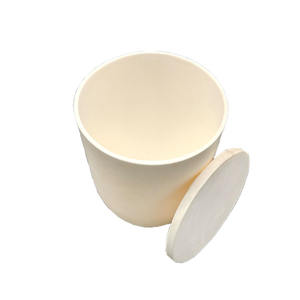
The piezo ceramic aspect makes use of high-purity quartz crystal as its core material. This crystal is expanded under regulated problems to ensure consistent efficiency. The framework is small and solid, designed for toughness popular settings. Electrodes are applied directly to the crystal surface areas utilizing a thin-film deposition process for dependable electrical contact.
Electrical Features
This aspect operates within a standard frequency variety of 1 kHz to 1 MHz. Its resonant frequency tolerance stays within ± 0.1% under typical operating problems. The capacitance normally gauges in between 20 pF and 50 pF, depending upon dimension and cut. Insulation resistance goes beyond 10 GΩ at space temperature, making certain minimal signal leakage. Drive degrees continue to be secure approximately 100 µW, stopping efficiency drift during continual usage.
Mechanical and Ecological Performance
The quartz crystal endures shock up to 500 g and vibration levels of 20 g RMS. It operates dependably throughout a temperature level variety of– 40 ° C to +85 ° C. Thermal stability is preserved with a frequency shift of less than ± 15 ppm over this range. Humidity resistance satisfies commercial standards, without any deterioration after 96 hours at 95% relative humidity.
Dimensions and Placing
Standard sizes consist of diameters from 3 mm to 20 mm and thicknesses from 0.1 mm to 2 mm. Custom-made measurements are offered upon request. The aspect features either cord leads or surface-mount terminals, making it simple to integrate into motherboard or sensor real estates. Mounting anxiety is lessened through accuracy lapping and edge chamfering.
Applications
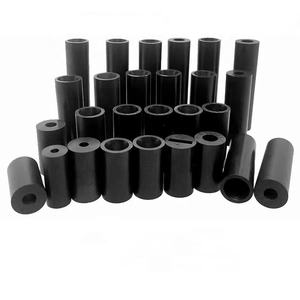
These piezo ceramic elements are made use of in timing gadgets, ultrasonic transducers, stress sensors, and precision oscillators. Their secure result and long service life make them perfect for medical tools, vehicle systems, and commercial automation tools.
Applications of Piezo Ceramic Element Quartz Crystal
Applications of Piezo Ceramic and Quartz Crystal Components
Sensors and Measurement Devices
Piezo ceramic and quartz crystal components are commonly used in sensors. They transform stress, force, or vibration right into electric signals. This makes them perfect for measuring things like engine knock in cars and trucks, tire pressure, and even footprints on smart floors. Clinical devices additionally utilize them to identify little movements inside the body.
Timing and Frequency Control
Quartz crystals keep time with terrific precision. That’s why they’re discovered in watches, clocks, and computers. They vibrate at a steady regularity when electricity is applied. This stable signal helps digital tools remain in sync. From mobile phones to GPS systems, quartz timing guarantees everything runs efficiently.
Ultrasonic Instruments
These materials produce and get ultrasound waves. In clinical imaging, they help develop clear images of body organs and tissues. Cleansing machines use them to drink dust off fragile components like precious jewelry or circuit boards. Industrial systems additionally rely upon them for non-destructive testing– inspecting steel parts for covert splits without creating damages.
Actuators and Accuracy Movement
Piezo porcelains move extremely small distances when voltage is applied. This feature is ideal for great modifications. Microscopes, telescopes, and laser systems utilize them to concentrate with extreme precision. Inkjet printers likewise depend on piezo elements to push out tiny declines of ink swiftly and accurately.
Energy Harvesting
In many cases, these components record energy from day-to-day motion. Footprints on special floor tiles or vibrations from machinery can be developed into percentages of electricity. While not enough to power big gadgets, this energy can run low-power sensors or cordless transmitters– helpful in remote or hard-to-reach places.

Company Profile
Synthetic-chemical focus on the research and development, production and sales of ceramic products, serving the electronics, ceramics, chemical and other industries. Since its establishment in 2015, the company has been committed to providing customers with the best products and services, and has become a leader in the industry through continuous technological innovation and strict quality management.
Our products includes but not limited to Aluminum Nitride, Aluminum Oxide, Boron Carbide, Boron Nitride, Ceramic Crucible, ect. If you are interested in any type of these, please feel free to contact us.

Payment Methods
T/T, Western Union, Paypal, Credit Card etc.
Shipment Methods
By air, by sea, by express, as customers request.
5 FAQs of Piezo Ceramic Element Quartz Crystal
Frequently Asked Questions About Piezo Ceramic and Quartz Crystal Elements
What is a piezo ceramic element?
A piezo ceramic element is a special material that creates an electric charge when you press or bend it. It also moves slightly when you apply electricity to it. People use it in buzzers, sensors, and small motors because it responds quickly to changes.
How does a quartz crystal work?
Quartz crystal vibrates at a steady rate when electricity passes through it. This stable vibration helps keep accurate time in watches and clocks. It also helps control frequencies in radios and other electronic devices.
Are piezo ceramics and quartz crystals the same?
No, they are not the same. Both can generate electricity from mechanical stress, but they are made differently. Piezo ceramics are man-made and stronger in output. Quartz is a natural crystal and more stable over time and temperature.
Where are these elements used?
You will find them in many everyday items. Piezo ceramics appear in lighters, speakers, and medical ultrasound tools. Quartz crystals are inside watches, smartphones, computers, and communication gear where timing matters.
Can temperature affect their performance?
Yes, temperature can change how they work. Extreme heat or cold may shift the frequency of a quartz crystal or reduce the sensitivity of a piezo ceramic. That’s why engineers design circuits to handle normal temperature changes and keep performance steady.
REQUEST A QUOTE
RELATED PRODUCTS
Silica Sand Quartz Ceramic Steel Ball Mill Making Machine
Melting Gold Platinum Fused Silica Quartz Ceramic Crucible Dish
Ceramic Foundry Industry Silica Quartz Sand Per Ton
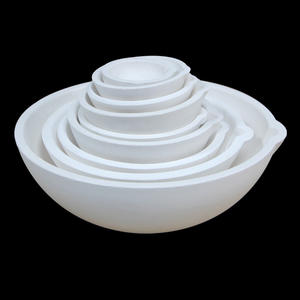
350 Fused Silica Quartz Ceramic Crucible Boat for Melting
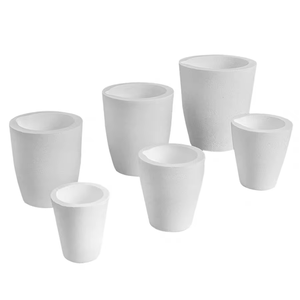
Quartz Ceramic Melting Dishes and Bowls for Platinum