Next-Generation Ceramics: Unlocking Superior Properties for Industry


PRODUCT PARAMETERS
Description
Overview of Quartz Ceramic Melting Fused Silica Crucible for Jewelry Industry
Quartz ceramics, also known as fused silica ceramics or re-bonded quartz products, are a high-performance advanced ceramic material. Unlike traditional clay-based ceramics, they are not made by sintering clay, but rather from high-purity fused silica (silicon dioxide, SiO₂) that is crushed, shaped, and then sintered at high temperatures.
Their core appeal lies in their unique combination of the excellent properties of fused silica glass (such as extremely low thermal expansion coefficient and excellent thermal shock stability) and the structural strength and versatility of ceramics (they can be made into crucibles, rollers, and irregularly shaped parts), overcoming the limitations of fused silica glass in terms of difficulty in manufacturing large sizes and complex shapes, and its high cost.
Quartz ceramics perform exceptionally well in harsh environments involving high temperatures, rapid temperature changes, and chemical corrosion, and are widely used in solar photovoltaics (crucibles for polycrystalline silicon ingot furnaces), semiconductors, aerospace, metallurgy and casting, the glass industry, and laboratories.
Main Characteristics of Quartz Ceramic Melting Fused Silica Crucible for Jewelry Industry
Excellent Thermal Shock Stability: They have an extremely low thermal expansion coefficient, generating almost no thermal stress during rapid temperature changes, and can withstand rapid cooling from extremely high temperatures to room temperature without cracking.
Extremely High Temperature Resistance and Thermal Stability: They can be used continuously at temperatures of 1100°C – 1350°C, and can even withstand higher temperatures for short periods. They do not soften or deform at high temperatures and maintain good dimensional stability.
Excellent Chemical Inertness and Corrosion Resistance: Except for hydrofluoric acid and hot concentrated phosphoric acid, they have strong resistance to most acids, salt solutions, and molten metals (such as aluminum, copper, gold, silver, and platinum), making them ideal melting and containment vessels.
Low Thermal Conductivity and Good Electrical Insulation: They have low thermal conductivity, making them excellent thermal insulation materials. They also maintain good electrical insulation properties at high temperatures.
High Purity and Low Contamination Risk: Made from high-purity quartz sand, they do not contaminate the high-purity molten metals or semiconductor materials they come into contact with, ensuring process cleanliness.
Moderate Mechanical Strength: Compared to most engineering ceramics, their mechanical strength at room temperature is relatively low; they are brittle materials. However, their strength is sufficient under their designed operating conditions (high-temperature insulation, thermal shock resistance). Its strength can be improved by optimizing the formula and manufacturing process.
Specifications of Quartz Ceramic Melting Fused Silica Crucible for Jewelry Industry
Quartz Ceramic Melting Fused Silica Crucible– Precious Jewelry Industry Requirements
Material Make-up
High-purity integrated silica types the core of this crucible. It includes over 99.9% SiO TWO. No binders or ingredients are used. This makes sure marginal contamination throughout rare-earth element melting.
Temperature level Resistance
The crucible stands up to constant use up to 1,700 ° C (3,092 ° F). Temporary direct exposure can reach 1,800 ° C without splitting or contortion. Thermal shock resistance is outstanding as a result of low thermal growth.
Physical Features
Wall density varies from 3 mm to 6 mm, relying on dimension. Density is around 2.2 g/cm ³. The surface is smooth and non-porous, which stops steel absorption and alleviates cleansing after each melt.
Readily available Sizes
Criterion capabilities include 50g, 100g, 200g, 500g, and 1kg thaw volumes. Personalized sizes are also offered upon request. Each crucible features a conical top for simple handling with tongs.
Chemical Security
Integrated silica remains inert when touching gold, silver, platinum, and palladium alloys. It does not react with changes typically made use of in precious jewelry spreading. This safeguards both the metal pureness and crucible honesty.
Use Notes
Always pre-heat the crucible slowly prior to full-temperature usage. Fast heating may cause tension cracks. Prevent straight call with cold surface areas while hot. Shop in a completely dry location to stop dampness absorption, even though the product itself is non-hygroscopic.
Quality control
Every set goes through aesthetic inspection and dimensional checks. Crucibles are evaluated for fractures, bubbles, and consistent wall density. Only units fulfilling rigorous top quality standards are shipped to clients.
Applications of Quartz Ceramic Melting Fused Silica Crucible for Jewelry Industry
Applications of Quartz Porcelain Melting Fused Silica Crucible in the Jewelry Sector
Precision Thawing for Fine Metals
Jewelers depend on quartz ceramic melting fused silica crucibles when working with precious metals like gold, silver, and platinum. These crucibles deal with really heats without breaking down. Their material stays stable even when heated up over 1600 ° C. This makes them perfect for thawing little batches of steel cleanly and securely.
Pure Results, No Contamination
Merged silica is made from pure quartz sand. It consists of nearly no impurities. When jewelry experts thaw metal in these crucibles, the outcome remains tidy. There is no risk of undesirable elements blending right into the molten steel. This pureness matters a lot. Also tiny bits of contamination can change the shade or toughness of great precious jewelry.
Smooth Casting and Much Better Information
The internal surface of an integrated silica crucible is extremely smooth. Metal streams quickly from it during spreading. This helps record great information in molds. Elaborate designs– like delicate fretwork or little gem setups– appeared sharp and clear. Jewelers obtain regular outcomes whenever they pour.
Long-Lasting and Cost-effective
These crucibles last longer than numerous other kinds. They withstand thermal shock well. That implies they will not crack when heated up quickly or cooled down instantly. Jewelers can recycle them many times before replacement. Gradually, this saves cash and reduces waste.
Relied on Throughout Workshops
From little artisan workshops to bigger manufacturing shops, fused silica crucibles are a standard tool. They work well with induction heating systems, lantern melting, and other common jewelry-making techniques. Their reliability and performance make them a go-to choice for experts that demand top quality in every piece they create.

Company Profile
Synthetic-chemical focus on the research and development, production and sales of ceramic products, serving the electronics, ceramics, chemical and other industries. Since its establishment in 2015, the company has been committed to providing customers with the best products and services, and has become a leader in the industry through continuous technological innovation and strict quality management.
Our products includes but not limited to Aluminum Nitride, Aluminum Oxide, Boron Carbide, Boron Nitride, Ceramic Crucible, ect. If you are interested in any type of these, please feel free to contact us.

Payment Methods
T/T, Western Union, Paypal, Credit Card etc.
Shipment Methods
By air, by sea, by express, as customers request.
5 FAQs of Quartz Ceramic Melting Fused Silica Crucible for Jewelry Industry
Frequently Asked Questions About Quartz Ceramic Melting Fused Silica Crucibles for Jewelry
What is a fused silica crucible?
A fused silica crucible is a high-purity container made from melted quartz. It holds molten metal during jewelry casting. The material resists very high temperatures and does not react with most metals.
Why use fused silica instead of other materials?
Fused silica has excellent thermal stability. It can handle rapid heating and cooling without cracking. It also stays chemically inert, so it won’t contaminate precious metals like gold or silver. This keeps your castings clean and pure.
How long does a fused silica crucible last?
Lifespan depends on how often you use it and the melting temperature. With proper handling, one crucible can be used for many melts. Avoid sudden temperature changes and physical shocks to extend its life.
Can I use this crucible for all types of jewelry metals?
Yes, fused silica works well with gold, silver, platinum, and palladium. It is not suitable for reactive metals like titanium or aluminum. Always check compatibility before melting new alloys.
How do I clean and store the crucible?
Let the crucible cool completely after use. Tap out any leftover metal or slag gently. Do not wash it with water or chemicals. Store it in a dry place away from dust and moisture. Handle it with care to avoid chips or cracks.
REQUEST A QUOTE
RELATED PRODUCTS
Custom High Quality Metal Display Rack for Granite Quartz Ceramic
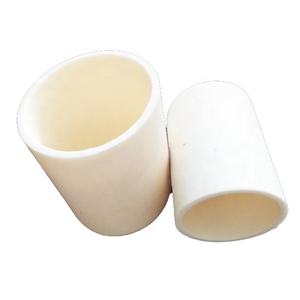
Jewelry Industry Fused Silica Quartz Ceramic Melting Bowl Crucible
High Grade Quartz for Precision Ceramic Applications
Custom Sliding Black Ceramic Tile Display Rack Stone Quartz Stand
Custom Quartz Ceramic Crucible Boat Optical Fused Silica Glass