Next-Generation Ceramics: Unlocking Superior Properties for Industry

When the Heat is On: A Story About Bearing Failure
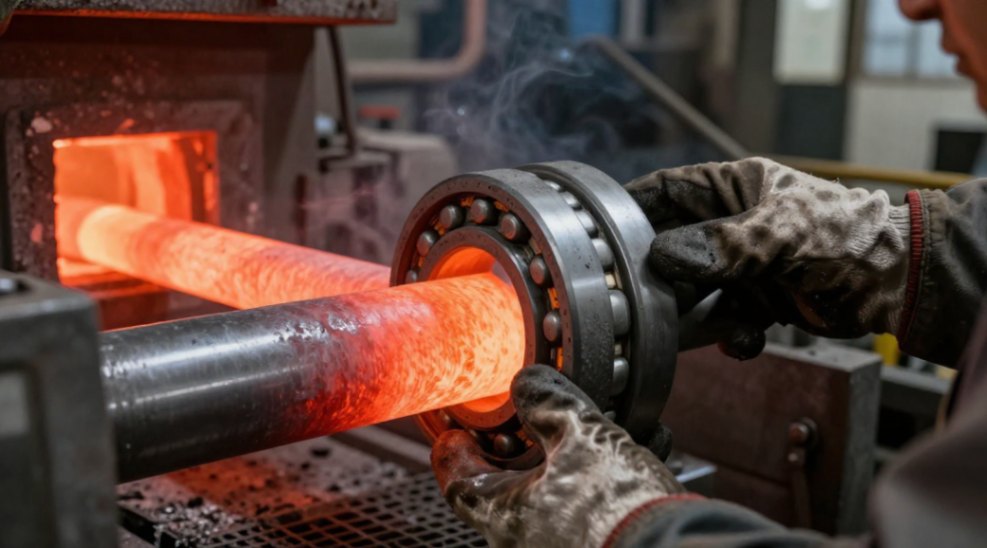
It was a furnace roll bearing. The ambient temperature hovered at 750°C. The standard bearing material, a high-grade ceramic, had lasted only a few weeks before catastrophic failure. We were called in. The problem wasn’t just heat. It was thermal shock from rapid cooling cycles, combined with an abrasive atmosphere. We needed a material that wouldn’t just survive, but thrive. That’s when we specified pressureless sintered silicon carbide. The bearing is still running today. Let’s break down why this material defines the pinnacle for high-temperature bearings.
What Makes Pressureless Sintered Silicon Carbide Unique?
Pressureless sintered silicon carbide (PLSiC) is a specific type of ceramic created by sintering fine silicon carbide powder without applying external pressure. The result is a near-net-shape component with exceptional density and uniformity. For bearings, this process is critical. It delivers a material that laughs in the face of conditions that melt steel and shatter other ceramics.
Core Advantages Over Traditional Materials
We compare PLSiC to common alternatives. The contrast is stark.
- Superior Thermal Stability: Steel bearings lose their hardness and dimensional stability well before 500°C. PLSiC bearings retain their strength and shape from 500°C to over 1,400°C. This isn’t just better performance. It’s a different league of capability.
- Unmatched Oxidation Resistance: Unlike metals that oxidize and scale, PLSiC forms a thin, protective silicon dioxide layer. This layer actually seals the surface, preventing further degradation. In high-temperature, oxidizing atmospheres, this is a game-defining trait.
- Reduced Thermal Expansion: PLSiC has a very low coefficient of thermal expansion (CTE). This means the bearing’s dimensions change very little as temperature swings. You get predictable, stable operation. No seizing from expansion. No slop from contraction.
Designing for the Inferno: Key Considerations
You can’t just drop a ceramic bearing into a steel housing. Success demands careful design.
Managing Thermal Expansion Mismatch
The housing material expands at a different rate than the PLSiC bearing. We must design for this. Common solutions include using compliant metallic sleeves or designing the housing itself from a material with a closely matched CTE, like a specialty nickel alloy. Ignore this, and you create immense stress that will crack the bearing or distort the housing.
The Lubrication Conundrum
Conventional oils and greases vaporize instantly. PLSiC bearings often run in one of three modes:
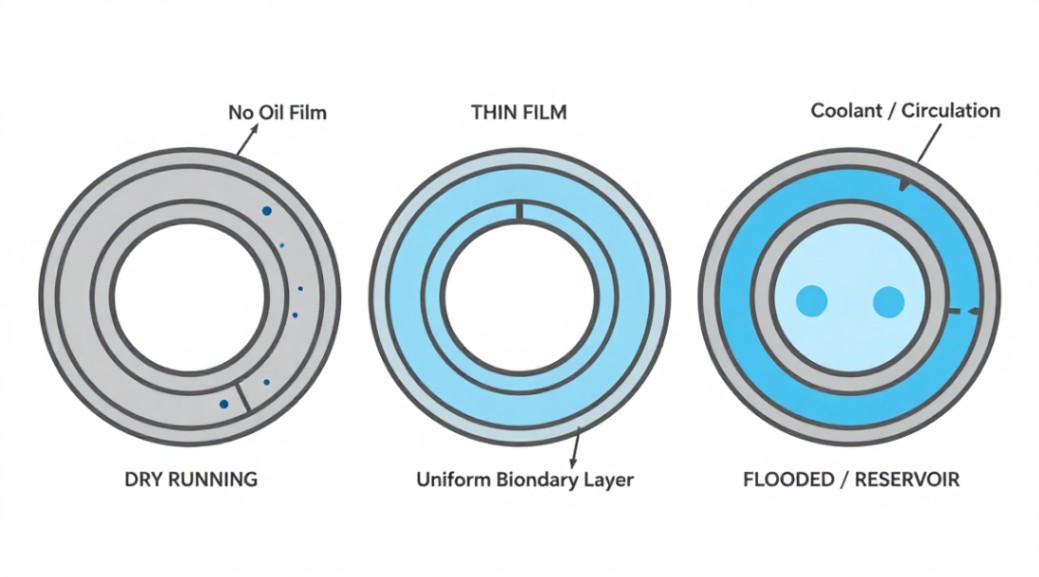
- Solid Film Lubricants: Coatings like graphite or molybdenum disulfide (MoS2) provide a sacrificial layer that reduces friction at startup and during low-load conditions.
- Dry Running (Self-Lubrication): The inherent low friction coefficient of a finely polished PLSiC-on-PLSiC pair can allow for dry operation in certain clean environments.
- Specialized High-Temp Greases: For lower-temperature applications within the PLSiC range (e.g., 300-600°C), specially formulated, thermally stable greases are an option.
Where Do We Use These Bearings? Real-World Applications
This isn’t a lab curiosity. PLSiC bearings solve critical industrial problems.
- High-Temperature Furnaces: Roller bearings in continuous strip annealing lines, walking beam furnaces, and sintering furnaces. They handle the heat and the heavy loads.
- Aerospace & Turbomachinery: Support bearings for auxiliary power units (APUs), turbine shafts, and other hot-section components where weight and temperature resistance are paramount.
- Energy & Chemical Processing: Pumps and agitators in hot hydrocarbon or chemical processes. Their corrosion resistance adds another layer of protection.
Handling and Installation: Treat It Like Glass (Because It Is)
Silicon carbide is incredibly hard. It is also brittle. Handle it with the care you would afford a precision optical lens. Never strike it with a metal hammer. Use soft mallets and press-fit tooling. Ensure mounting surfaces are clean, parallel, and free of burrs. A proper press fit provides the necessary preload without over-stressing the ring.
The Bottom Line: Is PLSiC Right for Your Application?
Consider PLSiC bearings when your operating temperature consistently exceeds 500°C, when oxidation or corrosion destroys metals, and when you need long-term, maintenance-free operation in a hostile environment. The upfront cost is higher than steel. The total cost of ownership, when you factor in downtime, replacements, and energy losses from friction, is often dramatically lower. For the right problem, it is the only solution.
The future is even hotter. Material scientists are pushing the limits with composite formulations and advanced surface engineering. The goal is to extend service life and push the temperature boundary even further. For now, pressureless sintered silicon carbide remains the benchmark for bearing performance where the heat is truly on.
Suppiler
Synthetic-chemical focus on the research and development, production and sales of ceramic products, serving the electronics, ceramics, chemical and other industries. Since its establishment in 2015, the company has been committed to providing customers with the best products and services, and has become a leader in the industry through continuous technological innovation and strict quality management.
Our products includes but not limited to Aluminum Nitride, Aluminum Oxide, Boron Carbide, Boron Nitride, Ceramic Crucible, ect. If you are interested in any type of these, please feel free to contact us.