Next-Generation Ceramics: Unlocking Superior Properties for Industry

The High-Stakes Substrate Dilemma
Have you ever launched a product only to face field failures from unexplained short circuits? Has thermal throttling limited the performance of your power module despite an oversized heatsink? These frustrating scenarios are often rooted in a single, critical component: the substrate. Choosing the wrong foundation compromises the entire system. For decades, engineers have turned to one proven solution for these exact problems. The material is high purity aluminum oxide ceramic, commonly called alumina. Its unique combination of properties makes it indispensable for demanding electronics. This article provides a step-by-step framework for selecting and applying these substrates effectively.
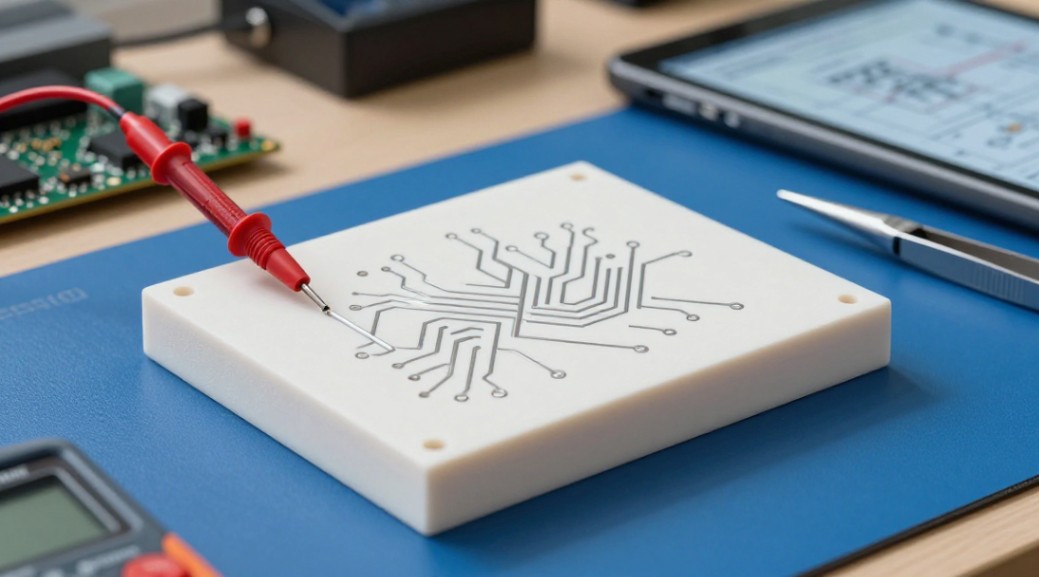
Defining the Material: High Purity Alumina’s Core Properties
At its core, high purity aluminum oxide (Al2O3) is a polycrystalline ceramic engineered for electronics. Purity is paramount. While standard alumina may be 96% pure, high purity aluminium oxide ceramic substrates for electronics typically range from 99.5% to 99.9%. This reduction in silica and other impurities directly enhances performance. The primary value proposition rests on three pillars: electrical insulation, thermal management, and mechanical integrity. These are not incidental features; they are the result of deliberate material science and process control. Understanding these intrinsic properties is the first step to leveraging them in your design.
1. Unmatched Electrical Insulation and Dielectric Strength
Electrical failure is a primary risk. A substrate must be an impeccable insulator. High purity alumina excels here. Its volume resistivity exceeds 1014 Ω·cm, effectively blocking leakage currents. More critically, its dielectric strength is high, typically 10-17 kV/mm. This means it can withstand significant voltage differences across a thin cross-section without breaking down. For high-voltage applications like power modules or RF components, this property is non-negotiable. Compare it to organic PCB materials, which can carbonize and track under similar stress. The ceramic does not degrade. Its stable dielectric constant also supports consistent high-frequency signal propagation.
2. Engineered Thermal Conductivity and Heat Dissipation
Heat kills electronics. While not the highest conductor like aluminum nitride, alumina’s thermal conductivity (typically 20-30 W/mK for high-purity grades) is a strategic balance. It efficiently spreads heat from localized hotspots, such as a semiconductor die, across the entire substrate plane. This lateral heat spreading prevents thermal runaway. The substrate then conducts this heat downward to the package base or heatsink. The material’s performance is predictable and stable across a wide temperature range, unlike polymers whose properties degrade with heat. This makes it a reliable thermal management solution.
3. Mechanical Strength and Dimensional Stability
Substrates are structural elements. They must be rigid, hard, and dimensionally stable. Alumina offers high flexural strength and exceptional hardness (Vickers hardness ~1500-1700 HV). It resists scratching and deformation during handling and assembly. Its coefficient of thermal expansion (CTE) is well-matched to silicon and other critical materials. This match prevents destructive stresses during thermal cycling, a common cause of solder joint fatigue and die cracking. The substrate maintains its shape and tolerances from room temperature to operating extremes, ensuring long-term reliability.
A Practical Guide to Selection and Specification
Selecting the right high purity aluminum oxide ceramic substrate is a methodical process. Blindly choosing a standard option invites compromise. Follow these steps to match the material to your application’s needs.
Step 1: Define Your Application’s Primary Driver
Is electrical isolation or heat dissipation the paramount concern? For ultra-high voltage insulation, prioritize the highest purity grade (99.9%) and sufficient thickness to meet dielectric withstand requirements. For power-dense applications where heat is the bottleneck, focus on the thermal conductivity specification and consider surface finish for optimal thermal interface. LED packages, for instance, demand excellent reflectivity and thermal pathing. Semiconductor packages require precision and hermeticity. Define this driver first.
Step 2: Specify the Purity Grade and Key Properties
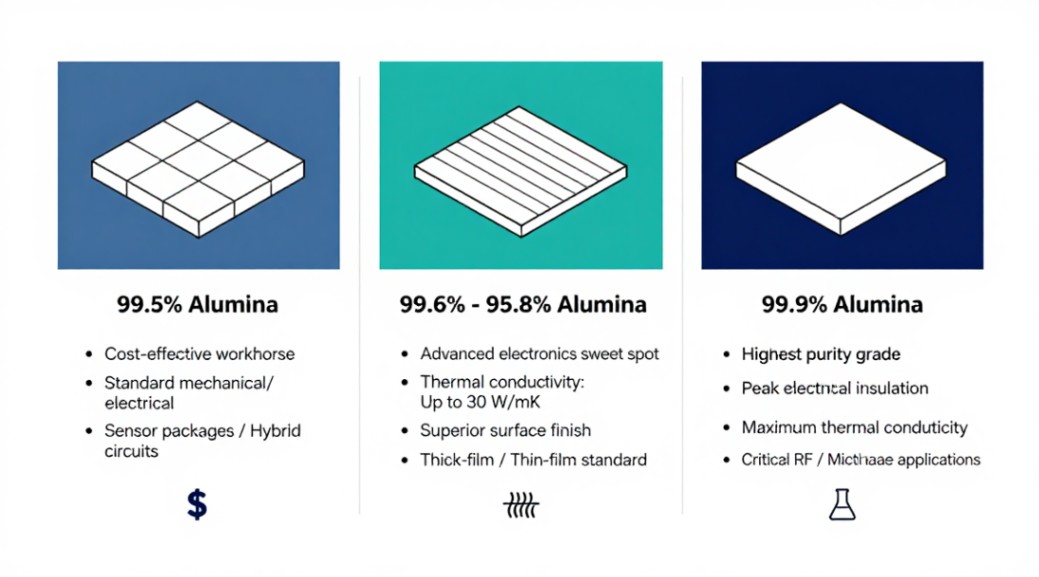
Purity dictates performance. Use this framework:
99.5% Alumina: A cost-effective workhorse. It offers good mechanical and electrical properties for many standard applications like sensor packages or hybrid circuits.
99.6% – 99.8% Alumina: The sweet spot for advanced electronics. It provides significantly improved thermal conductivity (up to 30 W/mK) and superior surface finish for fine-line metallization. This is the standard for most thick-film and thin-film circuits.
99.9% Alumina: Used where every impurity matters. It delivers the highest electrical insulation, thermal conductivity, and chemical inertness. Essential for critical RF/microwave applications, high-reliability aerospace modules, and corrosive environments.
Step 3: Understand Manufacturing Processes
The manufacturing method shapes the substrate’s form and capability.
Tape Casting: Produces thin, large-area sheets ideal for multilayer circuits or where precise, uniform thickness is required. It is the standard for LTCC (Low-Temperature Co-fired Ceramic) processes.
Dry Pressing: Used for creating thicker, simpler shapes like insulators, coil forms, or LED submounts. It is efficient for high-volume production of specific geometries.
Green Machining: The unfired ‘green’ ceramic is machined to complex shapes. After sintering, the part achieves its final dense form. This allows for custom geometries, holes, and intricate features not possible with pressing alone.
Step 4: Plan for Surface Finish and Metallization
The bare ceramic is useless without a conductive circuit. The surface finish, measured in Ra (average roughness), is critical. A smooth surface (e.g., Ra < 0.2 µm) is mandatory for thin-film deposition techniques like sputtering, which create precise, fine-line circuits. A slightly rougher surface can enhance adhesion for thick-film pastes. Common metallization systems include:
- Thick-Film: Screen-printing of conductive, resistive, and dielectric pastes, then firing. Robust and cost-effective for many applications.
- Thin-Film: Vacuum deposition of metals like chromium/gold or titanium/platinum/gold. Enables extremely fine lines, excellent adhesion, and optimal performance for high-frequency circuits.
- Direct Bonded Copper (DBC): A copper foil is oxidized and bonded directly to the ceramic at high temperature. Creates a superior thermal and electrical path for high-power devices like IGBT modules.
Comparing Substrate Materials: Alumina vs. The Alternatives
Alumina is not the only option. The choice involves a trade-off analysis.
- Aluminum Nitride (AlN): Offers far higher thermal conductivity (140-180 W/mK). Use it when heat flux is the absolute limiting factor, especially with high-power laser diodes or RF devices. However, it is more expensive and can be more challenging to metallize reliably.
- Beryllium Oxide (BeO): Historically offered thermal conductivity rivaling aluminium metal. Its severe toxicity in powder form has rendered it obsolete for most new designs. Do not specify it.
- Organic Laminates (FR4, Polyimide): These are suitable for low-power, low-frequency applications where cost and flexibility are key. They cannot match alumina’s thermal performance, high-temperature stability, or hermeticity.
For the majority of applications requiring a balance of performance, reliability, and cost, high purity aluminum oxide ceramic substrates for electronics remain the optimal, proven choice.
Implementing Quality Control and Looking Ahead
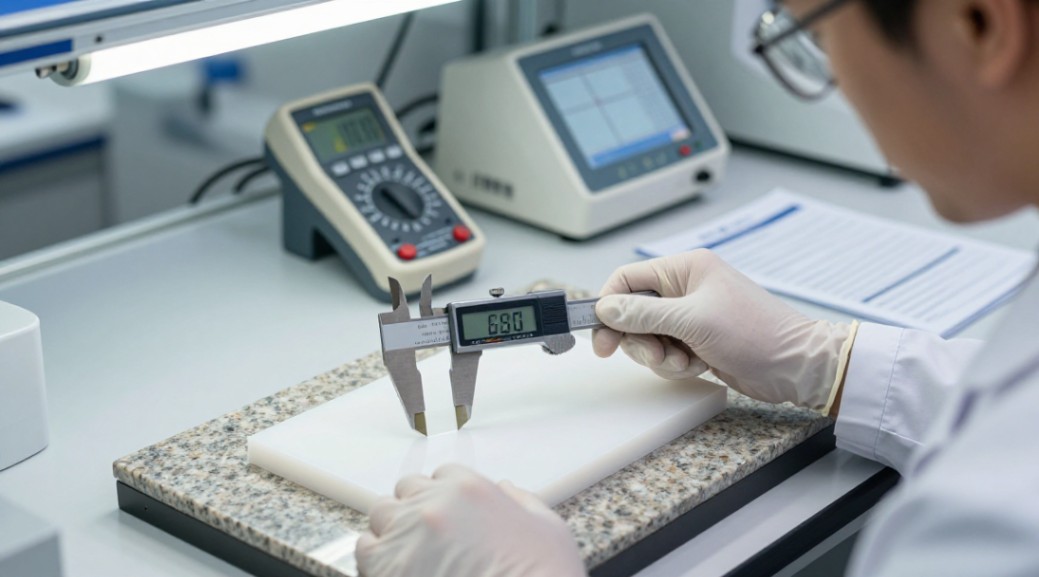
Once you have specified your substrate, demand rigorous quality control. Key parameters to verify include: dimensional tolerances (flatness, camber, thickness), surface finish (Ra), flexural strength, dielectric strength, and thermal conductivity. Ensure your supplier adheres to relevant industry standards and can provide material certification. The future will push these substrates further. Demand for higher thermal performance continues, driving developments in even higher-purity formulations and composite materials. Integration of embedded passives and 3D ceramic structures is on the horizon. The fundamental role of alumina, however, is secure.
The Definitive Solution for Critical Electronics
The path to solving thermal management and insulation problems is clear. High purity aluminum oxide ceramic is the engineering foundation for reliable, high-performance electronics. Its properties are not accidental; they are engineered. From power modules to RF packages to LED arrays, it provides the stable, robust platform that advanced circuits require. Stop compromising with inadequate substrates. To implement this solution, you need a supplier with deep material expertise and precision manufacturing capabilities. That is where we excel. We provide engineered ceramic solutions, not just parts. Contact our engineering team today for a technical consultation. Send us your specifications, and we will provide a substrate sample and a metallization proposal tailored to your project. Let us build your foundation.
Suppiler
Synthetic-chemical focus on the research and development, production and sales of ceramic products, serving the electronics, ceramics, chemical and other industries. Since its establishment in 2015, the company has been committed to providing customers with the best products and services, and has become a leader in the industry through continuous technological innovation and strict quality management.
Our products includes but not limited to Aluminum Nitride, Aluminum Oxide, Boron Carbide, Boron Nitride, Ceramic Crucible, ect. If you are interested in any type of these, please feel free to contact us.